
Miami Herald: How a woman won her battle with Shell Oil
A chemical plant in Norco, La., exposed mostly black residents to sickening toxins.
Posted on Sun, May. 04, 2008
BY MARK WEISENMILLER
NIGHT FIRE: Big Oil, Poison Air, and Margie Richard’s Fight To Save Her Town.
Ronnie Greene. Amistad. 288 pages. $24.95.
Greene’s compelling new book has all the drama of a classic David-and-Goliath tale, with Margie Richard of Norco, La., as David and the Shell Oil Co. in the role of the menacing Philistine.
Greene, urban affairs editor and a longtime investigative reporter for The Miami Herald, writes of how the tenacious Richard, in a battle that began in 1973 and ended in 2002, pressured Shell executives to respond to environmentally unfriendly problems in its chemical plant in Norco.
Greene, who effectively blends oral history and facts culled from public documents, interviewed Richard more than 30 times for Night Fire (he also talked to Shell representatives at length). At times Richard comes across as stubborn and unwilling to compromise her beliefs; at others she is warm and gregarious, eager to learn the complicated details of the problems affecting her community and to share this newfound knowledge with her friends in the four-block neighborhood known as Diamond.
The community, Greene writes, fell victim to decades of environmental racism. Norco’s population was primarily middle-class white families who lived far from the plant. Residents of Diamond, however, were mostly black and more directly exposed to the billowing toxins.
In fact, it was the death of her sister Naomi from a rare lung disease that set Richard on her crusade. “[T]he diagnosis now was that Naomi had sarcoidosis, a disease that causes inflammation of the body’s tissues. . . . Doctors say environmental factors can trigger the disease, and Naomi’s upbringing had been smothered in smoke and flares from the Chemical Corridor that was their home.”
Shell so completely dominated the social and economic life of Diamond — Norco was named after the New Orleans Refining Co. — that the residents feared retribution if they dared fight back. Greene does a thorough job of explaining just how Richard changed this mindset through a long, dogged series of community meetings, and his descriptive writing evokes a sharp sense of the day-to-day reality in Diamond, where the plant emitted toxic waste for decades.
“After each complaint, the company replied firmly that all was well, and the plant continued to churn, its pipes hissing and belching at all hours, sending smoke plumes into the air and forcing residents to shutter their homes. . . . Diamond residents witnessed the intense fire and smoke . . . and wondered just what chemicals might be seeping into their homesteads.”
Greene writes that it wasn’t until Shell changed personnel that the plant was cleaned up. Three bold Shell employees risked dismissal when they pestered their bosses about the pollution. In the end, Shell bought out the whole community of Diamond. Homeowners got a minimum price of $80,000, Greene writes, as well as moving expenses and other bonuses. Not surprisingly, most residents moved away.
Richard is now in her 60s, but she hasn’t retired. Instead she’s kept up her work as an environmental activist, sharing her story and counseling other communities. She is relentless, likable, informative — just like this book.
Mark Weisenmiller is a writer in Tampa.
http://www.miamiherald.com/215/story/518761.html
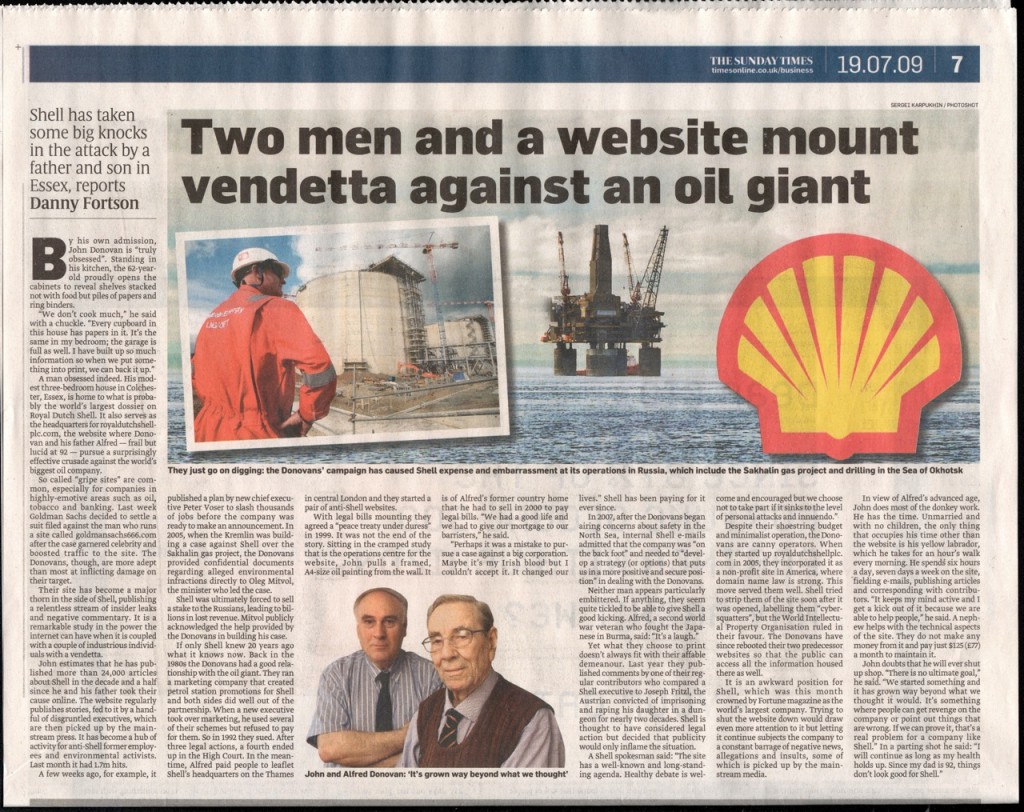
This website and sisters royaldutchshellplc.com, shellnazihistory.com, royaldutchshell.website, johndonovan.website, and shellnews.net, are owned by John Donovan. There is also a Wikipedia segment.


 Royal Dutch Shell conspired directly with Hitler, financed the Nazi Party, was anti-Semitic and sold out its own Dutch Jewish employees to the Nazis. Shell had a close relationship with the Nazis during and after the reign of Sir Henri Deterding, an ardent Nazi, and the founder and decades long leader of the Royal Dutch Shell Group. His burial ceremony, which had all the trappings of a state funeral, was held at his private estate in Mecklenburg, Germany. The spectacle (photographs below) included a funeral procession led by a horse drawn funeral hearse with senior Nazis officials and senior Royal Dutch Shell directors in attendance, Nazi salutes at the graveside, swastika banners on display and wreaths and personal tributes from Adolf Hitler and Reichsmarschall, Hermann Goring. Deterding was an honored associate and supporter of Hitler and a personal friend of Goring.

 Deterding was the guest of Hitler during a four day summit meeting at Berchtesgaden. Sir Henri and Hitler both had ambitions on Russian oil fields. Only an honored personal guest would be rewarded with a private four day meeting at Hitler’s mountain top retreat.


 IN JULY 2007, MR BILL CAMPBELL (ABOVE, A RETIRED GROUP AUDITOR OF SHELL INTERNATIONAL SENT AN EMAIL TO EVERY UK MP AND MEMBER OF THE HOUSE OF LORDS:


 MORE DETAILS:


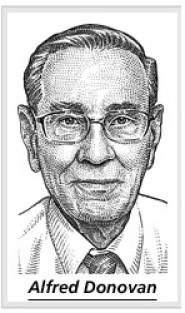 A head-cut image of Alfred Donovan (now deceased) appears courtesy of The Wall Street Journal.