By LAUREN VILLAGRAN
The Associated Press
Saturday, October 20, 2007; 6:49 AM
NEW YORK — While Americans gape wide-eyed as oil passes $90 a barrel, countries with stronger currencies haven’t felt the same sticker shock: the rapidly falling dollar has provided a de facto discount.
Or it did. That was until oil’s 30 percent surge since late August eroded what small benefit holders of euros, British pounds, Indian rupees and other currencies enjoyed from the dollar’s decline over the same period.
Worldwide, economies are feeling the pinch of high oil prices, raising concerns that energy inflation could slow growth abroad. But economists say global economies from Europe to China likely face no more risk of a recession due to high oil prices than does the United States.
Increased energy efficiency, a progressive rather than shocking climb in oil prices and faster-paced income growth have made higher energy prices less harmful today than 30 years ago.
“Previously, we have said that once oil crosses $80 and stays above there for a year or so, the risk of recession is high,” said Song Seng Wun, regional economist at Singapore-based CIMB-GK Research Pte. Ltd. “But at this point, whether that still applies or not, we don’t know. Economies have become more efficient, businesses are more efficient, we use less oil. So we’ll see.”
A barrel of crude crossed $90 a barrel for the first time Thursday. The same barrel bought with euro looks like $63. Bought with British pounds, a barrel of crude looks more like $44. Other currencies have also appreciated against the dollar, giving fast-growing countries such as China and India a slight break. China’s yuan has climbed 5 percent against the dollar from a year ago; India’s rupee has risen 14 percent.
The effect on consumers overseas is more difficult to compare with the U.S., given that Europeans face high taxes on fuel and China and India have state-run oil companies that control oil prices to shield consumers from swings.
Some analysts speculate that without the rupee’s increase, the government may have raised retail fuel prices by now. India’s petroleum ministry last week said it has no plans to hike fuel prices until next March. China, which is worried about spiking consumer price inflation, announced a moratorium on Sept. 20 blocking price increases for gasoline.
Oil’s rise is at least partially due to the dollar’s decline. A weak dollar increases the attractiveness of commodities, which are seen as retaining their underlying value relative to all currencies, and speculative interest in the energy market has surged in recent weeks.
Associated Press reporters Gillian Wong in Singapore, Joe McDonald in Beijing and Rajesh Mahapatra in New Delhi contributed to this story.
http://www.washingtonpost.com/wp-dyn/content/article/2007/10/20/AR2007102000393.html
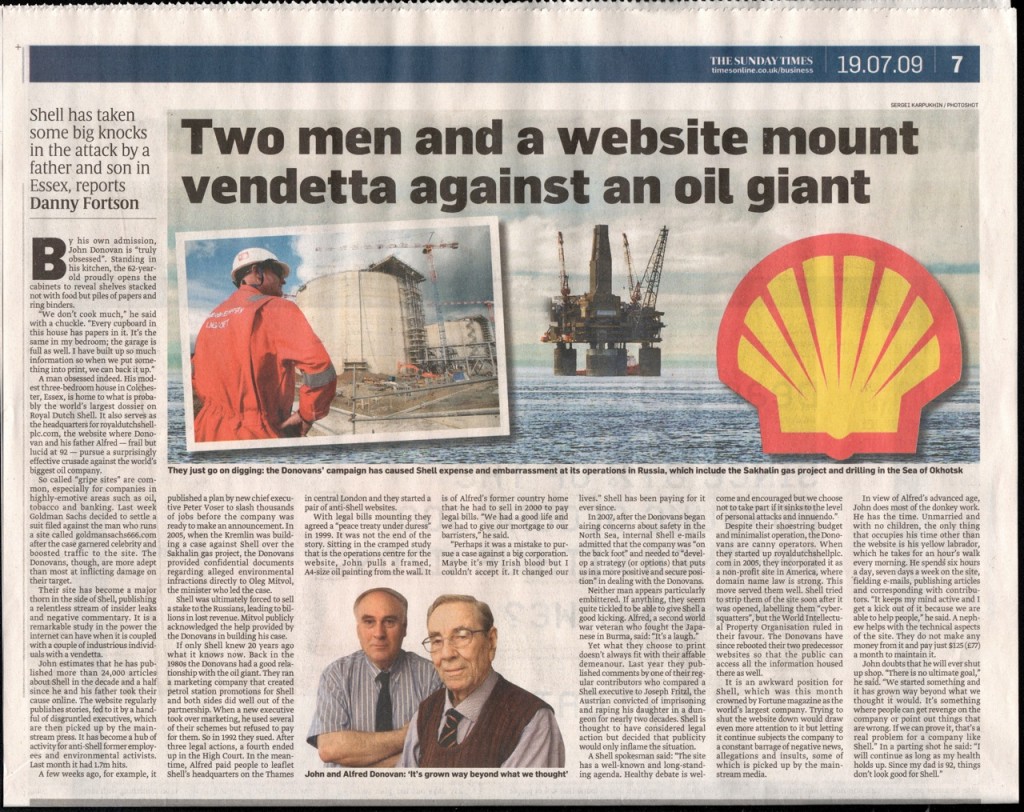
This website and sisters royaldutchshellplc.com, shellnazihistory.com, royaldutchshell.website, johndonovan.website, and shellnews.net, are owned by John Donovan. There is also a Wikipedia segment.


 Royal Dutch Shell conspired directly with Hitler, financed the Nazi Party, was anti-Semitic and sold out its own Dutch Jewish employees to the Nazis. Shell had a close relationship with the Nazis during and after the reign of Sir Henri Deterding, an ardent Nazi, and the founder and decades long leader of the Royal Dutch Shell Group. His burial ceremony, which had all the trappings of a state funeral, was held at his private estate in Mecklenburg, Germany. The spectacle (photographs below) included a funeral procession led by a horse drawn funeral hearse with senior Nazis officials and senior Royal Dutch Shell directors in attendance, Nazi salutes at the graveside, swastika banners on display and wreaths and personal tributes from Adolf Hitler and Reichsmarschall, Hermann Goring. Deterding was an honored associate and supporter of Hitler and a personal friend of Goring.

 Deterding was the guest of Hitler during a four day summit meeting at Berchtesgaden. Sir Henri and Hitler both had ambitions on Russian oil fields. Only an honored personal guest would be rewarded with a private four day meeting at Hitler’s mountain top retreat.


 IN JULY 2007, MR BILL CAMPBELL (ABOVE, A RETIRED GROUP AUDITOR OF SHELL INTERNATIONAL SENT AN EMAIL TO EVERY UK MP AND MEMBER OF THE HOUSE OF LORDS:


 MORE DETAILS:


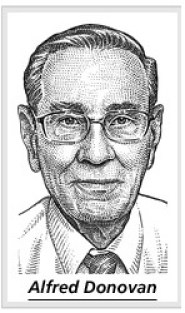 A head-cut image of Alfred Donovan (now deceased) appears courtesy of The Wall Street Journal.