By Sheila McNulty in Houston and Bernard Simon in Toronto
Published: October 7 2007 19:57 | Last updated: October 7 2007 19:57
Oil companies and investors are lobbying the Alberta government against significant proposed rises in royalties on its energy sector, including Canada’s large oilsands deposits – the largest proven oil reserve outside Saudi Arabia.
A government-appointed panel recommended a string of increases last month to put Alberta’s energy tax and royalty structure more in line with other parts of the world, which have been cashing in on rising oil prices.
The proposals include raising royalties on profitable oilsands projects from 25 per cent of net revenue to 33 per cent, along with a new tax on the production of bitumen – the heavy crude extracted from the oilsands – that varies with the price of the commodity.
The proposals leave in place a rule that allows companies developing oilsands projects to pay a revenue royalty of just 1 per cent until they recover their investments. The incentive was offered when oil prices were low as a way of attracting oil companies to this capital-intensive resource.
EnCana, Canada’s largest natural gas producer and a shareholder in several oilsands projects, is one of the most vocal critics of the proposals. “If the royalty panel’s recommendations are adopted in full, many of Alberta’s new and emerging resource plays will simply not be economically viable,” the company said.
EnCana has threatened to cut its 2008 capital investment in Alberta by about $1bn, equivalent to 30-40 per cent of the $2.5bn-$3bn it had planned to spend.
The big international oil companies have been more measured in their response. Brian Straub, Shell’s executive vice-president for oilsands, said the company was actively engaged with the government: “The government is pretty smart. I know they aren’t going to do anything knee-jerk.”
A group of investors, including the Ontario Teachers Pension Plan, one of the country’s biggest pension funds, urged Alberta’s deputy premier and energy minister at a meeting on Friday to water down the royalty proposals. Shares of companies with interests in the Alberta energy sector have dropped markedly since the panel published its report.
The government has said that it would respond in mid-October. Some groups, such as environmental activists, support the tax increases.
Derek Butter, head of corporate analysis for Wood Mackenzie, the consultancy, said that in determining royalty increases, everyone has been focused on the low government take, not on the heavy investment needed to extract oil from the oilsands.
If implemented, he said, the changes would reduce the commercial value of oilsands projects by $26bn at a long-term Brent price of $50 a barrel.
“The higher than expected level of new taxation will cause concern among oilsands industry players already struggling to cope with spiralling costs,” Mr Butter said.
It is far less expensive for oil companies to produce in other parts of the world, so they can still be profitable with high government royalties, but that is not true for oilsands, he added.
Imperial Oil, ExxonMobil’s Canadian subsidiary, said: “It’s certainly a resource that under less favourable fiscal terms could have remained dormant for much longer, with the kind of lead time and management of investment that oilsands represent.”
Copyright The Financial Times Limited 2007
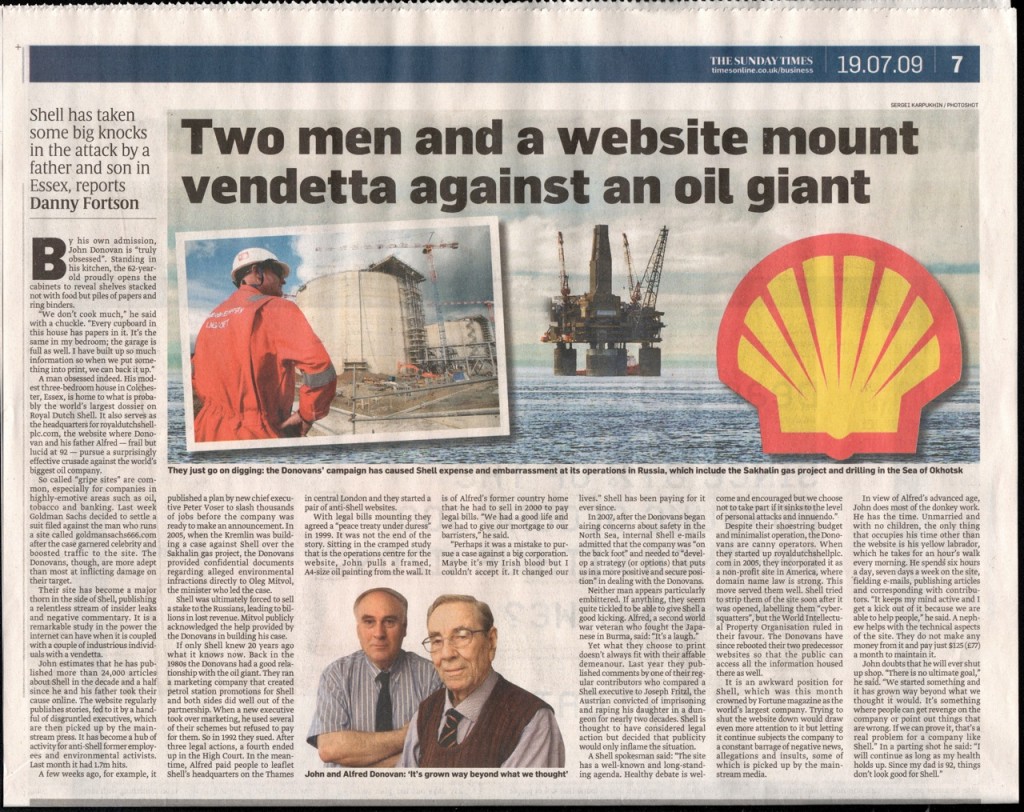
This website and sisters royaldutchshellplc.com, shellnazihistory.com, royaldutchshell.website, johndonovan.website, and shellnews.net, are owned by John Donovan. There is also a Wikipedia segment.


 Royal Dutch Shell conspired directly with Hitler, financed the Nazi Party, was anti-Semitic and sold out its own Dutch Jewish employees to the Nazis. Shell had a close relationship with the Nazis during and after the reign of Sir Henri Deterding, an ardent Nazi, and the founder and decades long leader of the Royal Dutch Shell Group. His burial ceremony, which had all the trappings of a state funeral, was held at his private estate in Mecklenburg, Germany. The spectacle (photographs below) included a funeral procession led by a horse drawn funeral hearse with senior Nazis officials and senior Royal Dutch Shell directors in attendance, Nazi salutes at the graveside, swastika banners on display and wreaths and personal tributes from Adolf Hitler and Reichsmarschall, Hermann Goring. Deterding was an honored associate and supporter of Hitler and a personal friend of Goring.

 Deterding was the guest of Hitler during a four day summit meeting at Berchtesgaden. Sir Henri and Hitler both had ambitions on Russian oil fields. Only an honored personal guest would be rewarded with a private four day meeting at Hitler’s mountain top retreat.


 IN JULY 2007, MR BILL CAMPBELL (ABOVE, A RETIRED GROUP AUDITOR OF SHELL INTERNATIONAL SENT AN EMAIL TO EVERY UK MP AND MEMBER OF THE HOUSE OF LORDS:


 MORE DETAILS:


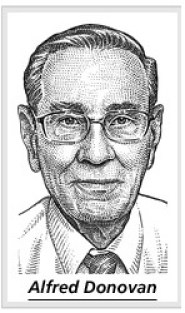 A head-cut image of Alfred Donovan (now deceased) appears courtesy of The Wall Street Journal.