28 Sep 2007
A race is on to access the world’s remaining gas and oil reserves that is pitting new players in the global market against the tradition conglomerates from industrialized nations, according to a world body.
The UN Conference on Trade and Development (UNCTAD), says with crude oil prices staying well above $70 a barrel, traditional transnational corporations are losing bargaining power to oil-producing countries “eager to use climbing demand to capture a larger share of the rents.”
The agency says there are “large imbalances” in global consumption, production and reserves of oil and gas, such as the fact that developed countries consume more than half of global oil and gas output, while they account for only a quarter of production.
And it says less than 8 per cent of the world’s remaining proved reserves of oil and gas are found in these countries. As many as 21 of the top 25 countries ranked in 2005 by total remaining proved reserves were developing or transition economies.
UNCTAD says data suggests that resources in developed countries are being depleted more than 10 times faster that that of developing and transition economies, which means that the former will have to rely increasingly on oil and gas imported from the latter.
And it says competition for oil and gas resources is becoming more complex, due to changes in government policies in producing nations.
Some developing countries with large reserves, such as Kuwait, Mexico and Saudi Arabia, do not allow foreign participation in oil and gas extraction.
Others permit foreign investment but are facing embargoes applied by the home countries of companies, such as in the case of those from the United States which are not allowed to invest in Iran or Sudan.
UNCTAD says also affecting competition is the entry of new corporations based in developing and transition economies.
These include Kuwait Petroleum, Lukoil (Russia), Petrobras (Brazil) and Petronas (Malaysia), who are already among the main foreign investors in selected oil and gas producing countries and operate alongside traditional companies from the developed countries such as British Petroleum, Royal Dutch Shell and Chevron.
© NewsRoom 2007
http://www.newswire.co.nz/main/viewstory.aspx?storyid=393575
This website and sisters royaldutchshellplc.com, shellnazihistory.com, royaldutchshell.website, johndonovan.website, and shellnews.net, are owned by John Donovan. There is also a Wikipedia segment.


 Royal Dutch Shell conspired directly with Hitler, financed the Nazi Party, was anti-Semitic and sold out its own Dutch Jewish employees to the Nazis. Shell had a close relationship with the Nazis during and after the reign of Sir Henri Deterding, an ardent Nazi, and the founder and decades long leader of the Royal Dutch Shell Group. His burial ceremony, which had all the trappings of a state funeral, was held at his private estate in Mecklenburg, Germany. The spectacle (photographs below) included a funeral procession led by a horse drawn funeral hearse with senior Nazis officials and senior Royal Dutch Shell directors in attendance, Nazi salutes at the graveside, swastika banners on display and wreaths and personal tributes from Adolf Hitler and Reichsmarschall, Hermann Goring. Deterding was an honored associate and supporter of Hitler and a personal friend of Goring.

 Deterding was the guest of Hitler during a four day summit meeting at Berchtesgaden. Sir Henri and Hitler both had ambitions on Russian oil fields. Only an honored personal guest would be rewarded with a private four day meeting at Hitler’s mountain top retreat.


 IN JULY 2007, MR BILL CAMPBELL (ABOVE, A RETIRED GROUP AUDITOR OF SHELL INTERNATIONAL SENT AN EMAIL TO EVERY UK MP AND MEMBER OF THE HOUSE OF LORDS:


 MORE DETAILS:


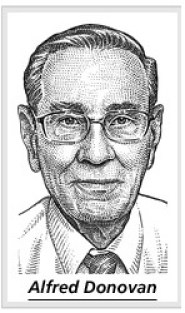 A head-cut image of Alfred Donovan (now deceased) appears courtesy of The Wall Street Journal.