Tue Sep 25, 2007 5:37am EDT
MOSCOW, Sept 25 (Reuters) – Russia’s Sakhalin-2 energy group confirmed on Tuesday it would delay year-round exports of crude to 2008 from the end of 2007, but was sticking to its liquefied natural gas deliveries timetable.
The delay will mean lower-than-expected winter supplies of a highly-sought light crude to a tight oil market worried about peak heating season demand and already facing record prices.
“Year-round exports of crude will start in the first half of 2008. As to the LNG deliveries we plan to send the first cargoes in the second half of 2008,” said a spokeswoman for Sakhalin Energy, a consortium developing Sakhalin-2.
Industry sources told Reuters last week exports of Vityaz crude will be pushed back to next year due to delays in pipeline commissioning. Sakhalin Energy then said it was sticking to its schedule to launch the pipeline by the end of this year.
Last year, the project faced intense scrutiny from technical and environmental agencies, and the pressure contributed to a decision by Royal Dutch Shell (RDSa.L: Quote, Profile, Research), then leading the project, to cede control to Russia’s gas monopoly Gazprom.
Shell’s share halved to 27.5 percent after Gazprom (GAZP.MM: Quote, Profile, Research) bought 50 percent stake from Shell and its Japanese partners, Mitsui (8031.T: Quote, Profile, Research) and Mitsubishi (8058.T: Quote, Profile, Research).
Analysts interpreted the sale as yet another step in the Kremlin’s drive to win more control over Russia’s huge energy industry.
Sakhalin-2 produces 60,000-70,000 barrels per day (bpd) of Vityaz crude, with API gravity of 34.3, for only about six months of the year because drifting ice stops production and closes the loading port.
Production is expected to gradually increase from next year and reach 150,000 bpd by 2010-2011.
The project’s 800 km (497 miles) oil and gas pipelines run in parallel down the length of Russia’s remote Sakhalin island off the Pacific coast to a liquefied natural gas (LNG) plant to be commissioned next year. The project’s cost are estimated at $22 billion.
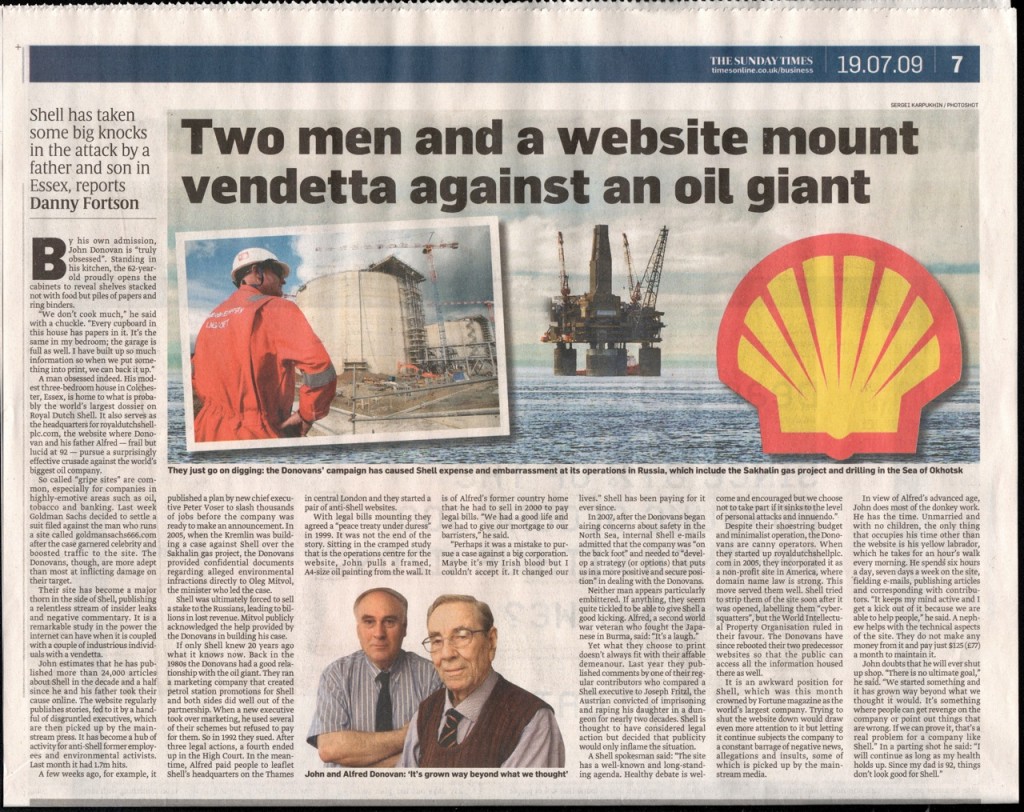
This website and sisters royaldutchshellplc.com, shellnazihistory.com, royaldutchshell.website, johndonovan.website, and shellnews.net, are owned by John Donovan. There is also a Wikipedia segment.


 Royal Dutch Shell conspired directly with Hitler, financed the Nazi Party, was anti-Semitic and sold out its own Dutch Jewish employees to the Nazis. Shell had a close relationship with the Nazis during and after the reign of Sir Henri Deterding, an ardent Nazi, and the founder and decades long leader of the Royal Dutch Shell Group. His burial ceremony, which had all the trappings of a state funeral, was held at his private estate in Mecklenburg, Germany. The spectacle (photographs below) included a funeral procession led by a horse drawn funeral hearse with senior Nazis officials and senior Royal Dutch Shell directors in attendance, Nazi salutes at the graveside, swastika banners on display and wreaths and personal tributes from Adolf Hitler and Reichsmarschall, Hermann Goring. Deterding was an honored associate and supporter of Hitler and a personal friend of Goring.

 Deterding was the guest of Hitler during a four day summit meeting at Berchtesgaden. Sir Henri and Hitler both had ambitions on Russian oil fields. Only an honored personal guest would be rewarded with a private four day meeting at Hitler’s mountain top retreat.


 IN JULY 2007, MR BILL CAMPBELL (ABOVE, A RETIRED GROUP AUDITOR OF SHELL INTERNATIONAL SENT AN EMAIL TO EVERY UK MP AND MEMBER OF THE HOUSE OF LORDS:


 MORE DETAILS:


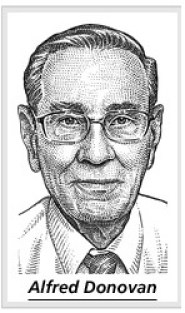 A head-cut image of Alfred Donovan (now deceased) appears courtesy of The Wall Street Journal.