By Chris Hughes
Published: September 26 2007 03:00 | Last updated: September 26 2007 03:00
Tony Hayward, the new chief executive of BP, was naïve when he lambasted a hundred senior executives for the company’s “dreadful” operating performance and assumed the comment would not leak out. But this should not be a hanging offence.
Details of Mr Hayward’s frank pep-talk were revealed in the FT yesterday. BP’s share price duly slid as investors feared that he was conveying new information about the company’s forthcoming third-quarter results. Had that been true, Mr Hayward would have committed a serious gaffe. Price-sensitive information should be conveyed to the market in an orderly way – not in ad hoc briefings of senior staff.
The reality is that the market already expected BP’s results to be bad. That was evident from the weekly performance indicators posted on BP’s website.
Mr Hayward’s error was failing to anticipate how his internal message might be construed externally. Public relations consultants charge a lot of money to deliver common-sense advice and rule one is to keep internal and external messages aligned. Mr Hayward was addressing a fairly large gathering, so he ought to have considered that his comments were semi-public. He should have anticipated that casually using the word “dreadful” to describe BP’s performance might have ugly consequences.
Clearly, it would have been wiser to say something like: “Stock market analysts expect our performance to be dreadful. I have not disabused them of this notion.”
So, yes, Mr Hayward made an error of judgment. Yes, he has some learning to do about how he communicates as chief executive. Can he move on from this? Sure.
In fact, this episode should give investors a degree of comfort. Far better to have a candid Mr Hayward who reads staff the riot act than the sort of savvy chief executive who knows just how to use investor communication to his advantage. It is not uncommon for new brooms at poorly- performing companies to advertise widely their commitment to “driving shareholder value”. Talking like that often becomes a self-fulfilling prophecy in that investors applaud and push the share price higher.
But generating shareholder value by telling the stock market what it wants to hear is not the same as creating real value in the enterprise itself. By focusing his communication on the staff, Mr Hayward should stimulate behaviour that will be good for BP as a business.
In time, the share price should follow.
This website and sisters royaldutchshellplc.com, shellnazihistory.com, royaldutchshell.website, johndonovan.website, and shellnews.net, are owned by John Donovan. There is also a Wikipedia segment.


 Royal Dutch Shell conspired directly with Hitler, financed the Nazi Party, was anti-Semitic and sold out its own Dutch Jewish employees to the Nazis. Shell had a close relationship with the Nazis during and after the reign of Sir Henri Deterding, an ardent Nazi, and the founder and decades long leader of the Royal Dutch Shell Group. His burial ceremony, which had all the trappings of a state funeral, was held at his private estate in Mecklenburg, Germany. The spectacle (photographs below) included a funeral procession led by a horse drawn funeral hearse with senior Nazis officials and senior Royal Dutch Shell directors in attendance, Nazi salutes at the graveside, swastika banners on display and wreaths and personal tributes from Adolf Hitler and Reichsmarschall, Hermann Goring. Deterding was an honored associate and supporter of Hitler and a personal friend of Goring.

 Deterding was the guest of Hitler during a four day summit meeting at Berchtesgaden. Sir Henri and Hitler both had ambitions on Russian oil fields. Only an honored personal guest would be rewarded with a private four day meeting at Hitler’s mountain top retreat.


 IN JULY 2007, MR BILL CAMPBELL (ABOVE, A RETIRED GROUP AUDITOR OF SHELL INTERNATIONAL SENT AN EMAIL TO EVERY UK MP AND MEMBER OF THE HOUSE OF LORDS:


 MORE DETAILS:


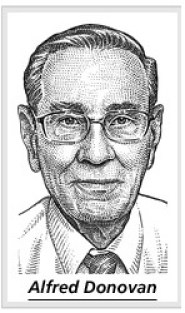 A head-cut image of Alfred Donovan (now deceased) appears courtesy of The Wall Street Journal.