Published: Sep 20, 2007
ANGOLA has launched its next hydrocarbon exploration licensing round with its ultra-deepwater blocks likely to be the pick of the bunch, writes Martyn Wingrove.
The West African country, which joined the Organisation of Petroleum Exporting Countries this year, wants to attract fresh investment from oil majors and smaller companies through this year’s round.
State oil firm Sonangol is offering 10 licences, including seven offshore and three land blocks, with tenders to be submitted in the fourth quarter.
Probably the most eagerly anticipated are ultra-deepwater blocks 46, 47 and 48, situated in the Lower Congo basin, west of BP’s prolific deepwater block 31.
These blocks cover 2,000-3,500 sq km of offshore acreage, which has not been drilled, but has some limited seismic information coverage.
The blocks are west of where BP has found more than 10 oil fields, which it is preparing to develop, probably using floating production, storage and offloading vessels.
It is likely that the oil majors already operating in Angola BP, ExxonMobil, Chevron, Marathon and Total and potentially those which do not work in the country, such as Shell, could tender for these blocks.
Sonangol is also re-offering three 4,800 sq km licences covering the Kwanza basin deepwater blocks 19, 20 and 21, and one shallow water licence covering block 9.
These are just off the coast of Luanda in an area where a few disappointing wells have been drilled. But independent oil companies may fancy their chances of discovering oil in these areas.
The three onshore blocks include one in Cabinda, which lies north of the Congo river, and two south of Luanda in the Bengo province.
The smaller independent explorers are likely to be interested in these blocks as operating costs will be lower.
Competing for all of this year’s blocks could be an array of state enterprises from oil consumers China and India.
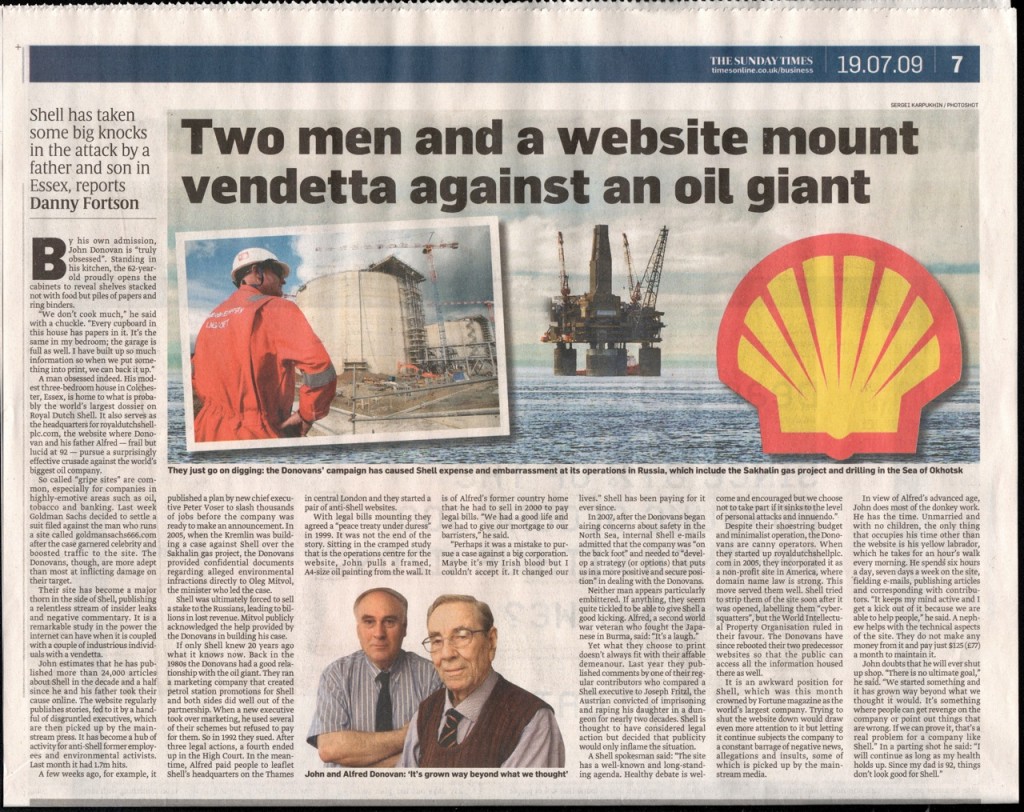
This website and sisters royaldutchshellplc.com, shellnazihistory.com, royaldutchshell.website, johndonovan.website, and shellnews.net, are owned by John Donovan. There is also a Wikipedia segment.


 Royal Dutch Shell conspired directly with Hitler, financed the Nazi Party, was anti-Semitic and sold out its own Dutch Jewish employees to the Nazis. Shell had a close relationship with the Nazis during and after the reign of Sir Henri Deterding, an ardent Nazi, and the founder and decades long leader of the Royal Dutch Shell Group. His burial ceremony, which had all the trappings of a state funeral, was held at his private estate in Mecklenburg, Germany. The spectacle (photographs below) included a funeral procession led by a horse drawn funeral hearse with senior Nazis officials and senior Royal Dutch Shell directors in attendance, Nazi salutes at the graveside, swastika banners on display and wreaths and personal tributes from Adolf Hitler and Reichsmarschall, Hermann Goring. Deterding was an honored associate and supporter of Hitler and a personal friend of Goring.

 Deterding was the guest of Hitler during a four day summit meeting at Berchtesgaden. Sir Henri and Hitler both had ambitions on Russian oil fields. Only an honored personal guest would be rewarded with a private four day meeting at Hitler’s mountain top retreat.


 IN JULY 2007, MR BILL CAMPBELL (ABOVE, A RETIRED GROUP AUDITOR OF SHELL INTERNATIONAL SENT AN EMAIL TO EVERY UK MP AND MEMBER OF THE HOUSE OF LORDS:


 MORE DETAILS:


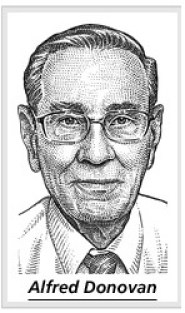 A head-cut image of Alfred Donovan (now deceased) appears courtesy of The Wall Street Journal.