July 25, 2007
Nick Hasell: Tempus
Rarely can results showing that a company has made £32 million a day be received with little more than a shrug of the shoulders in the City.
So if Tony Hayward was looking to calm the storm of controversy surrounding his new charge, he achieved it yesterday, with the straightforward delivery of a set of second-quarter numbers that contained not even the slightest hint of his future strategic thinking. The new chief executive’s main priority must simply be to buy more time to right the wrongs plaguing the £115 billion company.
At first glance, these were not immediately evident. At $5.3 billion (£2.6 billion), replacement cost net income came in 6 per cent ahead of consensus forecasts. However, that overshoot was helped by a lower than expected tax rate, and still represented a year-on-year fall of 13 per cent.
But the more egregious indicator of BP’s woes lay in its weakened cashflow, which, at $6.1 billion this time round, was 33 per cent lower than last year’s second quarter. BP’s problem has been the downstream disruption that has caused a slump in production. With oil prices at near-record levels, and refining margins having risen from about $3 a barrel to $17 a barrel over the past five years, this could not have come at a worse time. Meanwhile, it will not be until next year that Indiana’s Whiting, BP’s second-biggest refinery, will be back at full capacity.
In the interim, there are reasons to believe that the tide of bad news that has plagued BP – from Texas City to Alaska and the exit of Lord Browne of Madingley– will begin to reverse. Not least, the company is expected to begin production within the next three months at its Greater Plutonio development offshore Angola, one of BP’s major new, high-margin deepwater projects on which its recovery depends. But investors will need to see firmer signs of operational improvements before the shares, which have rallied nearly 19 per cent since March, go much higher. That requires other major new projects, such as Atlantis and Thunder Horse, to come on stream as planned, and for BP to find far more oil and gas. Until Britain’s biggest oil company can attract the City’s attention for the right reasons, BP, at 590p, or 11 times next year’s earnings, and yielding 3.4 per cent, does not appear obviously cheap. Shell, whose upstream attractions are clearer, remains a more certain bet.
http://business.timesonline.co.uk/tol/business/markets/article2135051.ece
This website and sisters royaldutchshellplc.com, shellnazihistory.com, royaldutchshell.website, johndonovan.website, and shellnews.net, are owned by John Donovan. There is also a Wikipedia segment.


 Royal Dutch Shell conspired directly with Hitler, financed the Nazi Party, was anti-Semitic and sold out its own Dutch Jewish employees to the Nazis. Shell had a close relationship with the Nazis during and after the reign of Sir Henri Deterding, an ardent Nazi, and the founder and decades long leader of the Royal Dutch Shell Group. His burial ceremony, which had all the trappings of a state funeral, was held at his private estate in Mecklenburg, Germany. The spectacle (photographs below) included a funeral procession led by a horse drawn funeral hearse with senior Nazis officials and senior Royal Dutch Shell directors in attendance, Nazi salutes at the graveside, swastika banners on display and wreaths and personal tributes from Adolf Hitler and Reichsmarschall, Hermann Goring. Deterding was an honored associate and supporter of Hitler and a personal friend of Goring.

 Deterding was the guest of Hitler during a four day summit meeting at Berchtesgaden. Sir Henri and Hitler both had ambitions on Russian oil fields. Only an honored personal guest would be rewarded with a private four day meeting at Hitler’s mountain top retreat.


 IN JULY 2007, MR BILL CAMPBELL (ABOVE, A RETIRED GROUP AUDITOR OF SHELL INTERNATIONAL SENT AN EMAIL TO EVERY UK MP AND MEMBER OF THE HOUSE OF LORDS:


 MORE DETAILS:


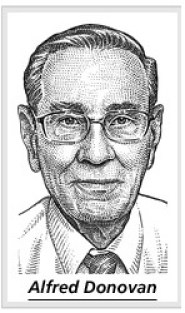 A head-cut image of Alfred Donovan (now deceased) appears courtesy of The Wall Street Journal.