
COMMENT FROM BREAKING VIEWS
As Oil Reserves Dwindle,
Giants Find That Size
Can Often Be a Liability
July 14, 2007; Page B14
Exxon Mobil this week became the first company worth more than $500 billion since the millennial stock boom burst. The Texas oil producer is now nearly twice as valuable as its nearest rival, Royal Dutch Shell. But the supermajor faces supersized obstacles if it ever hopes to become the world’s first $1 trillion company.
Size has traditionally been an advantage for Big Oil. As the world shrinks, the number of choice oil fields has diminished and new finds have become more expensive and complicated to tap. The trouble for Exxon chief Rex Tillerson is that to move the needle on a company bigger than most governments, he needs to broker ever larger deals.
Yet last year Exxon didn’t replace its reserves through the drill-bit for the first time, according to Oppenheimer research. That’s because more of the world’s oil reserves have become off limits to Exxon and other private drillers. Many are controlled by national oil companies, such as Saudi Arabia’s Aramco or Mexico’s Pemex. Expropriation by governments like Russia and Venezuela took other reserves off the market.
In the past, Exxon’s size gave it sufficient political sway to overcome such hurdles. Today, size may be a liability. It makes Exxon a continuing target for the environmental movement. And every time gas closes in on $3 a gallon, legislators talk of imposing windfall taxes. That’s not happened. But equally, Exxon has failed to persuade Congress to allow it to drill in Alaska and other environmentally sensitive places.
And where once Washington might have sent the Marines into a country that failed to honor its commercial agreements, all it could do when Hugo Chávez tore up Venezuela’s pact with Exxon and others was express disapproval. Mind you, that’s probably for the best. But Exxon rivals like Gazprom and PetroChina have effectively used their ambassadors to sign deals with foreign governments.
Moreover, as money has flowed to Russia and China, their domestic exploration companies increasingly have the resources to drill complicated wells in far off places, reducing Exxon’s competitive advantage. This may put Exxon in the position of having to spend more, and receive less, from its future projects. This would reduce its industry-leading returns on capital and impede its march to the head of the $1 trillion club.
–Cyrus Sanati, Rob Cox and Lauren Silva
• This column is written by breakingviews.com, an online financial commentary site.
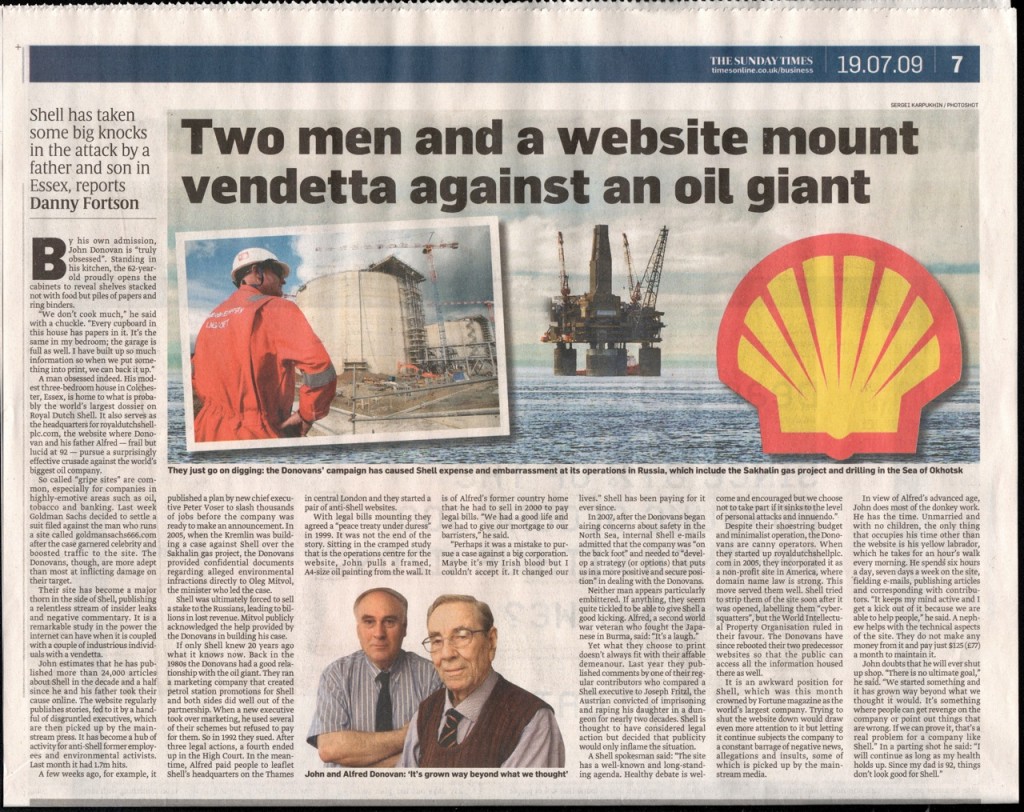
This website and sisters royaldutchshellplc.com, shellnazihistory.com, royaldutchshell.website, johndonovan.website, and shellnews.net, are owned by John Donovan. There is also a Wikipedia segment.


 Royal Dutch Shell conspired directly with Hitler, financed the Nazi Party, was anti-Semitic and sold out its own Dutch Jewish employees to the Nazis. Shell had a close relationship with the Nazis during and after the reign of Sir Henri Deterding, an ardent Nazi, and the founder and decades long leader of the Royal Dutch Shell Group. His burial ceremony, which had all the trappings of a state funeral, was held at his private estate in Mecklenburg, Germany. The spectacle (photographs below) included a funeral procession led by a horse drawn funeral hearse with senior Nazis officials and senior Royal Dutch Shell directors in attendance, Nazi salutes at the graveside, swastika banners on display and wreaths and personal tributes from Adolf Hitler and Reichsmarschall, Hermann Goring. Deterding was an honored associate and supporter of Hitler and a personal friend of Goring.

 Deterding was the guest of Hitler during a four day summit meeting at Berchtesgaden. Sir Henri and Hitler both had ambitions on Russian oil fields. Only an honored personal guest would be rewarded with a private four day meeting at Hitler’s mountain top retreat.


 IN JULY 2007, MR BILL CAMPBELL (ABOVE, A RETIRED GROUP AUDITOR OF SHELL INTERNATIONAL SENT AN EMAIL TO EVERY UK MP AND MEMBER OF THE HOUSE OF LORDS:


 MORE DETAILS:


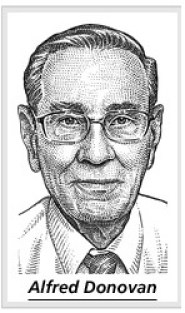 A head-cut image of Alfred Donovan (now deceased) appears courtesy of The Wall Street Journal.