
Royal Dutch Shell CEO, Jeroen van der Veer
Oman is set to become an important centre for developing economical and effective enhanced oil recovery (EOR), according to Royal Dutch Shell’s Chief Executive Jeroen van der Veer in a viewpoint article in Emerging Oman 2007, the authoritative publication produced by Oxford Business Group (OBG) the UK-based publishing, research and consultancy service.
‘Shell recently established an EOR research centre in the sultanate and Petroleum Development Oman (PDO) is undertaking a major EOR project to raise recovery at Harweel as much as fourfold. Another major EOR project, using steam to recover perhaps a billion barrels of oil, is also underway in the Mukhaizna field. This openness to new technology extends across all areas of operations and typifies Oman’s imaginative approach to the development of its natural resources,’ says Mr van der Veer.
EOR is vital for the Gulf region, Mr van der Veer points out, because energy demand is growing more quickly here than in any other part of the world.
‘We have to learn how to produce increasingly difficult and unconventional resources and to deliver over greater distances to meet the changing needs of consumers,’ he said.
‘Oman is an example to the world of how this can be done. There’s never been much easy oil or gas here. The country’s geology is complex and its resources can be difficult to produce. For example, at Harweel in the south of the country, there are some of the world’s earliest oil deposits. These salt-encased carbonate reservoirs are very deep, up to 5 km below the surface, with highly variable rock properties.”
‘Currently, normal production methods can only recover about a tenth of the oil in the ground. Developing economical and EOR techniques, using, heat, gas or chemicals to boost production will be essential. This openness to new technology extends across all areas of operations and typifies Oman’s imaginative approach to the development of its natural resources.’
Mr van der Veer concluded: ‘I believe that Oman’s long term approach of enabling investment, enhancing technological capabilities, and working in partnership with other countries is the only clear route to success.’
http://www.ameinfo.com/125879.html
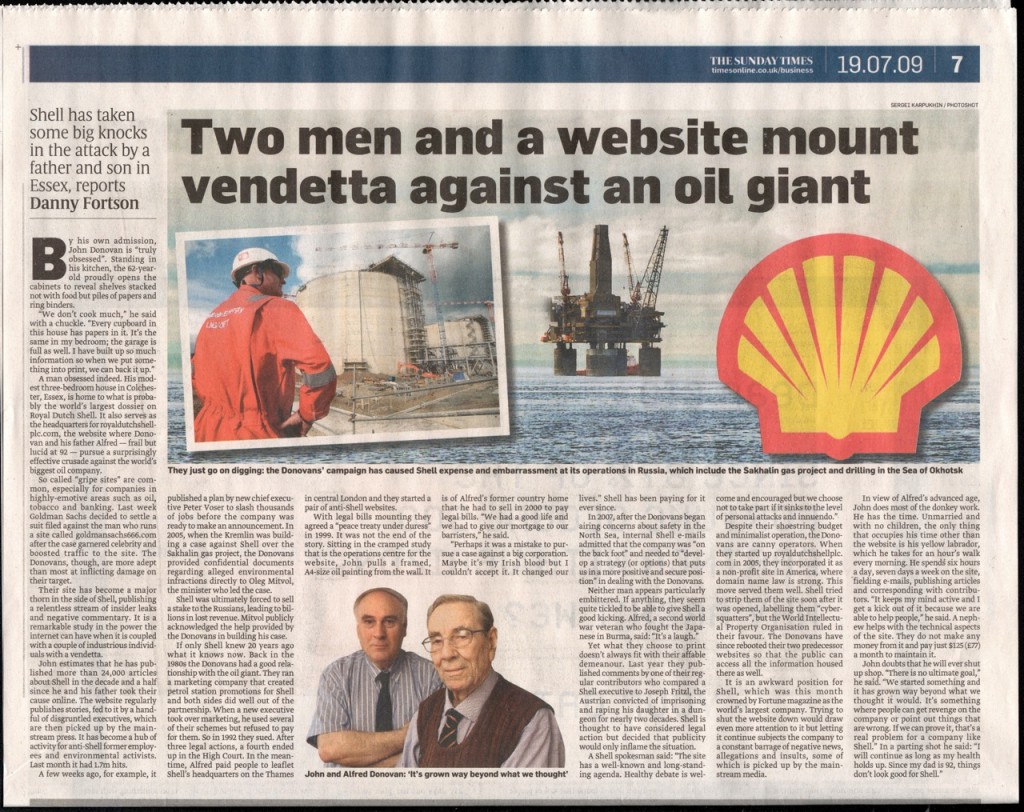
This website and sisters royaldutchshellplc.com, shellnazihistory.com, royaldutchshell.website, johndonovan.website, and shellnews.net, are owned by John Donovan. There is also a Wikipedia segment.


 Royal Dutch Shell conspired directly with Hitler, financed the Nazi Party, was anti-Semitic and sold out its own Dutch Jewish employees to the Nazis. Shell had a close relationship with the Nazis during and after the reign of Sir Henri Deterding, an ardent Nazi, and the founder and decades long leader of the Royal Dutch Shell Group. His burial ceremony, which had all the trappings of a state funeral, was held at his private estate in Mecklenburg, Germany. The spectacle (photographs below) included a funeral procession led by a horse drawn funeral hearse with senior Nazis officials and senior Royal Dutch Shell directors in attendance, Nazi salutes at the graveside, swastika banners on display and wreaths and personal tributes from Adolf Hitler and Reichsmarschall, Hermann Goring. Deterding was an honored associate and supporter of Hitler and a personal friend of Goring.

 Deterding was the guest of Hitler during a four day summit meeting at Berchtesgaden. Sir Henri and Hitler both had ambitions on Russian oil fields. Only an honored personal guest would be rewarded with a private four day meeting at Hitler’s mountain top retreat.


 IN JULY 2007, MR BILL CAMPBELL (ABOVE, A RETIRED GROUP AUDITOR OF SHELL INTERNATIONAL SENT AN EMAIL TO EVERY UK MP AND MEMBER OF THE HOUSE OF LORDS:


 MORE DETAILS:


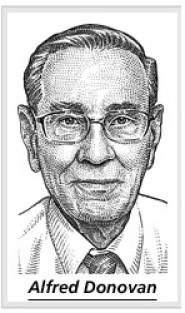 A head-cut image of Alfred Donovan (now deceased) appears courtesy of The Wall Street Journal.