By Javier Blas,Commodities Correspondent
Published: July 7 2007 03:00 | Last updated: July 7 2007 03:00
Oil prices rose above $76 a barrel yesterday to the highest level in 11 months amid renewed unrest in Nigeria and no prospect of a production increase by Opec, the oil cartel.
Low US petrol inventories ahead of an anticipated surge in demand during the summer holiday season provided additional support.
Analysts warned that further rises were likely as the Nigerian militant group responsible for most of the attacks on the oil industry called off a one-month truce. Attacks had cut about25 per cent of Nigeria’s oil output.
Costanza Jacazio of Barclays Capital in London said: “The situation in Nigeria is flaring up again.” The kidnap of a three-year-old British girl in the Nigerian oil city of Port Harcourt exacerbated the tension.
Frederic Lasserre, head of commodities at Société Générale in Paris, said: “In the short term, everything points up for prices.”
Shell, Nigeria’s largest foreign oil producer, said that it would not restart production in part of the delta region for the rest of 2007 as insecurity persisted.
ICE August Brent, seen as the best gauge of the oil market, surged to $76.01 a barrel, just $2.50 a barrel below the record high. It closed up 87 cents to $75.62 a barrel.
The price increase was accentuated by traders closing bets of a fall in prices ahead of the weekend. The fear of new attacks in Nigeria during the weekend forced the traders to take such action. US oil futures were up $1 at $72.81 a barrel.
The Organisation of the Petroleum Exporting Countries, which controls 43 per cent of global oil production, has so far resisted western calls to raise production amid high prices.
Leo Drollas, chief economist at the London-based Centre forGlobal Energy Studies, said: “Opec appears unwilling to contemplate raising output before its September meeting, a policy stance which will push prices higher.”
Since Opec started to cut its supply at the end of 2006, oil prices have surged by more than $15 a barrel. But oil demand has been robust. The International Energy Agency, the industrialised countries’ energy watchdog, forecast global 2006 oil demand growth at 1.7m barrels a day, up from 0.8m b/d in 2005.
Copyright The Financial Times Limited 2007
This website and sisters royaldutchshellplc.com, shellnazihistory.com, royaldutchshell.website, johndonovan.website, and shellnews.net, are owned by John Donovan. There is also a Wikipedia segment.


 Royal Dutch Shell conspired directly with Hitler, financed the Nazi Party, was anti-Semitic and sold out its own Dutch Jewish employees to the Nazis. Shell had a close relationship with the Nazis during and after the reign of Sir Henri Deterding, an ardent Nazi, and the founder and decades long leader of the Royal Dutch Shell Group. His burial ceremony, which had all the trappings of a state funeral, was held at his private estate in Mecklenburg, Germany. The spectacle (photographs below) included a funeral procession led by a horse drawn funeral hearse with senior Nazis officials and senior Royal Dutch Shell directors in attendance, Nazi salutes at the graveside, swastika banners on display and wreaths and personal tributes from Adolf Hitler and Reichsmarschall, Hermann Goring. Deterding was an honored associate and supporter of Hitler and a personal friend of Goring.

 Deterding was the guest of Hitler during a four day summit meeting at Berchtesgaden. Sir Henri and Hitler both had ambitions on Russian oil fields. Only an honored personal guest would be rewarded with a private four day meeting at Hitler’s mountain top retreat.


 IN JULY 2007, MR BILL CAMPBELL (ABOVE, A RETIRED GROUP AUDITOR OF SHELL INTERNATIONAL SENT AN EMAIL TO EVERY UK MP AND MEMBER OF THE HOUSE OF LORDS:


 MORE DETAILS:


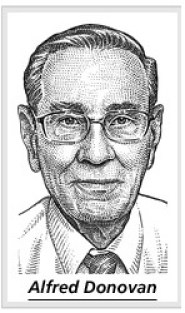 A head-cut image of Alfred Donovan (now deceased) appears courtesy of The Wall Street Journal.