Headline: The Power of Perception
Consumers are flooded by corporate marketing campaigns linking to social issues.
Indeed, the public now expects just about every company to be allied with a cause, according to Carol Cone, whose brand-strategy firm recently conducted a survey on cause-related marketing. The best corporate reputation belongs to Microsoft Corporation, according to one of the oldest and most respected indexes from Delahaye. It’s top spot is cemented by its well-publicized philanthropy.
A more sophisticated understanding of the power of perception is starting to take hold among savvy corporations. More are finding that the way in which the outside world expects a company to behave and perform can be its most important asset. A company’s reputation for being able to deliver growth, attract top talent, and avoid ethical mishaps can account for much of the 30%-to-70% gap between the book value of most companies and their market capitalizations.
A company’s message must be grounded in reality and its reputation is built over years. In the late 1990s, investors began to recognize reputation was in part responsible for the sky-high market values of the likes of Cisco Systems and Amazon.com Inc., companies with relatively few brick-and-mortar assets such as factories, machines and real estate.
Interest really took off after the tech bust and accounting scandals of 2001, which made investors more aware of risks if a company’s reputation is trashed by governance and leadership lapses. Companies also realized their shares were increasingly vulnerable to negative publicity over employee and social practices.
Reputation is a big reason Johnson & Johnson trades at a much higher price-earnings ratio than Pfizer, Procter & Gamble than Unilever and Exxon Mobil than Royal Dutch Shell. And while the value of a reputation is vastly less tangible than property, revenue or cash, more experts are arguing it is possible not only to quantify it but even to predict how image changes in specific areas will harm or hurt the share price.
Source: BusinessWeek, July 9, 2007
http://www.businessweek.com/magazine/content/07_28/b4042050.htm?campaign_id=rss_magzn
Online Extra: Slide Show: Reputation Role ReversalGraphic: The Value Of Perception
Graphic: Message Behind The Message
http://coachingtip.blogs.com/coaching_tip/2007/06/the-power-of-pe.html
This website and sisters royaldutchshellplc.com, shellnazihistory.com, royaldutchshell.website, johndonovan.website, and shellnews.net, are owned by John Donovan. There is also a Wikipedia segment.


 Royal Dutch Shell conspired directly with Hitler, financed the Nazi Party, was anti-Semitic and sold out its own Dutch Jewish employees to the Nazis. Shell had a close relationship with the Nazis during and after the reign of Sir Henri Deterding, an ardent Nazi, and the founder and decades long leader of the Royal Dutch Shell Group. His burial ceremony, which had all the trappings of a state funeral, was held at his private estate in Mecklenburg, Germany. The spectacle (photographs below) included a funeral procession led by a horse drawn funeral hearse with senior Nazis officials and senior Royal Dutch Shell directors in attendance, Nazi salutes at the graveside, swastika banners on display and wreaths and personal tributes from Adolf Hitler and Reichsmarschall, Hermann Goring. Deterding was an honored associate and supporter of Hitler and a personal friend of Goring.

 Deterding was the guest of Hitler during a four day summit meeting at Berchtesgaden. Sir Henri and Hitler both had ambitions on Russian oil fields. Only an honored personal guest would be rewarded with a private four day meeting at Hitler’s mountain top retreat.


 IN JULY 2007, MR BILL CAMPBELL (ABOVE, A RETIRED GROUP AUDITOR OF SHELL INTERNATIONAL SENT AN EMAIL TO EVERY UK MP AND MEMBER OF THE HOUSE OF LORDS:


 MORE DETAILS:


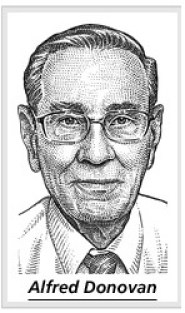 A head-cut image of Alfred Donovan (now deceased) appears courtesy of The Wall Street Journal.