Published: June 27 2007 20:05 | Last updated: June 27 2007 20:05
What links the world’s largest listed company, riots in Tehran, and political attacks on the private equity industry? The curious, and longstanding relationship between politics and Big Oil.
High crude prices stoke not just the profits of oil companies, but also politicians’ blood pressure – and ambitions. The latest round of nationalisation in Venezuela’s oil fields, edging out ExxonMobil, reflects this: when the profit pie gets bigger, resource-rich governments push for a bigger slice. Yet it also excites US politicians, which is also risky.
Congress is currently debating energy reforms that envision a US that is energy independent and “carbon-lite”, yet still enjoys low fuel prices. It is also taking a swipe at Big Oil’s cash flows through proposed windfall taxes. Calling on consumers to use less fuel without a significant increase in price is a doomed strategy. Witness Iranian drivers who, after years of profligate petrol consumption on the back of subsidised prices, are up in arms after the government’s introduction of rationing to ease capacity constraints.
The grandstanding in Washington’s current energy debate – including spurious calls to sue the Organisation of the Petroleum Exporting Countries for price manipulation – should have investors worried. The mood on Capitol Hill is not just pro-green and anti-oil. A wider focus on “fairness” has shown up in attacks on private equity’s favourable tax status – one worry weighing on Blackstone’s newly minted stock. Yet one year’s worth of net income at Exxon outstrips Blackstone’s entire market capitalisation. So even if it is simple supply and demand that really determines pump prices, calls to punish oil companies for supposed price gouging are beguiling. Venezuela may be at the bleeding edge of resource nationalism. But even in “market-friendly” regimes such as the US, Big Oil makes for a juicy target.
Copyright The Financial Times Limited 2007


 Royal Dutch Shell conspired directly with Hitler, financed the Nazi Party, was anti-Semitic and sold out its own Dutch Jewish employees to the Nazis. Shell had a close relationship with the Nazis during and after the reign of Sir Henri Deterding, an ardent Nazi, and the founder and decades long leader of the Royal Dutch Shell Group. His burial ceremony, which had all the trappings of a state funeral, was held at his private estate in Mecklenburg, Germany. The spectacle (photographs below) included a funeral procession led by a horse drawn funeral hearse with senior Nazis officials and senior Royal Dutch Shell directors in attendance, Nazi salutes at the graveside, swastika banners on display and wreaths and personal tributes from Adolf Hitler and Reichsmarschall, Hermann Goring. Deterding was an honored associate and supporter of Hitler and a personal friend of Goring.

 Deterding was the guest of Hitler during a four day summit meeting at Berchtesgaden. Sir Henri and Hitler both had ambitions on Russian oil fields. Only an honored personal guest would be rewarded with a private four day meeting at Hitler’s mountain top retreat.


 IN JULY 2007, MR BILL CAMPBELL (ABOVE, A RETIRED GROUP AUDITOR OF SHELL INTERNATIONAL SENT AN EMAIL TO EVERY UK MP AND MEMBER OF THE HOUSE OF LORDS:


 MORE DETAILS:


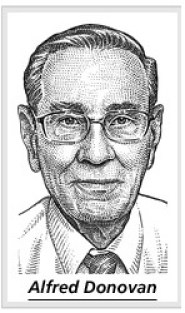 A head-cut image of Alfred Donovan (now deceased) appears courtesy of The Wall Street Journal.