
June 22, 2007
Nigeria’s President Umar Yar’Adua came into office on May 29 after a sham ballot a month earlier. Africa’s most populous and oil-rich country isn’t easy to govern in the best of times, but the new President is fast learning that it’s near impossible without political legitimacy.
The immediate crisis is a nationwide strike, which is paralyzing Nigeria and raising further questions about its reliability as a petroleum supplier. The outcome will help determine if Mr. Yar’Adua can govern the country.
Two weeks ago the Nigeria Labour Congress promised to strike unless fuel-price increases, a new VAT and the sale of two refineries to a political ally of former President Olusegun Obasanjo were not reversed. The federation of labor unions was also hankering for a 15% increase in civil service salaries, approved in January but never put into practice. On Wednesday, the NLC’s five million members went on strike. Now into its third day, the strike has emptied the streets and businesses of Nigeria’s cities and towns.
Politicians have given Nigerians little to cheer about. Since independence in 1960, they have robbed the country of billions of petrodollars, leaving the average Nigerian worse off than before the oil boom began in the 1970s. Mr. Obasanjo made progress in improving governance and eventually abided by a Senate decision that he should step down after two terms.
But the Obasanjo government had only limited success in reducing corruption and strengthening democracy. Thirty-one of the 36 state governors are being investigated for corruption. At least someone’s investigating, say optimists. But the spring presidential elections were the bigger disappointment. Meant to seal Nigeria’s first peaceful transfer of civilian power, the poll was so rife with irregularities and outright fraud that many observers called for a redo. None came.
The strike reflects the frustration of many Nigerians with their rulers and in particular former President Obasanjo, who handpicked Mr. Yar’Adua, a former state governor. The unions say the oil-price hikes were hastily pushed through in the last few days of Mr. Obasanjo’s term without being approved by the appropriate state agency. Since many Nigerians consider cheap fuel to be the only benefit they reap from their country’s oil wealth, losing it and the two refineries to Obasanjo cronies didn’t go down well.
To survive, Mr. Yar’Adua will have to break with the recent past. He tried to convince the unions that he is a new man by distancing himself from his predecessor’s policy. He offered to reduce Mr. Obasanjo’s fuel-price hikes by half, eliminate the VAT altogether, and come through with a 15% salary increase for civil service workers. The unions said it wasn’t enough.
The bigger test for the new President will be to make real progress on corruption. Mr. Obasanjo got the ball rolling, setting up the Economic and Financial Crimes Commission in 2004. Mr. Yar’Adua can keep up the pressure by allocating more resources to investigations and trials and not shying away from politically sensitive cases. He could also let the judiciary, which remains miraculously independent, go forward with challenges to the outcome of several gubernatorial races, even though his party will probably lose in some cases.
If this week’s strike goes on for more than a few days, oil supplies could be affected. Oil majors are already on alert in the volatile oil-producing Niger River Delta, and this week Shell, the oldest and largest stakeholder in Nigeria, said it would cut back operations and rethink its strategy.
The root of the Nigerian disease is weak institutions and shoddy governance. After dealing with the immediate crisis, Mr. Yar’Adua’s job will only get harder.
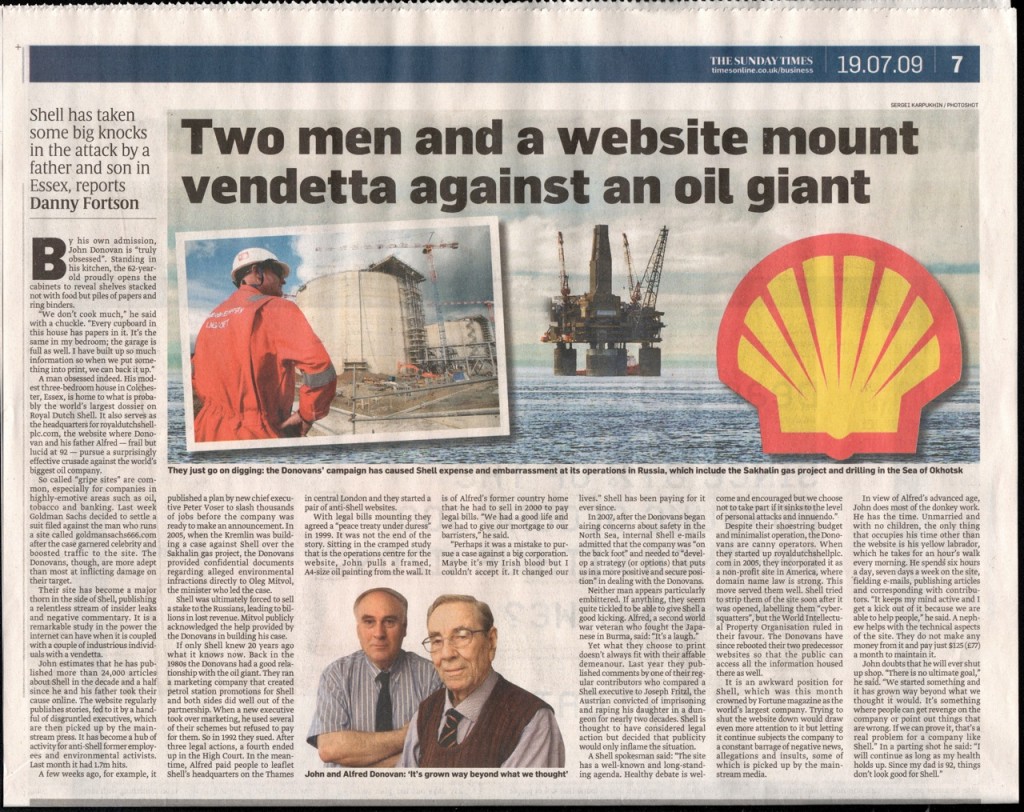
This website and sisters royaldutchshellplc.com, shellnazihistory.com, royaldutchshell.website, johndonovan.website, and shellnews.net, are owned by John Donovan. There is also a Wikipedia segment.


 Royal Dutch Shell conspired directly with Hitler, financed the Nazi Party, was anti-Semitic and sold out its own Dutch Jewish employees to the Nazis. Shell had a close relationship with the Nazis during and after the reign of Sir Henri Deterding, an ardent Nazi, and the founder and decades long leader of the Royal Dutch Shell Group. His burial ceremony, which had all the trappings of a state funeral, was held at his private estate in Mecklenburg, Germany. The spectacle (photographs below) included a funeral procession led by a horse drawn funeral hearse with senior Nazis officials and senior Royal Dutch Shell directors in attendance, Nazi salutes at the graveside, swastika banners on display and wreaths and personal tributes from Adolf Hitler and Reichsmarschall, Hermann Goring. Deterding was an honored associate and supporter of Hitler and a personal friend of Goring.

 Deterding was the guest of Hitler during a four day summit meeting at Berchtesgaden. Sir Henri and Hitler both had ambitions on Russian oil fields. Only an honored personal guest would be rewarded with a private four day meeting at Hitler’s mountain top retreat.


 IN JULY 2007, MR BILL CAMPBELL (ABOVE, A RETIRED GROUP AUDITOR OF SHELL INTERNATIONAL SENT AN EMAIL TO EVERY UK MP AND MEMBER OF THE HOUSE OF LORDS:


 MORE DETAILS:


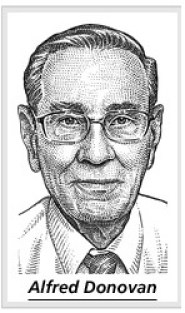 A head-cut image of Alfred Donovan (now deceased) appears courtesy of The Wall Street Journal.



To understand the predicament of President Omar Yar’Adua of Nigeria, please read about “Ali Baba and the 40 Thieves”.
The new administration of President Omar Yar’Adua of the ruling People’s Democratic Party (PDP) is now at the mercy of the trade unions as the nationwide strike against hikes in the prices of petroleum products and Value Added Tax (VAT) enters the third day Friday. The government has already conceded to suspend the increase of VAT, but has not reverted to the old price of N65 per litre of gasoline. And the leadership of the striking trade unions has insisted on the old price of N65 per litre. The President of the Nigeria Labour Congress (NLC), Comrade Abdulwaheed Omar and President of the Trade Union Congress (TUC), Comrade Peter Esele, said the industrial action would continue until the Federal Government reverts pump price of petrol from N75 to N65.
The NLC and TUC have won the support of the majority of the population. And they issued a joint press statement to commend Nigerians for the high level of compliance, mass support, and participation across the 36 states and Abuja, the Federal Capital Territory.
The government has accused the NLC and civil rights groups of politicizing the issues raised over the hikes in the pump price of fuel, VAT and workers welfare. Because, the NLC and allied bodies publicly rejected the controversial results of the last presidential election and refused to support the inauguration of the new government of the brazenly corrupt ruling People’s Democratic Party (PDP) of Nigeria.
The disputes over the hikes in the VAT and pump price of gasoline products were caused by the last President, the unpopular Chief Olusegun Obasanjo, who had increased VAT and the pump price of petrol without following the due process. And with only a week to the end of his administration, he quickly sold off the Kaduna and Port Harcourt refineries to two of his cronies and sold other priced government assets to his proxies and political supporters. But the troubles of the new President, Alhaji Omar Yar’Adua started, when he decided to continue with the unpopular political and economic legacies of Chief Olusegun Obasanjo.
The Voice Of America reported Friday, that Mr. Bernard Ugbi, the Assistant General Secretary of the Nigeria National Union of Petroleum and Gas Workers warned that things could get far worse by Friday.
“We just hope that the government will see reason with labor and come to terms with the demands of labor. But if not, it is escalating, and it would be so difficult if it enters into the weekend because right now all filling stations all over the country are being shut down. It then means that the whole streets will be empty. And even the banks are being closed down. And so, these are the effects that will come if the government does not come to terms with labor. “In fact, you have the National Union of Electricity Employees. They are the ones that handle electricity. You have the amalgamated workers’ union who are handling water areas. So all those areas, they will shut down,” Ugbi, said in an interview with the VOA.
The nationwide strike has crippled business activities as public schools, public offices, banks, and most private businesses have been closed. Some public taxis and transport buses are still running with some local and international flights. But many flights have been postponed or cancelled. Economists say Nigeria will be losing about N50.5-billion daily until the strike ends.
The success of the strike has confirmed that the new government of the ruling People’s Democratic Party (PDP) of Nigeria did not secure the mandate of the electorate at the last elections.