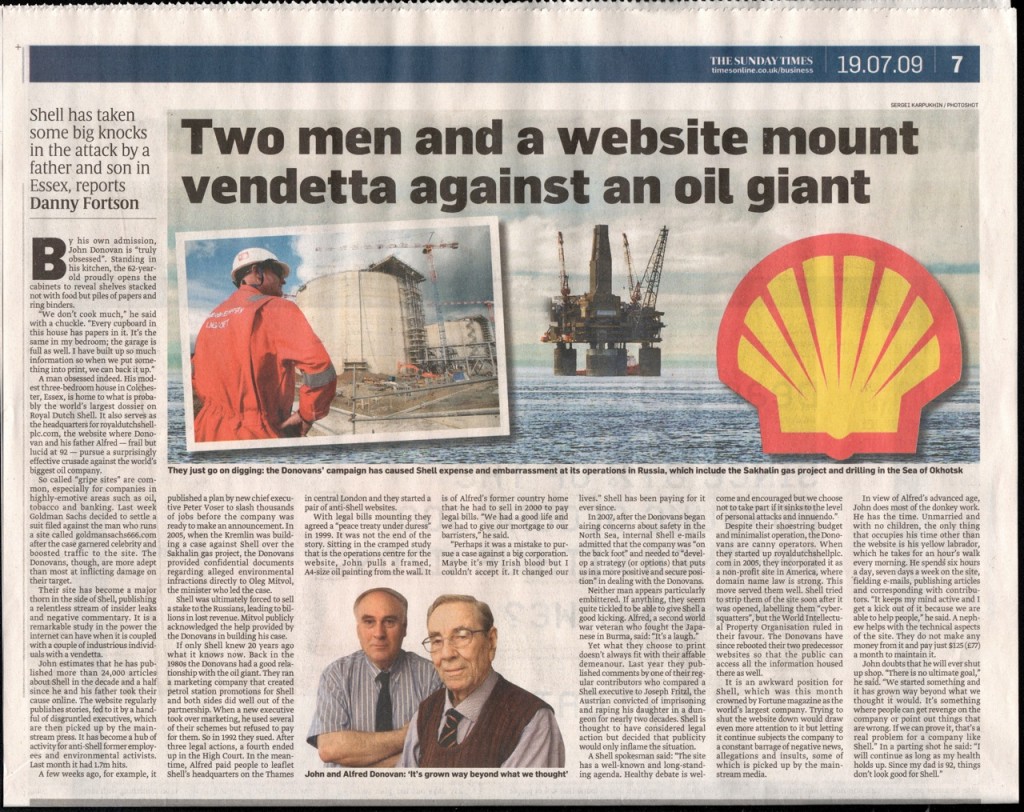
EXTRACT: Royal Dutch Shell recently amended its charter to provide for certain shareholder disputes to be handled outside of the court system, raising little public alarm.
June 22, 2007; Page A10
Hear ye, hear ye, Democrats are having a worthwhile debate on financial regulation. To witness this marvel, check out the party’s current intramural dispute over the perils facing the U.S. capital markets.
In one corner is Chuck Schumer, Senator from New York, the former financial capital of the world. In the other is Massachusetts’s Barney Frank, chairman of the House Financial Services Committee, who next week will host a political spectacle, er, hearing on whether a GOP-led Securities and Exchange Commission has slackened enforcement and investor protection. All five SEC Commissioners have been “invited” to testify — something that hasn’t happened in a decade.
Among Mr. Frank’s “concerns” are reports that the SEC might let shareholders decide to handle future investor complaints by arbitration rather than a class-action lawsuit. The trial lawyers, who lavish campaign cash on Democrats, want Mr. Frank to kill any possibility of this modest reform lest it curb their litigation machine.
Enter Mr. Schumer and his ally, New York Mayor Mike Bloomberg, co-sponsors of a report on the challenges facing U.S. capital markets. They have offered grim news on the declining attractiveness of a U.S. stock listing for international companies, citing excessive litigation in particular. In 2006 alone, U.S. companies shouldered $17 billion in settlements of lawsuits brought in the name of shareholders, though usually with a class-action law firm as a chief beneficiary. That same year, Wall Street got only 7.2% of all initial public offerings world-wide, down from 50% in 1999. Coincidence? Even scourge of Wall Street turned New York Governor Eliot Spitzer is calling for reform.
Meanwhile, Mr. Frank has cast himself as the defender of shareholder rights — a peculiar notion in this context. In shareholder lawsuits, any verdict or settlement against a company ends up coming out of the pockets of shareholders. If deterring or punishing management wrongdoing against shareholders is the goal, why are investors being punished twice? And few forms of litigation are more racket-ready: Firms routinely settle out of necessity, unwilling to litigate while their stock prices are held hostage to years of legal uncertainty. But in a letter to SEC Chairman Chris Cox, Mr. Frank has objected to what he called the “drastic change” an arbitration allowance would create.
Really? One question here is whether the SEC needs to “allow” anything at all. The charter of a company is nothing more than a contract among its owners. When companies go public, they spell out the rights of shareholders in their charters, and investors are free to buy or not. Companies can’t make changes to their charters unless a majority of shareholders agree. Royal Dutch Shell recently amended its charter to provide for certain shareholder disputes to be handled outside of the court system, raising little public alarm.
Some litigation critics like Harvard’s Hal Scott — who wrote the recent Committee on Capital Markets Regulation report calling for tort reform — still have doubts about whether new companies should be allowed to adopt an arbitration requirement when they go public. Better, he argues, for the SEC to step aside and let shareholders vote on the matter after a few months. The SEC has also long blocked public offerings with arbitration provisions. But we’d argue that permitting them would be one of the best ways to test the market’s acceptance of such charters. IPOs are deeply scrutinized by knowledgeable investors and fund managers as they decide whether to buy in.
By the way, Mr. Frank, aided by Democratic Senators Pat Leahy and Russ Feingold, is also using his new power to try to roll back an existing arbitration system that adjudicates disputes between brokerage firms and their clients. That’s a longtime dream of the trial bar, which would have loved to bring a class-action lawsuit against all of Wall Street after the dot-com meltdown.
Mr. Frank has said this experience was “instructive” regarding arbitration. But there’s really no connection. Investors ultimately would be in charge of whether listed companies adopt arbitration for shareholder complaints. If such provisions were seen as shielding companies from costly shakedowns by the trial bar, their value would be welcomed, and popularized. If arbitration ended up protecting corrupt management from accountability, the opposite would occur.
Corporate critics like to talk about “shareholder democracy.” Perhaps they should have the courage of their sloganeering and let the lawsuits-versus-arbitration issue be decided by the only people whose interests are legitimately implicated in the choice. That means shareholders. As for Senator Schumer, we’re with you on this one, sir. If you meant what you said about excessive litigation, now would be a good time to speak up.
This website and sisters royaldutchshellplc.com, shellnazihistory.com, royaldutchshell.website, johndonovan.website, and shellnews.net, are owned by John Donovan. There is also a Wikipedia segment.


 Royal Dutch Shell conspired directly with Hitler, financed the Nazi Party, was anti-Semitic and sold out its own Dutch Jewish employees to the Nazis. Shell had a close relationship with the Nazis during and after the reign of Sir Henri Deterding, an ardent Nazi, and the founder and decades long leader of the Royal Dutch Shell Group. His burial ceremony, which had all the trappings of a state funeral, was held at his private estate in Mecklenburg, Germany. The spectacle (photographs below) included a funeral procession led by a horse drawn funeral hearse with senior Nazis officials and senior Royal Dutch Shell directors in attendance, Nazi salutes at the graveside, swastika banners on display and wreaths and personal tributes from Adolf Hitler and Reichsmarschall, Hermann Goring. Deterding was an honored associate and supporter of Hitler and a personal friend of Goring.

 Deterding was the guest of Hitler during a four day summit meeting at Berchtesgaden. Sir Henri and Hitler both had ambitions on Russian oil fields. Only an honored personal guest would be rewarded with a private four day meeting at Hitler’s mountain top retreat.


 IN JULY 2007, MR BILL CAMPBELL (ABOVE, A RETIRED GROUP AUDITOR OF SHELL INTERNATIONAL SENT AN EMAIL TO EVERY UK MP AND MEMBER OF THE HOUSE OF LORDS:


 MORE DETAILS:


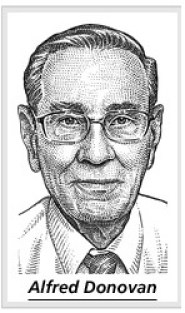 A head-cut image of Alfred Donovan (now deceased) appears courtesy of The Wall Street Journal.