Financial Times
Published: Jun 19, 2007
Rex Tillerson
Chairman, ExxonMobil
The appointment of Rex Tillerson, 55, to succeed Lee Raymond at the beginning of 2006 was a vote for continuity at the top of one of the world’s most succesful businesses.
A 30-year Exxon veteran, who was previously the group’s president, he has taken over a company that had established a reputation for industry-leading engineering competence and reliability, and a production growth outlook that is better than almost all of its “super-major” rivals among the international oil companies.
A telling case study of Exxon’s effectiveness has been the progress of its Sahkalin 1 project off Russia’s far eatsern coast, which has – so far – been relatively smooth compared with the agonies suffered by Royal Dutch Shell’s Sakhalin 2.
In one respect, however, Mr Tillerson has marked a break with the past: he has changed the tone of the company’s discussions of global warming.
Where Mr Raymond was an outspoken sceptic, Mr Tillerson has said: “There is no question that the world’s climate is getting warmer,” although he has also talked about “differences” of opinion as to what is happening.
Alexei Miller
Chief executive, Gazprom
Alexei Miller, 45, was appointed chief executive of Gazprom in 2001 by his old friend Vladimir Putin, a year after Mr Putin was elected president.
The two men had worked together on the St Petersburg City Council in the 1990s.
Under Mr Miller’s leadership, Gazprom has drawn mounting criticism for its treatment of trading partners, cutting off gas supplies to pursue disputes, and for failing to invest enough to provide the gas that Russia needs.
Analysts have argued that the company is a tool of the Russian government, which owns a controlling stake. Vladimir Milov, head of the Institute for Energy Policy, a Moscow think-tank, told the FT last year: “Putin effectively controls the company and makes all key decisions about its strategy.”
Last November, the grip of Mr Putin’s allies on the company was tightened when Alexander Ryazanov, was dismissed and replaced as deputy chief executive by Valery Golubev, another former colleague of Mr Putin on St Petersburg’s City Council.
Persistent speculation suggests that Mr Putin may join Mr Miller as Gazprom’s chairman when he leaves the presidency next year; perhaps as an interlude before returning as president, as Russia’s constitution allows, in 2012.
Christophe de Margerie
Chief executive, Total
When Christophe de Margerie, 55, known as “the Big Moustache”, took over from Thierry Desmaret as chief executive of Total in February, the company won plaudits for the smoothness of the transition.
A month later, that impression was tarnished when Mr de Margerie was detained for questioning by investigators looking into possible corruption related to a deal in Iran in 1997.
Mr de Margerie was also questioned last October over alleged corruption in Iraq between 1996 and 2002.
He and the company denied any wrongdoing, and investors have shown no sign of taking fright, but the investigations are likely to continue to cast a shadow over the company for some time to come. Speaking to the FT as he took over, Mr de Margerie said Total would carry on dealing with countries such as Iraq and Iran.
“I believe the only chance in the world is through communication, contact and by trying to persuade people,” he said.
“It is true that then you meet people who might not be of the acceptable standard and then others tell you that you are not doing things properly. I can tell you, I don’t care about it, except if it has an impact on my company.”
Paolo Scaroni
Chief executive, Eni
Paolo Scaroni, 60, is unusual among the leaders of major oil companies in not having spent a lifetime in the industry, but Eni is an unusual company in its mix of upstream activities with a downstream gas supply business.
“Imagine Total plus Gaz de France”, Mr Scaroni likes to say, although Eni is not as large as the behemoth this image would suggest. After a brief stint with Chevron before business school, he worked for 12 years for Saint-Gobain.
He was appointed to run Eni in 2005 having been chief executive of Enel, the electricity company.
At a time when western oil companies have generally been cautious about doing deals, Eni has been on an expansion drive, most recently spending $4.8bn for assets in the Gulf of Mexico, joining Enel to pay a maximum of almost $6bn for Yukos assets being auctioned in Russia, and agreeing to take a stake in a liquefied natural gas project in Angola.
Mr Scaroni’s most controversial move, however, was signing a long-term gas supply deal with Gazprom, as part of a broader strategy pact.
European Union officials have warned that bilateral deals with Gazprom undermine the EU’s efforts to form a common policy towards Russia.
This website and sisters royaldutchshellplc.com, shellnazihistory.com, royaldutchshell.website, johndonovan.website, and shellnews.net, are owned by John Donovan. There is also a Wikipedia segment.


 Royal Dutch Shell conspired directly with Hitler, financed the Nazi Party, was anti-Semitic and sold out its own Dutch Jewish employees to the Nazis. Shell had a close relationship with the Nazis during and after the reign of Sir Henri Deterding, an ardent Nazi, and the founder and decades long leader of the Royal Dutch Shell Group. His burial ceremony, which had all the trappings of a state funeral, was held at his private estate in Mecklenburg, Germany. The spectacle (photographs below) included a funeral procession led by a horse drawn funeral hearse with senior Nazis officials and senior Royal Dutch Shell directors in attendance, Nazi salutes at the graveside, swastika banners on display and wreaths and personal tributes from Adolf Hitler and Reichsmarschall, Hermann Goring. Deterding was an honored associate and supporter of Hitler and a personal friend of Goring.

 Deterding was the guest of Hitler during a four day summit meeting at Berchtesgaden. Sir Henri and Hitler both had ambitions on Russian oil fields. Only an honored personal guest would be rewarded with a private four day meeting at Hitler’s mountain top retreat.


 IN JULY 2007, MR BILL CAMPBELL (ABOVE, A RETIRED GROUP AUDITOR OF SHELL INTERNATIONAL SENT AN EMAIL TO EVERY UK MP AND MEMBER OF THE HOUSE OF LORDS:


 MORE DETAILS:


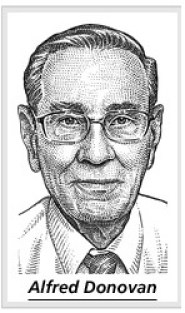 A head-cut image of Alfred Donovan (now deceased) appears courtesy of The Wall Street Journal.