By David Lee Smith June 19, 2007
Amid the endless stream of news we receive from Iraq, far too little seems to involve the country’s crucial role in the world of energy.
Iraq holds a long-standing and strategically important position in oil and gas, since international giants BP (NYSE: BP) and Royal Dutch Shell (NYSE: RDS-A) (NYSE: RDS-B) began operating there decades ago. The nation sits in a vital location, with Saudi Arabia to its south, Iran to its east, and Syria and Turkey to its north. Its lower flank straddles the Persian Gulf, making it reasonably accessible to Bahrain and Qatar.
From a purely numerical perspective, Iraq currently produces about 1.9 million barrels of oil on good days, roughly 25% less than its prewar rate. Indeed, as The Wall Street Journal noted last month, thefts of crude from pipelines in and around its northern fields have essentially crippled production in that area, a phenomenon that has prompted a U.S. Army artillery battalion to maintain pipeline security in the area around Kirkuk.
Nevertheless, that area is producing only about 180,000 barrels a day, compared to a rated capacity closer to 600,000 daily barrels.
With oil wells ranging from north to south throughout most of the nation, Iraq probably has about 115 billion barrels of proved reserves. Among OPEC nations, that’s less than half of Saudi Arabia’s 264 billion barrels, and about 85% of Iran’s 136 billion barrels. But it’s almost half Venezuela’s level, and more than three times Nigeria’s complement.
In our world of tight balances between crude oil’s supply and demand, it seems to me that, politics aside, the United States must treat Iraq and its entire energy-rich region very carefully. The status quo there is unacceptable to many observers, but any further decline in its status could threaten not only Iraq’s oil production, but that of Saudi Arabia and Iran as well. That’s roughly half of OPEC’s daily output at stake.
In the years ahead, I believe easy answers about the global energy market will be ever harder to find. That’s why I’d continue to urge Fools to save a place in their portfolios for major, geographically diverse oil producers, including ExxonMobil (NYSE: XOM), ConocoPhillips (NYSE: COP), Chevron (NYSE: CVX), or BP.
http://www.fool.com/investing/international/2007/06/19/iraq-stuck-in-the-middle-with-you.aspx
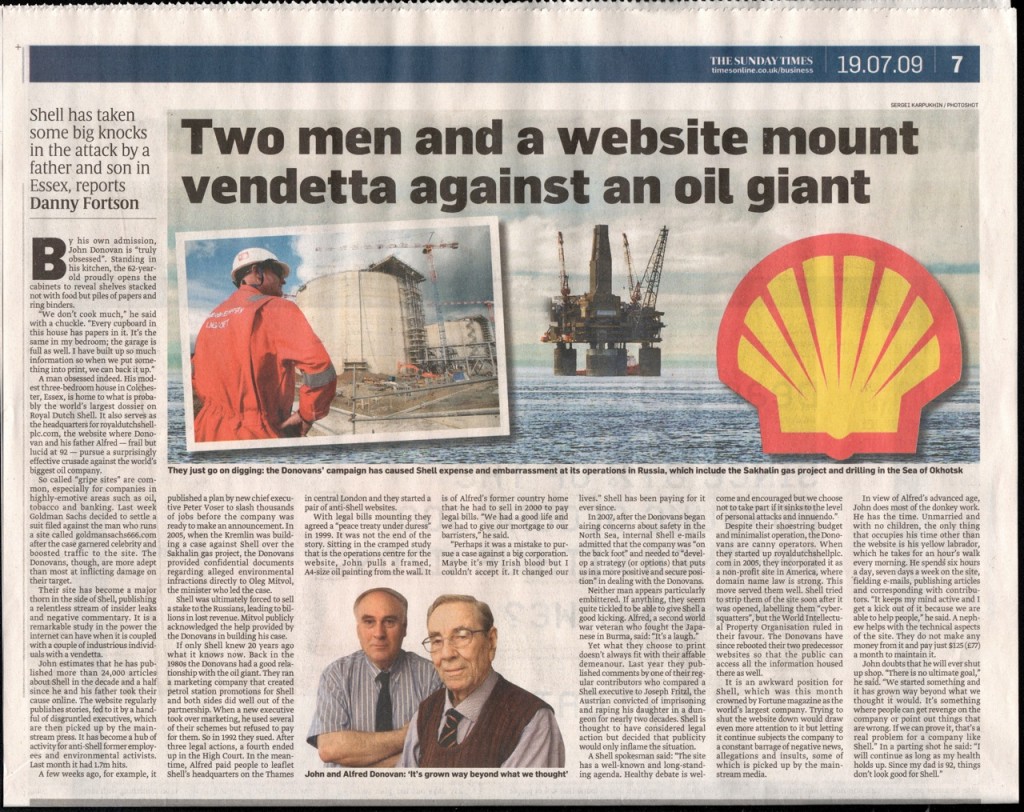
This website and sisters royaldutchshellplc.com, shellnazihistory.com, royaldutchshell.website, johndonovan.website, and shellnews.net, are owned by John Donovan. There is also a Wikipedia segment.


 Royal Dutch Shell conspired directly with Hitler, financed the Nazi Party, was anti-Semitic and sold out its own Dutch Jewish employees to the Nazis. Shell had a close relationship with the Nazis during and after the reign of Sir Henri Deterding, an ardent Nazi, and the founder and decades long leader of the Royal Dutch Shell Group. His burial ceremony, which had all the trappings of a state funeral, was held at his private estate in Mecklenburg, Germany. The spectacle (photographs below) included a funeral procession led by a horse drawn funeral hearse with senior Nazis officials and senior Royal Dutch Shell directors in attendance, Nazi salutes at the graveside, swastika banners on display and wreaths and personal tributes from Adolf Hitler and Reichsmarschall, Hermann Goring. Deterding was an honored associate and supporter of Hitler and a personal friend of Goring.

 Deterding was the guest of Hitler during a four day summit meeting at Berchtesgaden. Sir Henri and Hitler both had ambitions on Russian oil fields. Only an honored personal guest would be rewarded with a private four day meeting at Hitler’s mountain top retreat.


 IN JULY 2007, MR BILL CAMPBELL (ABOVE, A RETIRED GROUP AUDITOR OF SHELL INTERNATIONAL SENT AN EMAIL TO EVERY UK MP AND MEMBER OF THE HOUSE OF LORDS:


 MORE DETAILS:


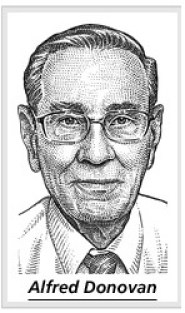 A head-cut image of Alfred Donovan (now deceased) appears courtesy of The Wall Street Journal.