Wednesday 30 May 2007
From Breaking Views
Russia’s stock market looks like a bargain among emerging markets. And it should benefit from stable but high oil prices. That is the argument of Credit Suisse emerging-market strategist Alexander Redman. But if the economics are promising, the politics are frightening.
The Russian market sells at 10.6 times expected 2007 earnings, 22% below the average of all emerging markets, although above the nine-year Russian average of 8.2 times. When oil was less expensive, Russia looked a loss less promising.
Russia also doesn’t look like a bargain in comparison with South Korea, which is selling at 12.5 times expected earnings. The main political risk there is a positive one — that a pro-business candidate wins December’s presidential elections.
Russian earnings may be attractive, but it is far from certain how much foreign investors will get their hand on. Property rights in Russia are subject to political control. So while the overall cost of oil extraction may be below $20 per barrel in remote Siberia — a steal at today’s oil prices — Moscow is happier to receive foreign investment than to respect foreign property claims. That is what Shell learned in its Sakhalin II project — and BP is finding in its joint venture with TNK.
Russia’s political aggressiveness may be an even worse problem. As Venezuela’s Hugo Chávez showed, a combination of anti-Western ideology and economic independence through oil can tempt leaders to expropriate Western companies. Investors in Caracas telephone company CANTV are unlikely to get full value for their expropriated investment; shareholders in Russian companies run the same risk, especially if Vladimir Putin’s successor is more nationalistic.
These dire political possibilities seem weighty enough to justify Russia’s discount to the emerging-market average.
–Edward Hadas, Una Galani, Martin Hutchinson
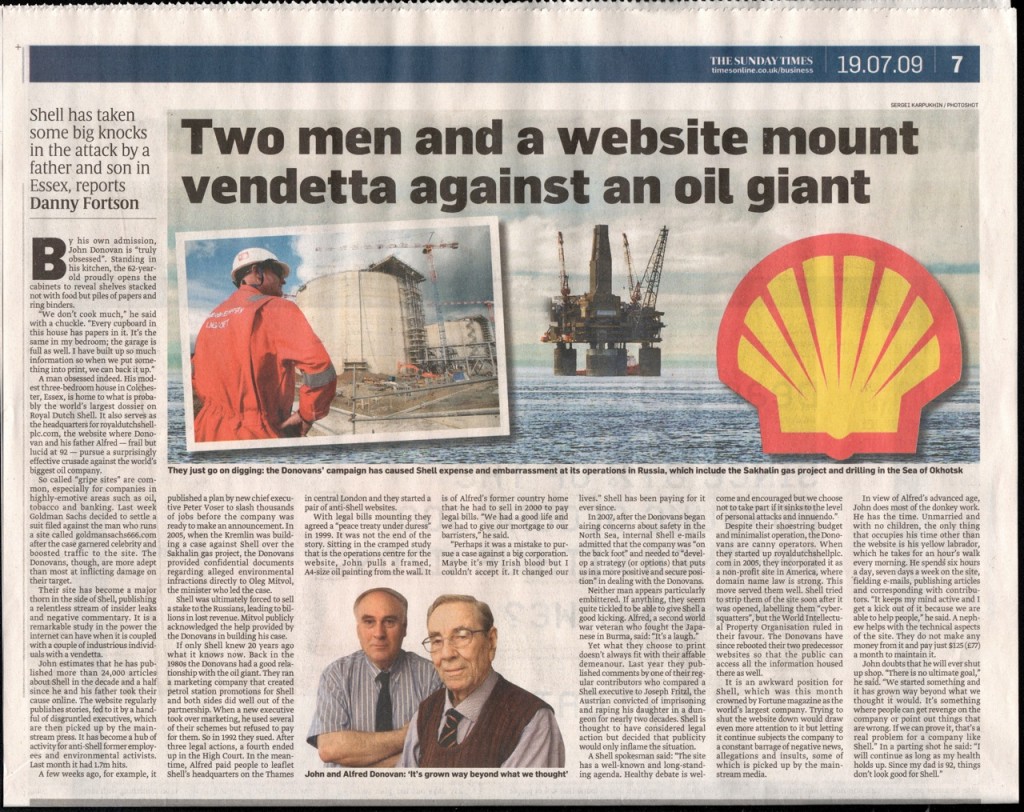
This website and sisters royaldutchshellplc.com, shellnazihistory.com, royaldutchshell.website, johndonovan.website, and shellnews.net, are owned by John Donovan. There is also a Wikipedia segment.


 Royal Dutch Shell conspired directly with Hitler, financed the Nazi Party, was anti-Semitic and sold out its own Dutch Jewish employees to the Nazis. Shell had a close relationship with the Nazis during and after the reign of Sir Henri Deterding, an ardent Nazi, and the founder and decades long leader of the Royal Dutch Shell Group. His burial ceremony, which had all the trappings of a state funeral, was held at his private estate in Mecklenburg, Germany. The spectacle (photographs below) included a funeral procession led by a horse drawn funeral hearse with senior Nazis officials and senior Royal Dutch Shell directors in attendance, Nazi salutes at the graveside, swastika banners on display and wreaths and personal tributes from Adolf Hitler and Reichsmarschall, Hermann Goring. Deterding was an honored associate and supporter of Hitler and a personal friend of Goring.

 Deterding was the guest of Hitler during a four day summit meeting at Berchtesgaden. Sir Henri and Hitler both had ambitions on Russian oil fields. Only an honored personal guest would be rewarded with a private four day meeting at Hitler’s mountain top retreat.


 IN JULY 2007, MR BILL CAMPBELL (ABOVE, A RETIRED GROUP AUDITOR OF SHELL INTERNATIONAL SENT AN EMAIL TO EVERY UK MP AND MEMBER OF THE HOUSE OF LORDS:


 MORE DETAILS:


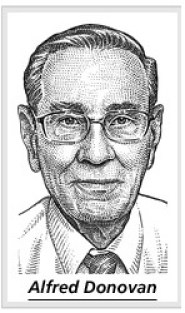 A head-cut image of Alfred Donovan (now deceased) appears courtesy of The Wall Street Journal.