Wednesday, 30 May 2007
U.S. and Russian whalers and other Alaska Native leaders have spoken with the public regarding continued threats to their whaling traditions. The briefing addressed Native concerns in light of the Department of Interior’s (DOI) plan to open the oceans off Alaska to a barrage of new oil and gas development starting this summer.
Days before the International Whaling Commission’s annual meeting, whalers from across Alaska will talk about U.S. whaling interests and the threat oil and gas activities will pose to the remaining bowhead whale populations, upon which Alaska Native subsistence communities depend.
“Oil and gas development in the Beaufort and Chukchi Seas threatens our whaling traditions which go back thousands of years,” said Mae Hank, Inupiaq tribal member of the Native Village of Point Hope and mother and grandmother of whalers. “These whales are a powerful symbol of our heritage and legacy to future generations to come,” said Hank.
Despite a U.S. Fish and Wildlife Service (USFWS) proposal to list the polar bear as “threatened” under the Endangered Species Act due to habitat destruction as a result of global warming, the Department of Interior (DOI), under the division of Minerals Management Services (MMS) has opened up over 73 million acres of pristine Alaska waters to Shell Oil for as early as this summer.
The proposed 5-year plan would sell leases for oil and gas exploration and development on:
More than 40 million acres in the Chukchi Sea, which supports polar bears, a variety of endangered whales including bowhead, beluga, gray and finback, the Pacific walrus and millions of migratory birds. The first lease sale would take place in November, followed by another sale in 2010 and another in 2012.
33.3 million acres in the Beaufort Sea, which is also critical habitat for polar bears as well as seals, whales, and migratory birds. The Beaufort Sea is experiencing a staggering amount of offshore oil and gas development already, with another two lease sales scheduled under the new 5-year plan.
Approximately 5.5 million acres in Bristol Bay, home to the worlds’ largest sockeye salmon run. Bristol Bay/North Aleutian Basin was protected from offshore oil and gas development until President Bush dropped its protections in January 2007.
“I have repeatedly voiced my concerns about Shell’s activities to the MMS only to be ignored,” said Robert Thompson, Inupiaq whaler and business owner in Kaktovik. “Oil and gas development is in direct opposition to the Inupiaq whaling interests in these waters,” said Thompson. “Our whaling and cultural traditions are too important to be sacrificed for oil and gas development.”
“We are opposed to the latest 5-year OCS plan because it threatens our subsistence way of life which is already seeing changes to the waters and animals due to global warming,” said Earl Kingik of the Native Village of Point Hope and REDOIL, Resisting Environmental Destruction on Indigenous Lands. “There is no safe way to proceed and we have voiced these concerns only to be ignored by MMS.”
“I am a lifelong resident of Point Hope and a whaling captain,” said Russell Lane. “My people depend on these whales and have done so for thousands of years. Our concerns have been overlooked and ignored and our Native traditions are what are at stake. Once they disappear, they’re gone forever,” said Lane.
“MMS has no real solutions should a major spill of 31,000 gallons or more of oil occur in the icy waters of the Beaufort and Chukchi Seas,” said Betsy Goll, Arctic Environmental Justice Director for Alaska Wilderness League. “In all my visits to public hearings and meetings for this plan, I have not met or heard one person who supports the MMS plan to drill in Alaska’s waters. To ignore the Native interests in these waters would be a tragic legacy for the DOI to leave these people who have be the stewards of these waters for thousands of years,” said Goll.
The new five-year plan runs from July 1, 2007, through June 30, 2012. Once Congress receives the plan, there will be a 60-day review before the plan becomes final on July 1. Congress can hold hearings on the plan or pass legislation to remove areas from the final plan.
Last Updated ( Wednesday, 30 May 2007 )
http://www.bymnews.com/news/newsDetails.php?id=92
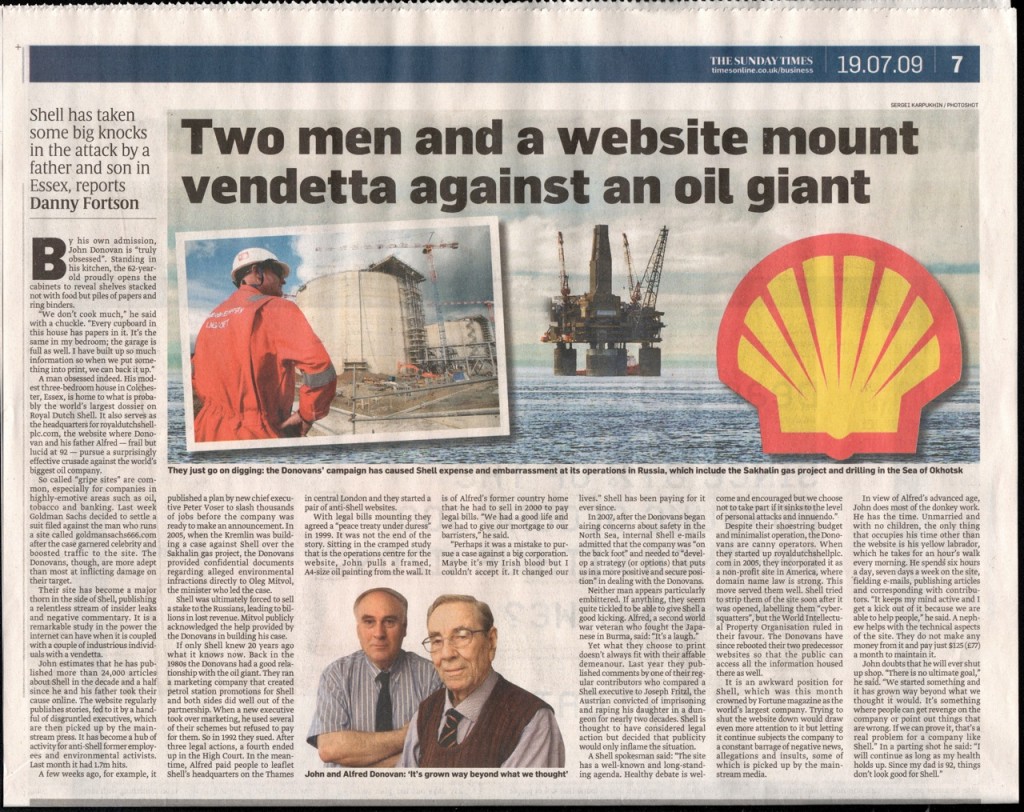
This website and sisters royaldutchshellplc.com, shellnazihistory.com, royaldutchshell.website, johndonovan.website, and shellnews.net, are owned by John Donovan. There is also a Wikipedia segment.


 Royal Dutch Shell conspired directly with Hitler, financed the Nazi Party, was anti-Semitic and sold out its own Dutch Jewish employees to the Nazis. Shell had a close relationship with the Nazis during and after the reign of Sir Henri Deterding, an ardent Nazi, and the founder and decades long leader of the Royal Dutch Shell Group. His burial ceremony, which had all the trappings of a state funeral, was held at his private estate in Mecklenburg, Germany. The spectacle (photographs below) included a funeral procession led by a horse drawn funeral hearse with senior Nazis officials and senior Royal Dutch Shell directors in attendance, Nazi salutes at the graveside, swastika banners on display and wreaths and personal tributes from Adolf Hitler and Reichsmarschall, Hermann Goring. Deterding was an honored associate and supporter of Hitler and a personal friend of Goring.

 Deterding was the guest of Hitler during a four day summit meeting at Berchtesgaden. Sir Henri and Hitler both had ambitions on Russian oil fields. Only an honored personal guest would be rewarded with a private four day meeting at Hitler’s mountain top retreat.


 IN JULY 2007, MR BILL CAMPBELL (ABOVE, A RETIRED GROUP AUDITOR OF SHELL INTERNATIONAL SENT AN EMAIL TO EVERY UK MP AND MEMBER OF THE HOUSE OF LORDS:


 MORE DETAILS:


 A head-cut image of Alfred Donovan (now deceased) appears courtesy of The Wall Street Journal.