By Ed Crooks
Published: April 24 2007 22:09 | Last updated: April 24 2007 22:09
Jorma Ollila, part-time chairman of Royal Dutch Shell, is arguably the most successful European business leader of his generation, having transformed Nokia from a struggling engineering group to a global power in mobile telephones. But he remains, he suggests, a “modest, down-to-earth Finn”.
Indeed, it has been suggested that some of Shell’s shareholders have found Mr Ollila rather too modest, grumbling that they would have liked to see more of him and hear what he has to say.
Telling the company’s story, he says, is a job for Jeroen van der Veer, the chief executive who took over after it emerged in 2004 that the company had been misreporting its reserves.
But now, having gone “back to school”, and spent the best part of a year touring the business from Nigeria to Sakhalin, Mr Ollila at last feels able to talk about it.
Over the next six weeks, he will meet the company’s 20 biggest investors, “to listen to their concerns, questions and issues” and to set out the company’s position on strategy and corporate responsibility.
What those shareholders will get is a man who, in spite of his illustrious record, is reluctant to step into the limelight.
As one executive who knows him says: “He’s not a spectacular, flamboyant kind of person. But he’s highly organised and highly ambitious. He’s not a great extrovert; not the life of the party, but very dedicated and very disciplined.”
He was “very lucky”, Mr Ollila admits, in joining Shell when he did last year, because the company had already moved decisively to put the reserves scandal behind it.
In 2005, Shell swept away its century-old dual-company structure, forming a single new company, Royal Dutch Shell, with one head office, one chief executive and one chairman.
But while the short-term crisis may have passed, Shell still faces a huge long-term challenge. All the big Western oil companies are confronting the problem of getting access to resources in a world in which the remaining reserves are increasingly controlled by the national companies of the oil and gas-rich countries.
Shell’s rough ride in Russia, where Gazprom, the state-controlled gas company, took a majority stake in the $22bn Sakhalin-2 gas and oil project, following strong-arm tactics from the government, has been the sharpest illustration of how the resource-owning countries hold the whip hand over even the biggest international companies.
Mr Ollila met Vladimir Putin, Russia’s president, in November last year, a few weeks before the Gazprom deal was done.
“The relationship is good. Gazprom is our good partner, we have completed the agreements and we are looking forward,” he says.
He cites four technologies where Shell can offer “something unique”: converting natural gas to liquids, including diesel fuel; exploiting the massive oil sand reserves of Canada; oil production in very deep water, and integrating refining technology.
Increased global concern about climate change and CO2 emissions can also create opportunities for Shell, he says, if the policy framework is right.
“We need a price for carbon, otherwise it will not be possible to design a mechanism for how you get to the CO2 reduction targets. Otherwise we get to a situation where the European target-setting, which is a courageous way of going about it, becomes another Lisbon target-setting, whereby it’s not taken seriously,” he says.
“There will be a lot of innovation, and it’s a believable scenario that in 2050, renewables will form 30 per cent of the energy source for mankind.”
And 30 per cent of Shell’s business, too? “Not impossible at all,” he adds.
In the next 10 to 15 years, he says, energy is going to be “one of the most interesting industries in the world”. If he puts Shell into a position where it can thrive in those times, he will have earned the right to let his modesty slip for a while.
Copyright The Financial Times Limited 2007
This website and sisters royaldutchshellplc.com, shellnazihistory.com, royaldutchshell.website, johndonovan.website, and shellnews.net, are owned by John Donovan. There is also a Wikipedia segment.


 Royal Dutch Shell conspired directly with Hitler, financed the Nazi Party, was anti-Semitic and sold out its own Dutch Jewish employees to the Nazis. Shell had a close relationship with the Nazis during and after the reign of Sir Henri Deterding, an ardent Nazi, and the founder and decades long leader of the Royal Dutch Shell Group. His burial ceremony, which had all the trappings of a state funeral, was held at his private estate in Mecklenburg, Germany. The spectacle (photographs below) included a funeral procession led by a horse drawn funeral hearse with senior Nazis officials and senior Royal Dutch Shell directors in attendance, Nazi salutes at the graveside, swastika banners on display and wreaths and personal tributes from Adolf Hitler and Reichsmarschall, Hermann Goring. Deterding was an honored associate and supporter of Hitler and a personal friend of Goring.

 Deterding was the guest of Hitler during a four day summit meeting at Berchtesgaden. Sir Henri and Hitler both had ambitions on Russian oil fields. Only an honored personal guest would be rewarded with a private four day meeting at Hitler’s mountain top retreat.


 IN JULY 2007, MR BILL CAMPBELL (ABOVE, A RETIRED GROUP AUDITOR OF SHELL INTERNATIONAL SENT AN EMAIL TO EVERY UK MP AND MEMBER OF THE HOUSE OF LORDS:


 MORE DETAILS:


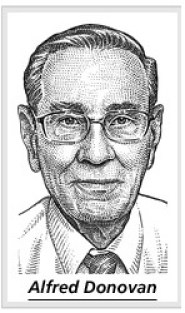 A head-cut image of Alfred Donovan (now deceased) appears courtesy of The Wall Street Journal.