By Sylvia Pfeifer,
Last Updated: 12:58am BST 22/04/2007
Boeing’s green sky thinking
Boeing, the US aerospace giant best known for making the 747 jumbo jet, is working on plans to develop a “biofuel blend” derived from plants or algae that could power conventional jets. Executives at the company said a hybrid fuel could be available within five years, using the same engines that currently propel aircraft.
Bill Glover, the managing director of environmental strategy at Boeing Commercial Airplanes, said: “We could see something within five years.” He stressed that any fuel would still be a blend, with between 20 per cent and 40 per cent derived from a plant source.
Boeing has teamed up with BP and Royal Dutch Shell to help launch the Commercial Aviation Alternative Fuels Initiative to explore the viability of alternative fuels. The first study is exploring issues such as feasibility, costs, barriers and technical issues.
The biggest impetus behind finding alternative fuels comes from the high cost of petroleum. Crude prices have soared to record levels in recent years; if they remain high, alternative fuels will continue to be attractive. However, industry executives are also under pressure from environmental groups and politicians to reduce harmful greenhouse gas emissions.
Of the current options, synthetic liquid fuels manufactured from coal, biomass or natural gas are viable. Bio jet fuel – jet fuel made from agricultural oil crops – is deemed a mid-term option but is handicapped by limited production capacity.
Earlier this year another Boeing executive, Dave Nielson, told the Transportation Research Board that if the US used biofuel for 15 per cent of its average fuel requirements, it would require cultivation of an area the size of Florida, or about 10 per cent of America’s total cropland. Similar analysis showed that if airlines used 100 per cent of bio jet fuel from algae, it would require cultivation of an area the size of Maryland.
According to Glover, one of the main questions is “can we find plant sources that don’t compete with food sources”. One project is testing the viability of bio jet fuel from the Babassu tree in Brazil.
Finding alternative fuels “is sort of the holy grail”, added Glover.
http://www.telegraph.co.uk/money/main.jhtml?xml=/money/2007/04/22/cnboeing22.xml
This website and sisters royaldutchshellplc.com, shellnazihistory.com, royaldutchshell.website, johndonovan.website, and shellnews.net, are owned by John Donovan. There is also a Wikipedia segment.


 Royal Dutch Shell conspired directly with Hitler, financed the Nazi Party, was anti-Semitic and sold out its own Dutch Jewish employees to the Nazis. Shell had a close relationship with the Nazis during and after the reign of Sir Henri Deterding, an ardent Nazi, and the founder and decades long leader of the Royal Dutch Shell Group. His burial ceremony, which had all the trappings of a state funeral, was held at his private estate in Mecklenburg, Germany. The spectacle (photographs below) included a funeral procession led by a horse drawn funeral hearse with senior Nazis officials and senior Royal Dutch Shell directors in attendance, Nazi salutes at the graveside, swastika banners on display and wreaths and personal tributes from Adolf Hitler and Reichsmarschall, Hermann Goring. Deterding was an honored associate and supporter of Hitler and a personal friend of Goring.

 Deterding was the guest of Hitler during a four day summit meeting at Berchtesgaden. Sir Henri and Hitler both had ambitions on Russian oil fields. Only an honored personal guest would be rewarded with a private four day meeting at Hitler’s mountain top retreat.


 IN JULY 2007, MR BILL CAMPBELL (ABOVE, A RETIRED GROUP AUDITOR OF SHELL INTERNATIONAL SENT AN EMAIL TO EVERY UK MP AND MEMBER OF THE HOUSE OF LORDS:


 MORE DETAILS:


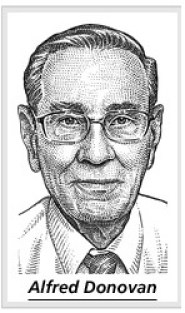 A head-cut image of Alfred Donovan (now deceased) appears courtesy of The Wall Street Journal.