Aine Ryan, Irish Times
Published: Apr 18, 2007
Shell E&P Ireland has been asked to provide detailed documentation of a consultation process the company claims it carried out with Mayo County Council and the community living near the proposed Bellanaboy refinery, regarding its decision to cold-vent gas rather than flare it.
On the second day of the Environmental Protection Agency’s oral hearing into the issuing of an integrated pollution prevention licence, the chairman, Frank Clinton, observed to Shell representatives that “there isn’t much in the way of supporting fact around this consulting process”.
He was referring to a section of a statement made by one of its expert witnesses, Ian McRae, which said: “However, in the case of the Bellanaboy bridge terminal, the overriding influence in the decision to permit releases to be cold-vented is the commitment to the local community and the planning authority to reduce to a minimum the visual intrusion and disturbance that could arise from the operation of a flare, in what is a rural area.”
The cold-venting of gas, usually methane, means it is released directly into the environment, without being burned.
There has been an ongoing debate over the fact that this proposed process was omitted from Shell’s original environmental impact statement and later added as an addendum.
Imelda Moran said yesterday that since Shell had implicated Mayo County Council in this decision, it should be mandated to attend the hearing.
The chairman declined to do so.
Ms Moran also said that she had been involved in collecting 200 signatures within a five-kilometre radius of the proposed refinery, and all signatories said they had not been consulted about cold-venting.
“Without very clear and substantive information regarding the consultation process, I will have to take a very serious look at cold-venting,” said the chairman. “This is one of the central issues and I won’t forget about it.”
When asked by appellant Tony Irwin if it would not be easier to simply move the discharge pipe farther out to sea, Prof Peter Matthiessen, an independent ecotoxicology consultant, highlighted the extra costs for Shell, saying that cost-benefits must be rationalised.
He added that “in essence” the pipe would need a robust monitoring regime no matter where it was situated.
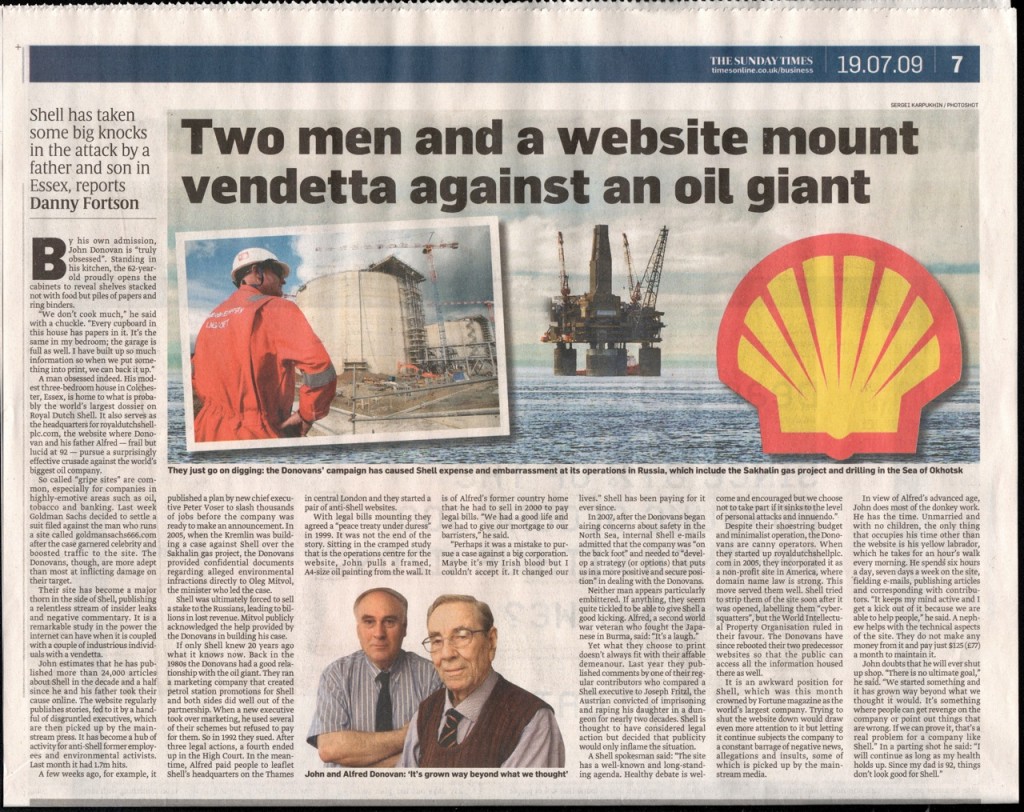
This website and sisters royaldutchshellplc.com, shellnazihistory.com, royaldutchshell.website, johndonovan.website, and shellnews.net, are owned by John Donovan. There is also a Wikipedia segment.


 Royal Dutch Shell conspired directly with Hitler, financed the Nazi Party, was anti-Semitic and sold out its own Dutch Jewish employees to the Nazis. Shell had a close relationship with the Nazis during and after the reign of Sir Henri Deterding, an ardent Nazi, and the founder and decades long leader of the Royal Dutch Shell Group. His burial ceremony, which had all the trappings of a state funeral, was held at his private estate in Mecklenburg, Germany. The spectacle (photographs below) included a funeral procession led by a horse drawn funeral hearse with senior Nazis officials and senior Royal Dutch Shell directors in attendance, Nazi salutes at the graveside, swastika banners on display and wreaths and personal tributes from Adolf Hitler and Reichsmarschall, Hermann Goring. Deterding was an honored associate and supporter of Hitler and a personal friend of Goring.

 Deterding was the guest of Hitler during a four day summit meeting at Berchtesgaden. Sir Henri and Hitler both had ambitions on Russian oil fields. Only an honored personal guest would be rewarded with a private four day meeting at Hitler’s mountain top retreat.


 IN JULY 2007, MR BILL CAMPBELL (ABOVE, A RETIRED GROUP AUDITOR OF SHELL INTERNATIONAL SENT AN EMAIL TO EVERY UK MP AND MEMBER OF THE HOUSE OF LORDS:


 MORE DETAILS:


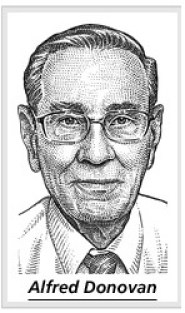 A head-cut image of Alfred Donovan (now deceased) appears courtesy of The Wall Street Journal.