By Jonathan Power, The Nation (Kenya)
Forty-two years ago the then named Rhodesia, a British colony, made its unilateral declaration of independence. The break with the mother country had come after an acrimonious period of resisting pressure from London to modestly widen the franchise.
For 14 years Rhodesia was a pariah state, boycotted by order of the UN Security Council, yet finding ways to circumvent the embargo and prosper. Even the big British oil companies, Shell and BP, connived in the sanctions busting with, if not a nod, at least a wink from Britain’s Labour government.
That was Britain’s mistake number one: forcing the Africans to fight their cause by guerrilla warfare for want of pressures on other fronts. Led by Robert Mugabe, now Zimbabwe’s prime minister, the guerrillas weakened the white government to the point where it was persuaded to sue for terms. Both London and Washington favoured a compromise with a less militant black leadership than the avowed Marxist, Mugabe.
The stepping-stone to black rule had been the constitutional conference in London. One of the sticking points was the question of land reform. I interviewed Mugabe and when I asked him what the main issue for his party was he replied, “land, land, land, land, land.” The British, however, were constrained by public opinion to accept that demand. The Americans were also reticent.
Nevertheless, I assumed that once the election was over that the new Zimbabwe would tackle land reform, even if it had to borrow the money from the World Bank or seek aid from Scandinavia.
Yet from Mugabe’s new government there was a deafening lack of initiative. A few months after independence I met an old acquaintance on a London street, Bernard Chidzero, Zimbabwe’s minister of Finance.
“What’s going on about land reform? What are you planning to do?”, I asked. “Not for now,” he replied. “It’s not on our list of priorities”.
I COULDN’T BELIEVE MY EARS. THE white farmers with their exports kept the country’s trade balance in the black. They also kept the urban population fed.
Moreover, and this seemed the sensible part, there was much to be done in upgrading the productivity of those millions of peasants who did have land. Their holdings may have been of inferior quality but they knew nothing of modern methods. Under the prodding of the Ministry of Agriculture led by ex white farmer, production leaped.
Yet as time passed momentum slackened. The leadership lost its way. Its reforming instincts, first briefly Marxist, then capitalist-liberal-pragmatic, returned to an old fashioned socialist state supremacy. The arrival of black power in South Africa, which should have been liberating for Zimbabwe, seemed to pose a personal challenge to Mugabe. He made it abundantly clear in more ways than one that he didn’t like the limelight of liberation moving from him to Nelson Mandela. Mugabe seemed to take a personal delight in going in an opposite direction to South Africa.
Desperate to find a winning issue at the polls in May 2000, Mugabe used his land reform crusade as a vote getter and a way of embarrassing the cautious Mandela. Defying the courts, he encouraged old warriors to invade 700 white-owned farms while he promised to expropriate them without compensation if Britain didn’t give him the money.
For once, belatedly, the British government, tried to occupy the high ground. If the election were honest, said the Foreign Secretary, Robin Cook, then London would help fund an orderly reform programme.
But the promise came too late. Britain – in its second grave mistake – had made its own contribution to the present day imbroglio by not putting serious money on the table for land reform at the time of independence.
Mugabe, increasingly besieged by opposition at home, resorted to rigging that poll and every succeeding one.
Now Mugabe’s Zimbabwe is in terminal crisis but I doubt history will record that Mugabe is the only one to blame.
Distributed by AllAfrica Global Media. (allafrica.com)
Published: Apr 16, 2007
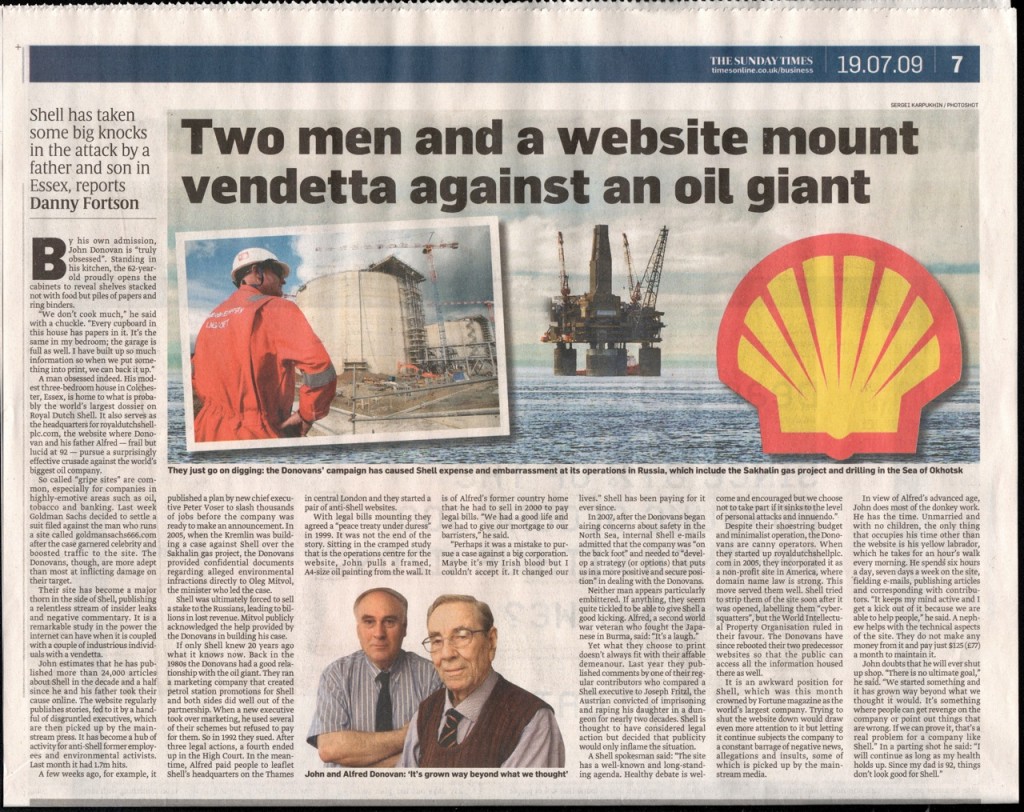
This website and sisters royaldutchshellplc.com, shellnazihistory.com, royaldutchshell.website, johndonovan.website, and shellnews.net, are owned by John Donovan. There is also a Wikipedia segment.


 Royal Dutch Shell conspired directly with Hitler, financed the Nazi Party, was anti-Semitic and sold out its own Dutch Jewish employees to the Nazis. Shell had a close relationship with the Nazis during and after the reign of Sir Henri Deterding, an ardent Nazi, and the founder and decades long leader of the Royal Dutch Shell Group. His burial ceremony, which had all the trappings of a state funeral, was held at his private estate in Mecklenburg, Germany. The spectacle (photographs below) included a funeral procession led by a horse drawn funeral hearse with senior Nazis officials and senior Royal Dutch Shell directors in attendance, Nazi salutes at the graveside, swastika banners on display and wreaths and personal tributes from Adolf Hitler and Reichsmarschall, Hermann Goring. Deterding was an honored associate and supporter of Hitler and a personal friend of Goring.

 Deterding was the guest of Hitler during a four day summit meeting at Berchtesgaden. Sir Henri and Hitler both had ambitions on Russian oil fields. Only an honored personal guest would be rewarded with a private four day meeting at Hitler’s mountain top retreat.


 IN JULY 2007, MR BILL CAMPBELL (ABOVE, A RETIRED GROUP AUDITOR OF SHELL INTERNATIONAL SENT AN EMAIL TO EVERY UK MP AND MEMBER OF THE HOUSE OF LORDS:


 MORE DETAILS:


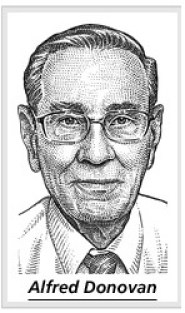 A head-cut image of Alfred Donovan (now deceased) appears courtesy of The Wall Street Journal.