Mon Apr 16, 2007 7:56 PM BST
(Adds talks broken off, agreement expected on Tuesday)
MOSCOW, April 16 (Reuters) – Russia’s gas monopoly Gazprom
The sources had earlier said a deal was likely on Monday but talks broke off late in the evening without it being finalised.
A preliminary deal was agreed in December after months of pressure on the project by Russian environmental authorities and was interpreted by analysts as yet another step in the Kremlin’s drive to win more control over Russia’s huge energy sector.
Gazprom will pay cash to Royal Dutch Shell and its Japanese partners Mitsui <8031.T> and Mitsubishi <8058.T>, becoming the leader of the project.
Shell will continue to contribute to management and act as technical adviser on Sakhalin-2, which will honour its existing contracts to sell liquefied natural gas to Japan, South Korea and the United States according to the agreed schedule, with the first shipment due in the summer of 2008.
The deal means Shell and its Japanese partners will each dilute their stakes by half, leaving them with 27.5 percent, 12.5 percent and 10 percent, respectively.
Gazprom had originally offered Shell a share of its Zapolyarnoye field as a swap for 25 percent of Sakhalin-2, based on Russia’s Pacific energy hub, Sakhalin Island.
But when Shell announced in 2005 that the cost of phase two of the Sakhalin-2 project had doubled to $20 billion, Gazprom reopened negotiations and demanded a much bigger share.
The cost hike also angered the Kremlin, since under the project’s production sharing agreement the operator can recoup costs before sharing any profit with the state. Higher costs mean Russia waiting longer for less profit.
Shell had initially asked Russia to allow it to spend $22 billion on Sakhalin-2 from the previously approved $12 billion.
Russian officials said in December they would clear the project’s costs to 2014 at $19.4 billion, but only some $15.8 would be redeemed.
They also said Shell and its Japanese partners would spend $3.6 billion out of their own pockets as Russia believes they could have avoided those costs.
The three firms would have to split this extra cost between themselves according to their previous stakes of 55, 25 and 20 percent respectively.
Shell has said Gazprom would not cover any of the $12 billion cost, registered as of the end of third quarter 2006.
Industry sources said the deal to be sealed on Monday retained the original terms agreed in December, but declined to give details.
© Reuters 2007. All rights reserved


 Royal Dutch Shell conspired directly with Hitler, financed the Nazi Party, was anti-Semitic and sold out its own Dutch Jewish employees to the Nazis. Shell had a close relationship with the Nazis during and after the reign of Sir Henri Deterding, an ardent Nazi, and the founder and decades long leader of the Royal Dutch Shell Group. His burial ceremony, which had all the trappings of a state funeral, was held at his private estate in Mecklenburg, Germany. The spectacle (photographs below) included a funeral procession led by a horse drawn funeral hearse with senior Nazis officials and senior Royal Dutch Shell directors in attendance, Nazi salutes at the graveside, swastika banners on display and wreaths and personal tributes from Adolf Hitler and Reichsmarschall, Hermann Goring. Deterding was an honored associate and supporter of Hitler and a personal friend of Goring.

 Deterding was the guest of Hitler during a four day summit meeting at Berchtesgaden. Sir Henri and Hitler both had ambitions on Russian oil fields. Only an honored personal guest would be rewarded with a private four day meeting at Hitler’s mountain top retreat.


 IN JULY 2007, MR BILL CAMPBELL (ABOVE, A RETIRED GROUP AUDITOR OF SHELL INTERNATIONAL SENT AN EMAIL TO EVERY UK MP AND MEMBER OF THE HOUSE OF LORDS:


 MORE DETAILS:


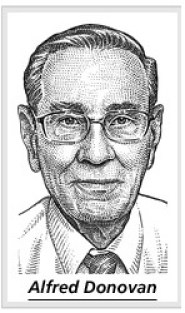 A head-cut image of Alfred Donovan (now deceased) appears courtesy of The Wall Street Journal.