A multi-million pound investment announced by oil giant Shell in three of its Scottish facilities could safeguard 300 jobs.
Improvements are being made to the St Fergus gas processing plant in Aberdeenshire and the Mossmorran plant in Fife.
The £350m investment will also upgrade the Braefoot Bay facility on the firth of Forth.
It is hoped the investment will create up to 100 contractor jobs.
‘Vote of confidence’
The two gas processing plants had been running below capacity in recent years, but now Shell is to make a substantial investment in “re-fettling” St Fergus and Mossmorran to enable them to return to full capacity.
The investment has been seen as a major vote of confidence in the North Sea oil industry by one of its key players.
Chancellor Gordon Brown is expected to make the announcement during a visit to Mossmorran, where he will unveil a plaque to celebrate the launch of the project.
John Gallagher, vice president technical of Shell, said: “This is a prime example of Shell meeting the energy demand of the UK for today and in the future by extending the life of existing infrastructure and investing in the import of gas supplies.
“Shell remains committed to the UK and we hold a key strategic position in enabling security of energy supply to the UK through our core infrastructure.”
The St Fergus terminal was developed after British Gas and Shell were granted planning permission in 1973.
The first natural gas supplies were piped ashore to the terminal, which lies seven miles north of Peterhead, four years later from the Frigg field.
The St Fergus plant cleans gas delivered from the Norwegian FLAGS and Fulmar Gas Pipeline and delivers the methane to the adjacent British Gas plant, where it serves the National Grid.
Ethane, propane and other liquid gases are separated by a cryogenic process and sent to Mossmorran, on the outskirts of Cowdenbeath, by an overland pipeline.
After being processed at Mossmorran, the gases are piped to the nearby Braefoot Bay deep water facility, on the northern side of the Firth of Forth, where they are loaded onto tankers.
http://news.bbc.co.uk/2/hi/uk_news/scotland/north_east/6540553.stm
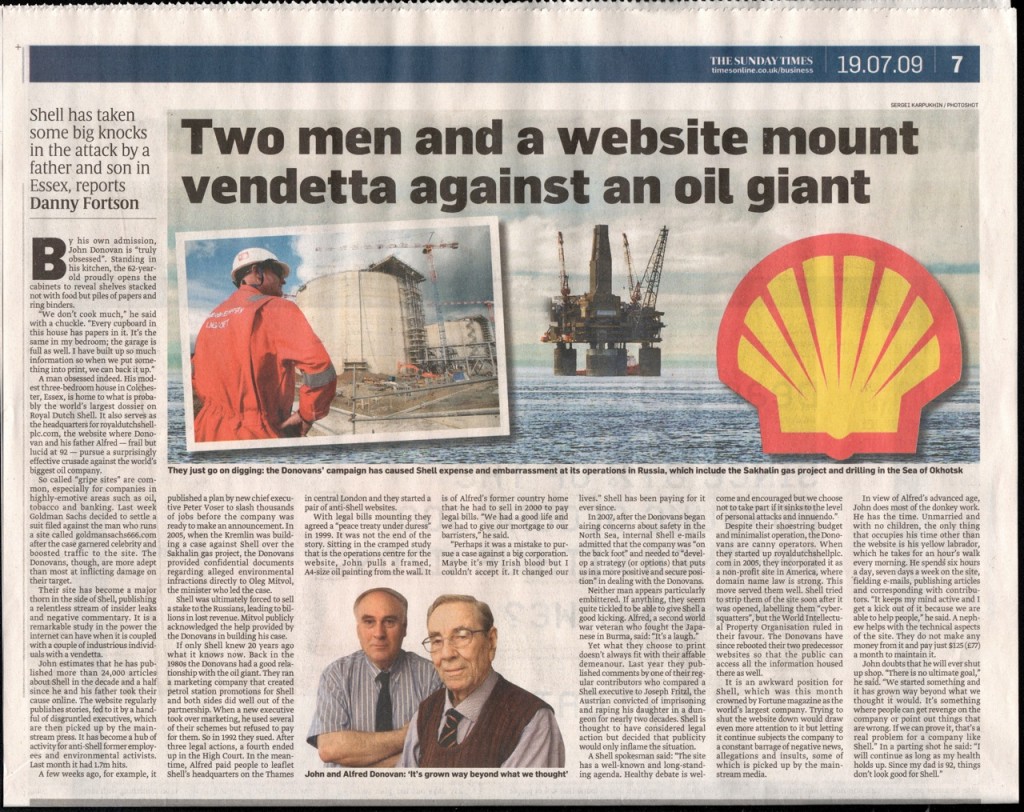
This website and sisters royaldutchshellplc.com, shellnazihistory.com, royaldutchshell.website, johndonovan.website, and shellnews.net, are owned by John Donovan. There is also a Wikipedia segment.


 Royal Dutch Shell conspired directly with Hitler, financed the Nazi Party, was anti-Semitic and sold out its own Dutch Jewish employees to the Nazis. Shell had a close relationship with the Nazis during and after the reign of Sir Henri Deterding, an ardent Nazi, and the founder and decades long leader of the Royal Dutch Shell Group. His burial ceremony, which had all the trappings of a state funeral, was held at his private estate in Mecklenburg, Germany. The spectacle (photographs below) included a funeral procession led by a horse drawn funeral hearse with senior Nazis officials and senior Royal Dutch Shell directors in attendance, Nazi salutes at the graveside, swastika banners on display and wreaths and personal tributes from Adolf Hitler and Reichsmarschall, Hermann Goring. Deterding was an honored associate and supporter of Hitler and a personal friend of Goring.

 Deterding was the guest of Hitler during a four day summit meeting at Berchtesgaden. Sir Henri and Hitler both had ambitions on Russian oil fields. Only an honored personal guest would be rewarded with a private four day meeting at Hitler’s mountain top retreat.


 IN JULY 2007, MR BILL CAMPBELL (ABOVE, A RETIRED GROUP AUDITOR OF SHELL INTERNATIONAL SENT AN EMAIL TO EVERY UK MP AND MEMBER OF THE HOUSE OF LORDS:


 MORE DETAILS:


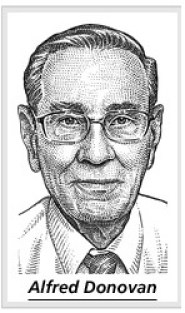 A head-cut image of Alfred Donovan (now deceased) appears courtesy of The Wall Street Journal.