EXTRACT: They cite pollution related to Shell’s activities in the Niger delta and Myanmar villagers’ accusations that forced labour was used to build a pipeline for Total SA, which paid to settle a lawsuit based on the claims, as examples of an industry that is fundamentally unsuitable for ethical investment.
THE ARTICLE
UK: January 8, 2007
LONDON – Oil majors are courting multi-trillion-dollar socially responsible investment (SRI) funds but they face continuing scepticism from investors.
SRI funds have grown to US$3.6 trillion, according to industry body Eurosif, prompting firms including BP Plc to hire SRI advisers to woo ethical funds.
Those efforts have helped oil majors win inclusion in ethical share indexes, but analysts say that means investors may be buying into companies of which they do not approve.
“Members of the public purchasing these things should be aware of what the criteria (funds use to screen companies) are and take a proper judgement,” said Stephen Hine, head of international marketing at EIRIS, an organization founded by charities to investigate companies’ environmental and social policies.
BP, Royal Dutch Shell Plc and France’s Total SA have been included in leading SRI stock indexes, the FTSE4Good and the DJ Stoxx World Sustainability Index.
Ethical tracker funds, such as those marketed by insurer Legal & General Group and Royal Bank of Scotland Group’s Direct Line unit, use the indexes to decide which stocks to buy.
The index compilers accept that oil and gas companies, by the nature of their business, have big environmental and social impacts, but say that if they have good risk management systems, the companies should be included in the indexes.
“The companies are eligible but they have to meet environmental and human rights criteria … the standards for those companies are very high,” said Will Oulton, head of the Responsible Investment Unit at index compiler FTSE.
ACTIVE INVESTORS SCEPTICAL
However, many investors do not believe that oil companies’ claims to have strict environmental and social risk management systems justify the companies’ inclusion in their portfolios.
They cite pollution related to Shell’s activities in the Niger delta and Myanmar villagers’ accusations that forced labour was used to build a pipeline for Total SA, which paid to settle a lawsuit based on the claims, as examples of an industry that is fundamentally unsuitable for ethical investment.
“Our fund has no oil companies because most oil companies have had issues in the past either with environmental concerns, such as oil spills … or human rights issues,” said Andrew Preston, head of SRI at Aberdeen Asset Managers.
“We don’t have a blanket ban on these companies … (But) we don’t see any of them being too close to meeting our criteria.”
A spokesman for the Co-Operative Group, one of the UK’s best-known ethical investment groups, said its SRI funds did not invest in oil companies either.
Such investors cite BP as an example of why claims of strict management systems should be treated sceptically.
While the London-based oil giant received much praise from some green and other non-governmental groups for its environmental and social policies in the past decade, in March 2005, fifteen workers died at an explosion at BP’s Texas City refinery.
Investigators blamed the blast partly on BP’s cost-cutting culture.
Last year, severe corrosion in oil and gas pipelines in Alaska led to oil leaks, despite BP earlier insisting its corrosion monitoring efforts were robust.
Analysts and industry figures again said BP had put short term profits ahead of safety.
Giles Mackey, SRI manager at BP admitted that support for the company among ethical investors had ebbed since the Alaska spills and that “there is doubt in the mind of investors now”.
Sophie Horsfall, manager of the F&C Stewardship International fund said actively-managed funds marketed direct to consumers, like hers, were more likely to exclude oil companies than trackers and those targeting institutional clients such as pension funds.
Indeed, while Legal & General’s ethical tracker funds invest in BP and Shell, its actively managed retail fund — which asks investors which companies should and should not be included — does not.
This means many people who tick ethical investment options on their pension schemes or who are attracted by lower management fees attached to tracker funds, could be investing in companies they would rather avoid, analysts said.
However, screening out big oil companies makes life difficult for fund managers as it severely limits choice.
The oil and gas sector accounts for almost a fifth of the FTSE 100 index of larger UK companies by weighting. If the oil sector outperforms the market, a manager not holding oil stocks runs a risk of underperforming other fund managers.
This explains why managers of some SRI funds are keen to retain exposure to big oil and gas companies, analysts said.
Story by Tom Bergin
REUTERS NEWS SERVICE


 Royal Dutch Shell conspired directly with Hitler, financed the Nazi Party, was anti-Semitic and sold out its own Dutch Jewish employees to the Nazis. Shell had a close relationship with the Nazis during and after the reign of Sir Henri Deterding, an ardent Nazi, and the founder and decades long leader of the Royal Dutch Shell Group. His burial ceremony, which had all the trappings of a state funeral, was held at his private estate in Mecklenburg, Germany. The spectacle (photographs below) included a funeral procession led by a horse drawn funeral hearse with senior Nazis officials and senior Royal Dutch Shell directors in attendance, Nazi salutes at the graveside, swastika banners on display and wreaths and personal tributes from Adolf Hitler and Reichsmarschall, Hermann Goring. Deterding was an honored associate and supporter of Hitler and a personal friend of Goring.

 Deterding was the guest of Hitler during a four day summit meeting at Berchtesgaden. Sir Henri and Hitler both had ambitions on Russian oil fields. Only an honored personal guest would be rewarded with a private four day meeting at Hitler’s mountain top retreat.


 IN JULY 2007, MR BILL CAMPBELL (ABOVE, A RETIRED GROUP AUDITOR OF SHELL INTERNATIONAL SENT AN EMAIL TO EVERY UK MP AND MEMBER OF THE HOUSE OF LORDS:


 MORE DETAILS:


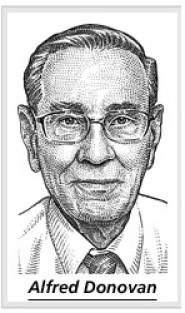 A head-cut image of Alfred Donovan (now deceased) appears courtesy of The Wall Street Journal.