Published: December 19 2006 02:00 | Last updated: December 19 2006 02:00
Today the Financial Times publishes the second part of a long investigation into the environmental and safety record of BP, one of the largest companies in the world. The investigation highlights a worrying series of accidents in the US. For oil companies, faced with the challenge of increasing profits in a world where new reserves are hard to come by, it shows that there are limits to how far costs can be cut.
In March 2005 an explosion at BP’s Texas City refinery killed 15 workers; a March 2006 oil spill at BP’s operations in Prudhoe Bay, Alaska, led to a complete shutdown of the field in August. But as the FT investigation reveals, doubts over BP’s safety performance were being voiced long before the most recent problems.
Those doubts need to be seen in the context of the wider issues that face BP and other integrated oil giants such as ExxonMobil and Shell. They are struggling to find oil: in the Middle East, in Russia and in South America new reserves are often monopolised by national operators. The oil industry also suffers from its cycle, with long periods of depressed prices, most recently in the 1980s and 1990s.
In such an environment, one of the best ways to increase profit is not to produce more, but to cut costs. That can be done via acquisitions. BP doubled in size by buying the US oil companies Amoco in 1998 and Arco in 2000. Whenever a company grows so much so quickly, especially when it absorbs large competitors with different corporate cultures, management will feel the strain.
The other way to cut costs is to try to run existing operations more efficiently. BP seems to have taken that principle to heart. Tony Hayward, BP’s chief executive for exploration and production, told staff that management had made a “virtue out of doing more for less”. The question is whether cost cutting distracted BP from its focus on safety.
It is a question that remains hard to answer, for all we have learnt about BP’s operations in the US. BP has suffered a number of serious accidents in close succession. But until regulators and independent investigators publish their findings next year we will not know whether the accidents were caused by bad management.
Either way, the accidents are a reminder that producing oil is a dangerous business, and safety must be the first priority. Oil companies need to review their procedures. Regulators, meanwhile, should scrutinise declining oilfields, where incentives to invest are lowest, with special rigour.
The loss of life in accidents at BP is tragic. It is encouraging, therefore, that BP seems determined to improve its safety levels. While the oil companies have to invest in finding new oilfields and must do what they can to maintain and increase profitability, that should never be at the expense of safety.
Copyright The Financial Times Limited 2006
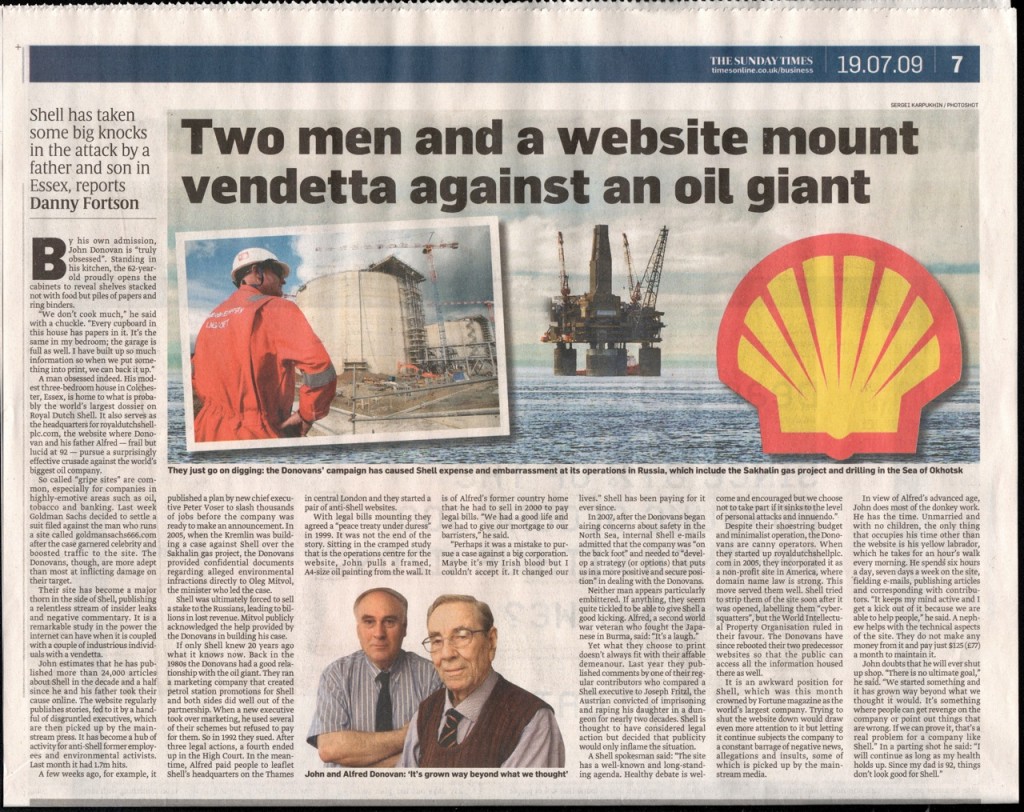
This website and sisters royaldutchshellplc.com, shellnazihistory.com, royaldutchshell.website, johndonovan.website, and shellnews.net, are owned by John Donovan. There is also a Wikipedia segment.


 Royal Dutch Shell conspired directly with Hitler, financed the Nazi Party, was anti-Semitic and sold out its own Dutch Jewish employees to the Nazis. Shell had a close relationship with the Nazis during and after the reign of Sir Henri Deterding, an ardent Nazi, and the founder and decades long leader of the Royal Dutch Shell Group. His burial ceremony, which had all the trappings of a state funeral, was held at his private estate in Mecklenburg, Germany. The spectacle (photographs below) included a funeral procession led by a horse drawn funeral hearse with senior Nazis officials and senior Royal Dutch Shell directors in attendance, Nazi salutes at the graveside, swastika banners on display and wreaths and personal tributes from Adolf Hitler and Reichsmarschall, Hermann Goring. Deterding was an honored associate and supporter of Hitler and a personal friend of Goring.

 Deterding was the guest of Hitler during a four day summit meeting at Berchtesgaden. Sir Henri and Hitler both had ambitions on Russian oil fields. Only an honored personal guest would be rewarded with a private four day meeting at Hitler’s mountain top retreat.


 IN JULY 2007, MR BILL CAMPBELL (ABOVE, A RETIRED GROUP AUDITOR OF SHELL INTERNATIONAL SENT AN EMAIL TO EVERY UK MP AND MEMBER OF THE HOUSE OF LORDS:


 MORE DETAILS:


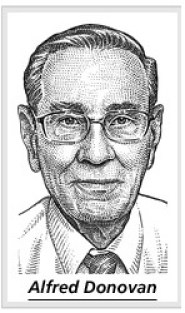 A head-cut image of Alfred Donovan (now deceased) appears courtesy of The Wall Street Journal.