KARL WEST August 31 2006
American regulator the Securities & Exchange Commission yesterday confirmed it will be taking no action against Sir Philip Watts, former Shell chief executive, over the oil reserves overbooking scandal.
Watts and other senior managers were ousted after Shell admitted in early 2004 that it had deceived investors by overstating the size of its oil and gas reserves for years.
The revelation sent shockwaves through the market, hitting the group’s shares and leading to a major loss of investor confidence.
The scandal claimed the scalps of Watts, plus former chief of Shell’s key exploration and production (EP) division, Walter van de Vijver.
Watts said yesterday: “I am extremely pleased the US authorities have closed the investigation … I had every reason to believe that all at Shell acted properly and in good faith when disclosing proved reserves.”
The depth of the deception was highlighted in an internal report in which Van de Vijver e-mailed Watts on November 9, 2003, after what he thought was an unfairly critical performance review, saying: “I am becoming sick and tired about lying about the extent of our reserves issues and the downward revisions that need to be done because of far too aggressive/optimistic bookings.”
On December 2, 2003, Van de Vijver also e-mailed a colleague in exploration and production, one of the authors of the bombshell report that confirmed the overstatement, saying: “This is absolute dynamite, not at all what I expected and needs to be destroyed.”
The document was retained, but only after internal counsel intervened.
Last September, Watts had an appeal against the City’s main regulator dismissed by a UK tribunal.
He claimed his reputation had been unfairly impugned by the Financial Services Authority after it ruled in 2004 that the oil major had engaged in “unprecedented misconduct” that resulted in market abuse for which it was fined £17m.
Shell has already paid out tens of millions of dollars to settle lawsuits related to the overbooking scandal.
Additionally, Russia’s environmental watchdog, which has already ordered Shell to stop work on onshore pipelines at the controversial Sakhalin Island project, yesterday said the group needed to redraw the plan.
Industry analysts said the halt, which came as building is already 75% complete, may cause further delays to Shell’s $20bn (£10bn) plan to extract liquefied natural gas from the remote Russian Pacific island.
They also note that increased pressure from Russia comes amid attempts by gas monopoly Gazprom to secure a 25% stake in the project.


 Royal Dutch Shell conspired directly with Hitler, financed the Nazi Party, was anti-Semitic and sold out its own Dutch Jewish employees to the Nazis. Shell had a close relationship with the Nazis during and after the reign of Sir Henri Deterding, an ardent Nazi, and the founder and decades long leader of the Royal Dutch Shell Group. His burial ceremony, which had all the trappings of a state funeral, was held at his private estate in Mecklenburg, Germany. The spectacle (photographs below) included a funeral procession led by a horse drawn funeral hearse with senior Nazis officials and senior Royal Dutch Shell directors in attendance, Nazi salutes at the graveside, swastika banners on display and wreaths and personal tributes from Adolf Hitler and Reichsmarschall, Hermann Goring. Deterding was an honored associate and supporter of Hitler and a personal friend of Goring.

 Deterding was the guest of Hitler during a four day summit meeting at Berchtesgaden. Sir Henri and Hitler both had ambitions on Russian oil fields. Only an honored personal guest would be rewarded with a private four day meeting at Hitler’s mountain top retreat.


 IN JULY 2007, MR BILL CAMPBELL (ABOVE, A RETIRED GROUP AUDITOR OF SHELL INTERNATIONAL SENT AN EMAIL TO EVERY UK MP AND MEMBER OF THE HOUSE OF LORDS:


 MORE DETAILS:


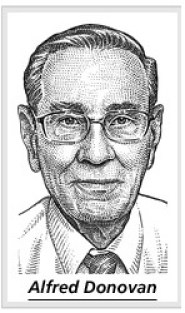 A head-cut image of Alfred Donovan (now deceased) appears courtesy of The Wall Street Journal.