By Jack Uldrich
August 21, 2006
Royal Dutch Shell (NYSE: RDS-A) is now working with researchers from the Stochastic Systems Group at MIT’s Laboratory for Information and Decision Systems to learn better ways to discover oil.
Now, if you think words like “stochastic” seem complex, you need to understand that the work the group is doing in designing new mathematical procedures is even more difficult to comprehend. But these procedures (actually, they’re algorithms) are important, because they can be used to quickly analyze complex images.
In the oil business, companies often spend tens of millions of dollars drilling a single well. If the drill comes up dry, the mistake can be costly. Now, a few million dollars might seem like chump change to an industry where the likes of ExxonMobil (NYSE: XOM) and Chevron (NYSE: CVX) have been hauling in some rather large quarterly profits lately, but in leaner times, such savings add up.
The advantage of MIT’s technology — which works by comparing sophisticated 3-D images against one another, then identifying discrepancies that might suggest the presence of oil — resides less in its ability to avoid areas where the oil isn’t, than in finding areas where it is. After all, that’s what really keeps the oil companies pumping out the profits.
Oil is now becoming increasingly difficult to locate, largely because many of the remaining pockets of oil are either miles beneath the earth’s surface, far offshore, or both. MIT’s algorithms, by establishing key relationships that can correlate to the presence of oil, are helping Royal Dutch explorers hone their ability to decide where to drill.
Because members of the Shell International Exploration and Production team are working in close partnership with the researchers at MIT, the odds that the technology will continue to improve are good. As the members share more information through this internal feedback mechanism, the algorithms will also get more accurate.
In the grand scheme of the oil business, the technology is unlikely to make or break Royal Dutch Shell, but it’s the kind of powerful tool that might help the company keep pace with fellow competitors such as BP (NYSE: BP) and ConocoPhillips (NYSE: COP) until Shell can determine whether its big bet on the oil sands of Canada pays off.
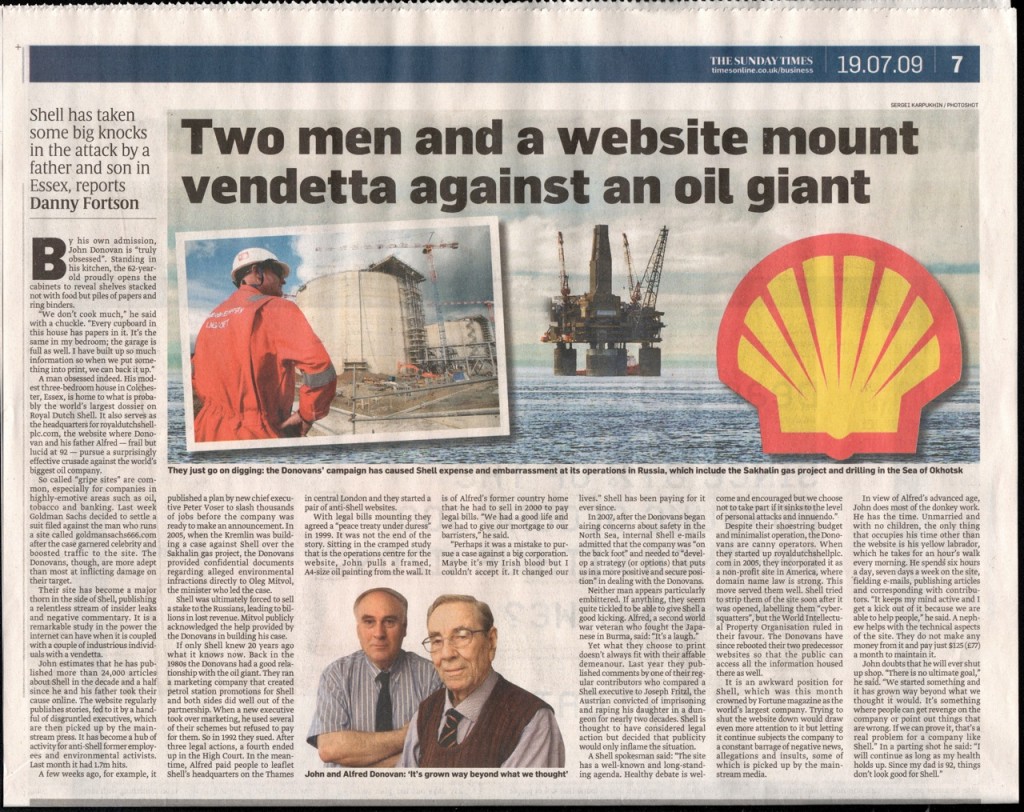
This website and sisters royaldutchshellplc.com, shellnazihistory.com, royaldutchshell.website, johndonovan.website, and shellnews.net, are owned by John Donovan. There is also a Wikipedia segment.


 Royal Dutch Shell conspired directly with Hitler, financed the Nazi Party, was anti-Semitic and sold out its own Dutch Jewish employees to the Nazis. Shell had a close relationship with the Nazis during and after the reign of Sir Henri Deterding, an ardent Nazi, and the founder and decades long leader of the Royal Dutch Shell Group. His burial ceremony, which had all the trappings of a state funeral, was held at his private estate in Mecklenburg, Germany. The spectacle (photographs below) included a funeral procession led by a horse drawn funeral hearse with senior Nazis officials and senior Royal Dutch Shell directors in attendance, Nazi salutes at the graveside, swastika banners on display and wreaths and personal tributes from Adolf Hitler and Reichsmarschall, Hermann Goring. Deterding was an honored associate and supporter of Hitler and a personal friend of Goring.

 Deterding was the guest of Hitler during a four day summit meeting at Berchtesgaden. Sir Henri and Hitler both had ambitions on Russian oil fields. Only an honored personal guest would be rewarded with a private four day meeting at Hitler’s mountain top retreat.


 IN JULY 2007, MR BILL CAMPBELL (ABOVE, A RETIRED GROUP AUDITOR OF SHELL INTERNATIONAL SENT AN EMAIL TO EVERY UK MP AND MEMBER OF THE HOUSE OF LORDS:


 MORE DETAILS:


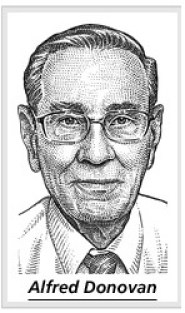 A head-cut image of Alfred Donovan (now deceased) appears courtesy of The Wall Street Journal.