By Carl Mortished and Tom Baldwin
FEARS that BP’s Prudhoe Bay production stoppage could extend for several months sent the stock market value of Britain’s largest company tumbling below Shell, its Dutch rival.
BP surged ahead of Shell when the reputation of the latter was damaged by the misreporting of its reserves in 2003. Shell’s valuation briefly topped BP last August when Royal Dutch Petroleum absorbed its British sister, Shell Transport & Trading, but since then BP has consistently maintained a lead over Shell as the second-largest oil company, after Exxon Mobil.
Investment analysts reckon that the loss of Prudhoe Bay’s output will cost BP 1 per cent of its daily earnings, not enough to damage the company materially, but BP shares continued to suffer yesterday from damage to its reputation in the United States, the company’s biggest investment location. BP stock ended down 1.4 per cent, valuing the firm at £121 billion, compared with £123 billion for Royal Dutch Shell.
Sam Bodman, the US Energy Secretary, said yesterday he expected that it would take months before oil shipments from Prudhoe Bay resumed, but he thought to reassure the market that Saudi Arabia and Mexico could provide alternative supplies.
However, Frank Murkowski, the Governor of Alaska, said that the state would lose $6.4 million (£3.4 million) in revenue for every day’s loss of Prudhoe Bay production. Mr Murkowski said that the shutdown was a wake-up call for Alaskans over their dependence on crude oil and he urged construction of a natural-gas pipeline to diversify the Alaskan revenue base.
Meanwhile, a spokesman for the Sierra Club, the environmentalist pressure group, described the events of this week as a wake-up call for the American people and another blow to those hoping to drill for more oil in the Alaskan Arctic wilderness. The Bush Administration favours opening the Arctic National Wildlife Refuge to oil exploration. This policy has been backed by the House of Representatives, but so far has failed to be passed by the Senate.
Crude oil dominates the Alaskan economy, generating 86 per cent of its revenues. Every year the Alaskan Permanent Fund distributes a share of the surplus revenue to citizens of the state. Last year the dividend was $510 million, and a cheque for $845 was sent to each of the 603,000 eligible Alaskans.


 Royal Dutch Shell conspired directly with Hitler, financed the Nazi Party, was anti-Semitic and sold out its own Dutch Jewish employees to the Nazis. Shell had a close relationship with the Nazis during and after the reign of Sir Henri Deterding, an ardent Nazi, and the founder and decades long leader of the Royal Dutch Shell Group. His burial ceremony, which had all the trappings of a state funeral, was held at his private estate in Mecklenburg, Germany. The spectacle (photographs below) included a funeral procession led by a horse drawn funeral hearse with senior Nazis officials and senior Royal Dutch Shell directors in attendance, Nazi salutes at the graveside, swastika banners on display and wreaths and personal tributes from Adolf Hitler and Reichsmarschall, Hermann Goring. Deterding was an honored associate and supporter of Hitler and a personal friend of Goring.

 Deterding was the guest of Hitler during a four day summit meeting at Berchtesgaden. Sir Henri and Hitler both had ambitions on Russian oil fields. Only an honored personal guest would be rewarded with a private four day meeting at Hitler’s mountain top retreat.


 IN JULY 2007, MR BILL CAMPBELL (ABOVE, A RETIRED GROUP AUDITOR OF SHELL INTERNATIONAL SENT AN EMAIL TO EVERY UK MP AND MEMBER OF THE HOUSE OF LORDS:


 MORE DETAILS:


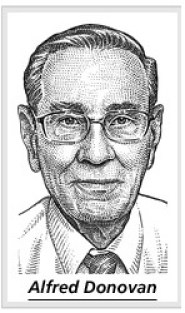 A head-cut image of Alfred Donovan (now deceased) appears courtesy of The Wall Street Journal.