THE TIMES: PERSONAL INVESTOR: The best isn’t too much of a good thing
Posted 8 May 05
By Graham Searjeant
PENSION funds are being advised by one of the few overpowerful consultants who dictate such matters to limit their holdings in Britain’s biggest and most successful companies to 5 per cent of their UK share portfolios.
Taken literally, this would, on average, mean cutting BP holdings by more than a third, shedding about a quarter of HSBC and Vodafone and pruning the already shrunken GlaxoSmithKline. This is not helpful when the market needs all the weight of new cash that it can get.
Like football’s Barclaycard Premiership, the main UK indices have become dominated by a handful of companies. Mechanically run funds track an index or more loosely mirror its weightings. Stockpicking is often reduced to short-run deviations from the norm. On such mathematical risk tests, portfolios can become accidentally concentrated.
There is a practical point. Fund managers made fools of themselves in the boom when Vodafone bought Germany’s Mannesmann, boosting its index weighting. Vodafone stock spiralled as funds competed to top up holdings, then plunged when the process was done.
This summer, Shell will, barring accident, lift its weighting from 3 per cent to 7 per cent of the FTSE all-share index when it merges with its Dutch bigger half. This guidance would save the fund sheep from embarrassment.
Private investors should be wary if Shell outpaces its peers between now and July. It might not last. If funds follow the letter, the share prices of BP et al could suffer more enduringly if UK funds feel they cannot put more than 5 per cent of new money into them.
Luckily for US shareholders in Berkshire Hathaway, Warren Buffett does not invest sheep-style. If the executive chairman really likes a company such as Coca-Cola, he takes a stake and worries not a jot if good performance makes it loom large in the portfolio.
Buffett, a byword for integrity in a sleazy world, is not having a happy time just now. General Re, an insurance company at the heart of Berkshire Hathaway, is involved in accounting scandals at the once peerless American Insurance Group (AIG), having supplied policies used by AIG to prettify its balance sheet. And Buffett, who personally runs a speculative book at Berkshire, lost £200 million in the first quarter on his bet against the US dollar, having made something of a killing last year.
Buffett the disciplined investment guru remains a wise guide to long-term portfolio building. He prefers to take chunky holdings precisely because he is backing his own judgment on the basis of detailed homework on companies with readily understandable businesses. He keeps them as long as they pass the tests of growth at a reasonable price and have a strong franchise (as well as because Berkshire has an unhelpful status for capital gains tax). The key, he says, is to think of yourself as part-owner of the business.
Buffett and Charles Munger, his deputy, were in robust form at last weekend’s annual meeting, billed as the capitalist Woodstock. Both deplored demutualisation of the New York Stock Exchange on the rarefied but refreshing ground that a profit-maximising exchange would only encourage more needless and costly share-trading activity.
They also unveiled a favoured new holding while telling investors not to expect high returns any time soon. Anheuser-Busch, of Budweiser fame, is still the world’s biggest brewer, though others are closing in through frenetic takeovers. Growth is modest but steady. Scottish & Newcastle (S&N), the UK’s premier brewer, would not pass Buffett’s tests. The shares yield above average on a rising dividend after the strategic 2003 cut. But the recent profit record is patchy, and margins and cashflow might be improved. S&N just could deliver what Buffett hopes from Anheuser-Busch, if the board focused on brands rather than deals. In myopic Britain, however, it is seen only as a possible provider of another Allied-style takeover premium.
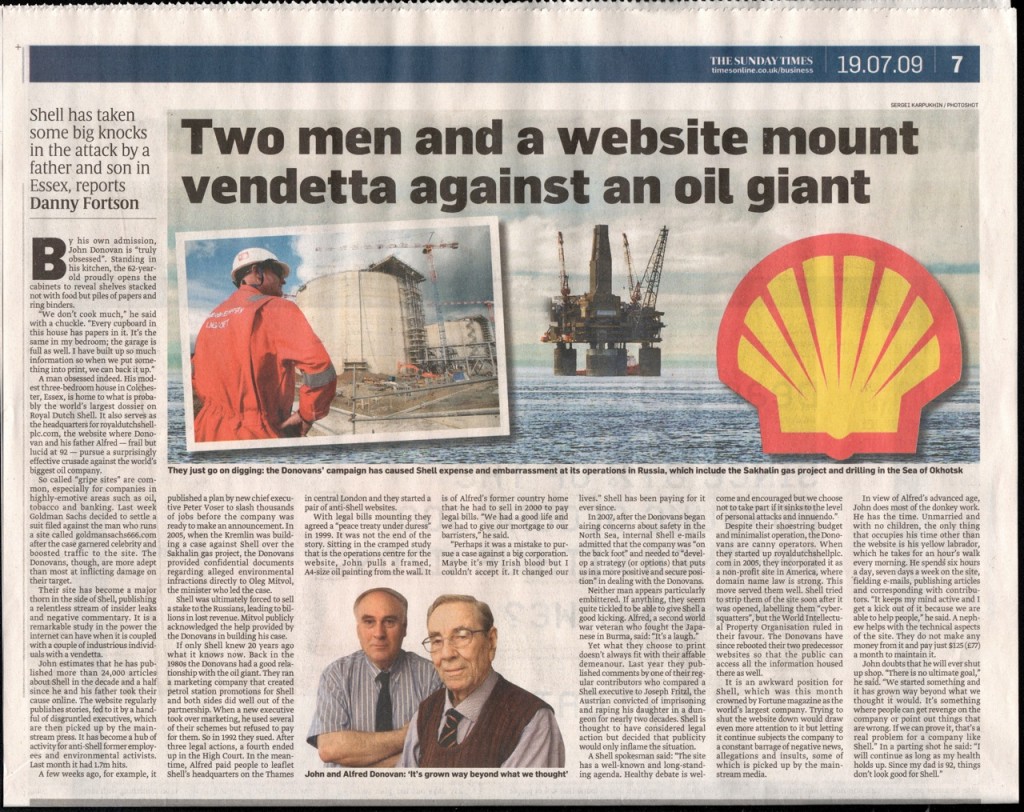
This website and sisters royaldutchshellplc.com, shellnazihistory.com, royaldutchshell.website, johndonovan.website, and shellnews.net, are owned by John Donovan. There is also a Wikipedia segment.


 Royal Dutch Shell conspired directly with Hitler, financed the Nazi Party, was anti-Semitic and sold out its own Dutch Jewish employees to the Nazis. Shell had a close relationship with the Nazis during and after the reign of Sir Henri Deterding, an ardent Nazi, and the founder and decades long leader of the Royal Dutch Shell Group. His burial ceremony, which had all the trappings of a state funeral, was held at his private estate in Mecklenburg, Germany. The spectacle (photographs below) included a funeral procession led by a horse drawn funeral hearse with senior Nazis officials and senior Royal Dutch Shell directors in attendance, Nazi salutes at the graveside, swastika banners on display and wreaths and personal tributes from Adolf Hitler and Reichsmarschall, Hermann Goring. Deterding was an honored associate and supporter of Hitler and a personal friend of Goring.

 Deterding was the guest of Hitler during a four day summit meeting at Berchtesgaden. Sir Henri and Hitler both had ambitions on Russian oil fields. Only an honored personal guest would be rewarded with a private four day meeting at Hitler’s mountain top retreat.


 IN JULY 2007, MR BILL CAMPBELL (ABOVE, A RETIRED GROUP AUDITOR OF SHELL INTERNATIONAL SENT AN EMAIL TO EVERY UK MP AND MEMBER OF THE HOUSE OF LORDS:


 MORE DETAILS:


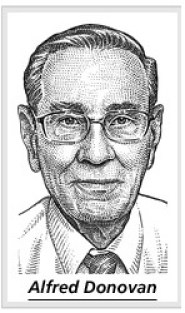 A head-cut image of Alfred Donovan (now deceased) appears courtesy of The Wall Street Journal.