The Guardian: Strike threatens Nigeria’s oil production
“Trade unions in Nigeria yesterday threatened to extend a three-day general strike which has shut down much of the country and driven world oil prices to a record high.”: Union in world’s seventh-biggest exporter says it will shut down supplies if police harass protesters
Rory Carroll, Africa correspondent
Thursday October 14, 2004
Trade unions in Nigeria yesterday threatened to extend a three-day general strike which has shut down much of the country and driven world oil prices to a record high.
The stoppage was due to end today but labour leaders said it would continue if the government used heavy-handed tactics against strikers.
At least two people have been killed in clashes between protesters and police, a modest toll compared with previous strikes, but the unions signalled that they would maintain their momentum.
“The strike is going on and it’s quite effective across the country,” said Owei Lakemfa, a spokesman for the Nigeria Labour Congress. “We have told the police that if the arrests and harassment continue, we’ll have to extend the strike.”
Oddly, given the impact on world oil prices, the strike was called to reverse steep rises in local fuel prices following the slashing of state subsidies. The government of President Olusegun Obasanjo sought a court injunction yesterday to stop the shutdown, claiming it was illegal and unconstitutional to strike for reasons unrelated to working conditions.
But a high court in the capital, Abuja, rejected the request. The Nigeria Labour Congress, an umbrella union body, was delighted. “We cannot be deterred in our struggle,” said a spokesman.
Femi Falana, a lawyer for the organisation, added: “The court has not stopped the strike. And that is a good development.”
In another blow to the government the main oil workers’ union, NUPENG, in solidarity with other unions, yesterday threatened to shut down oil supplies in the country – which is Africa’s biggest crude oil producer.
So far, Nigeria’s daily export of 2.5m barrels has not been disrupted, but the possibility that it could drove world prices up to $54.45 (£31.65) a barrel on Tuesday. Prices have since eased but analysts predicted a fresh surge at the first sign of disruption.
In a warning to the government to back off, Peter Akpatason, president of NUPENG, said that his members would leave their posts and shut down production if the police harassed strikers.
“If nothing serious happens, we will maintain this position,” he told the Associated Press. “But if there are arrests, we will change our strategy… We can move to stop operations 100%.”
The strike was called to protest at a 25% jump in fuel prices to 40 cents a litre in the wake of deregulation which reduced subsidies.
Cheap fuel is a political and emotional touchstone in Nigeria. Decades of corruption and misrule have left Africa’s most populous country resentful of the federal government, especially since it became the world’s seventh biggest oil exporter and yet has seen little done to alleviate the grinding poverty. The least the state can do, say many Nigerians, is provide discounted fuel.
But the subsidies are expensive and their market distortions have encouraged smugglers to export oil illegally, leading to shortages in cities such as Lagos and Abuja.
Since ending the country’s military rule with elections and a civilian administration, President Obasanjo has struggled to reform the economy, and protests about fuel have become a rallying point for his opponents. This is the third general strike over the issue in 18 months.
Oil and gas multinationals have said that fewer people have been reporting for work at their offices, but that offshore drilling has been unaffected. However, saboteurs who used a hacksaw to cut a pipeline in the Niger delta have forced Royal Dutch/Shell to cut production slightly, by 13,000 barrels, while repairs are made, the company said.
http://www.guardian.co.uk/international/story/0,,1326568,00.html
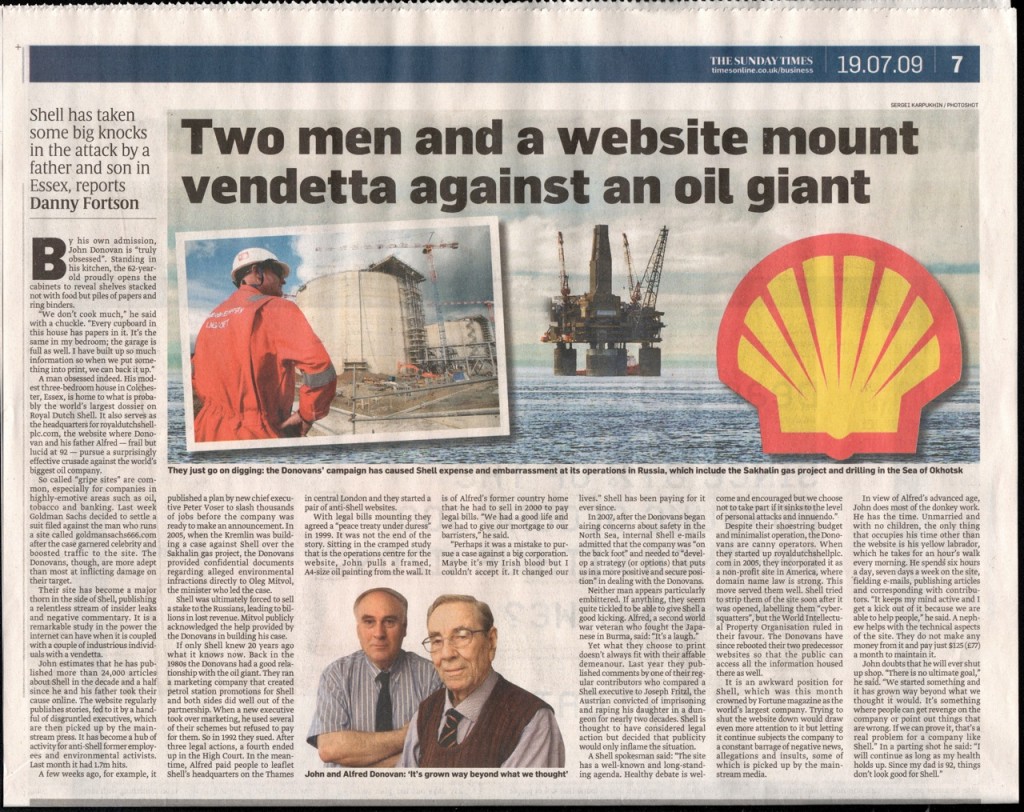
This website and sisters royaldutchshellplc.com, shellnazihistory.com, royaldutchshell.website, johndonovan.website, and shellnews.net, are owned by John Donovan. There is also a Wikipedia segment.


 Royal Dutch Shell conspired directly with Hitler, financed the Nazi Party, was anti-Semitic and sold out its own Dutch Jewish employees to the Nazis. Shell had a close relationship with the Nazis during and after the reign of Sir Henri Deterding, an ardent Nazi, and the founder and decades long leader of the Royal Dutch Shell Group. His burial ceremony, which had all the trappings of a state funeral, was held at his private estate in Mecklenburg, Germany. The spectacle (photographs below) included a funeral procession led by a horse drawn funeral hearse with senior Nazis officials and senior Royal Dutch Shell directors in attendance, Nazi salutes at the graveside, swastika banners on display and wreaths and personal tributes from Adolf Hitler and Reichsmarschall, Hermann Goring. Deterding was an honored associate and supporter of Hitler and a personal friend of Goring.

 Deterding was the guest of Hitler during a four day summit meeting at Berchtesgaden. Sir Henri and Hitler both had ambitions on Russian oil fields. Only an honored personal guest would be rewarded with a private four day meeting at Hitler’s mountain top retreat.


 IN JULY 2007, MR BILL CAMPBELL (ABOVE, A RETIRED GROUP AUDITOR OF SHELL INTERNATIONAL SENT AN EMAIL TO EVERY UK MP AND MEMBER OF THE HOUSE OF LORDS:


 MORE DETAILS:


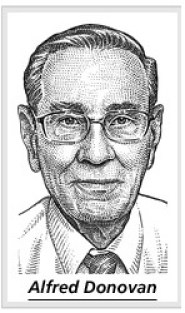 A head-cut image of Alfred Donovan (now deceased) appears courtesy of The Wall Street Journal.