Financial Times: Three cheers for bad news
“Sir Philip Watts, Royal Dutch/Shell’s chief executive, was nowhere to be seen when it cut its estimate of reserves in January.”: “Sir Philip’s display when faced with problems at Shell was an object lesson in how to flunk it…”: “He thus managed to make himself appear not only culpable but evasive.”
By John Gapper
Posted Saturday 2 October 04
Raymond Gilmartin looked a little mournful, and a touch uncertain on Thursday. Who can blame him? The chief executive of Merck, the US pharmaceuticals group, was appearing in public to make an announcement that knocked 25 per cent off Merck’s share price, weakened its chances of remaining independent and renewed speculation that he may retire early.
At least he was visible. Chief executives are not known for stepping to the front when there is bad news to announce. It can be slipped out in a press release, or a hapless manager can be put up to face questions. Sir Philip Watts, Royal Dutch/Shell’s chief executive, was nowhere to be seen when it cut its estimate of reserves in January.
So three cheers for Mr Gilmartin. He not only promptly withdrew Vioxx, Merck’s $2.5bn-a-year painkiller, when a trial showed it could raise the risk of heart attacks and strokes, but appeared on television and gave a press conference. It was a fine example of a captain not only going down with his ship, but standing on the bridge.
There is a vogue these days for business leaders to take lessons from sports stars and coaches. They want to learn how to summon strength and motivation to perform at their best. But few reflect on what to do when things go wrong. That is natural, but it is a mistake. After all, disaster is the ultimate character test.
Sir Philip’s display when faced with problems at Shell was an object lesson in how to flunk it. He provoked justifiable anger among investors by not taking part in the conference call to announce Shell’s revision of reserves. He thus managed to make himself appear not only culpable but evasive. He lost his job, and is now battling with financial regulators.
Mr Gilmartin could have taken a similar course. After all, the problem with Vioxx was not his fault. It emerged in a three-year trial conducted after the drug was released. It also comes at a tough time for Merck, which is suffering from a depleted drugs pipeline and could face trouble remaining independent.
He was probably told to deliver the news in person by advisers who know that companies can gain from deft handling of setbacks. It is hard to forget Richard Branson rushing to Heathrow to hold an impromptu press conference in 1997 after a Virgin Airlines aircraft landed on only one set of wheels.
Still, advice from the sidelines is one thing: the willingness to take it is another. Drug company bosses do not have a good record as communicators, often getting irritated when criticised for making excess profits from patented medicines. Nor is it in most high achievers’ nature to accept reverses: they prefer to focus on the positive.
Mr Gilmartin displayed more character. If there were any justice in the world, his graceful display of sang-froid under pressure would be rewarded by a recovery in Merck’s fortunes. Sadly, that seems unlikely. The company looks even more fragile compared with competitors such as Pfizer. But its boss is going down in style.
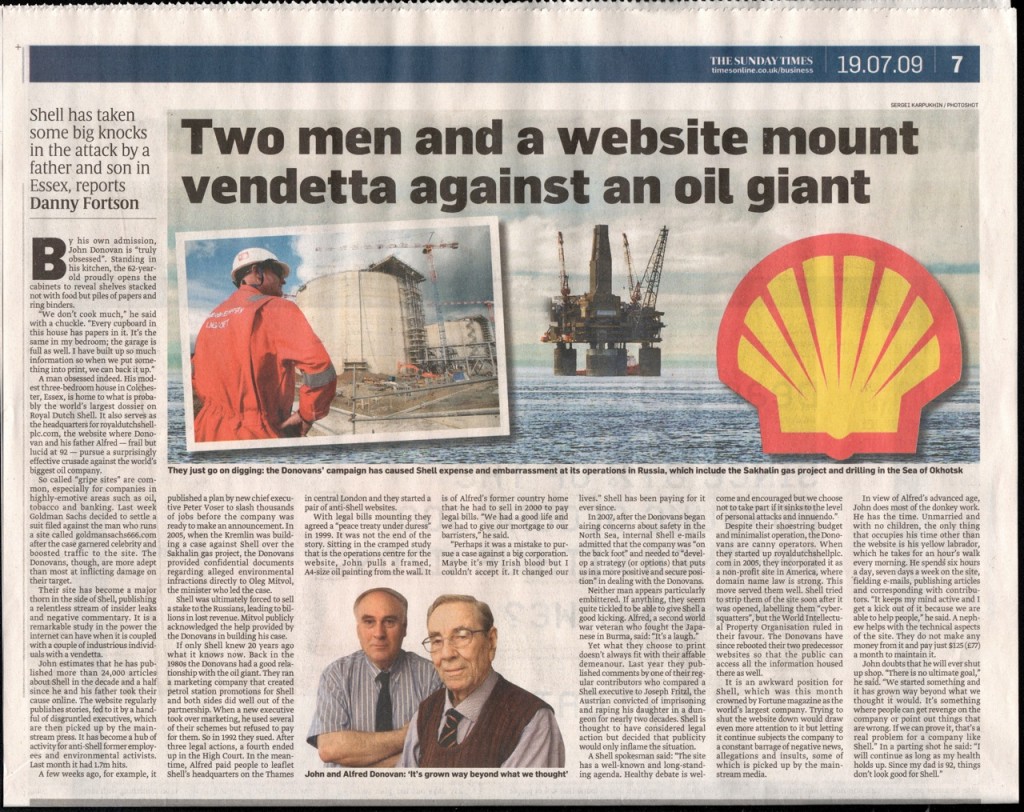
This website and sisters royaldutchshellplc.com, shellnazihistory.com, royaldutchshell.website, johndonovan.website, and shellnews.net, are owned by John Donovan. There is also a Wikipedia segment.


 Royal Dutch Shell conspired directly with Hitler, financed the Nazi Party, was anti-Semitic and sold out its own Dutch Jewish employees to the Nazis. Shell had a close relationship with the Nazis during and after the reign of Sir Henri Deterding, an ardent Nazi, and the founder and decades long leader of the Royal Dutch Shell Group. His burial ceremony, which had all the trappings of a state funeral, was held at his private estate in Mecklenburg, Germany. The spectacle (photographs below) included a funeral procession led by a horse drawn funeral hearse with senior Nazis officials and senior Royal Dutch Shell directors in attendance, Nazi salutes at the graveside, swastika banners on display and wreaths and personal tributes from Adolf Hitler and Reichsmarschall, Hermann Goring. Deterding was an honored associate and supporter of Hitler and a personal friend of Goring.

 Deterding was the guest of Hitler during a four day summit meeting at Berchtesgaden. Sir Henri and Hitler both had ambitions on Russian oil fields. Only an honored personal guest would be rewarded with a private four day meeting at Hitler’s mountain top retreat.


 IN JULY 2007, MR BILL CAMPBELL (ABOVE, A RETIRED GROUP AUDITOR OF SHELL INTERNATIONAL SENT AN EMAIL TO EVERY UK MP AND MEMBER OF THE HOUSE OF LORDS:


 MORE DETAILS:


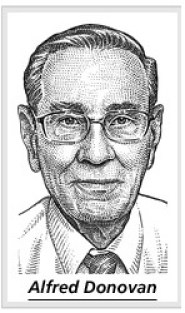 A head-cut image of Alfred Donovan (now deceased) appears courtesy of The Wall Street Journal.