Financial Times: The ‘quasi-dividend’ of a buy-back programme
“So why has there been such commiseration when companies such as Royal Dutch/Shell… cast a veil of uncertainty over their share repurchase programmes?”: “This month, shareholders have been disappointed by the impact a $45bn (£25bn) capital spending programme over the next three years will have on Shell’s buy-back programme.”
By Henry Tricks
Published: October 2
According to a joke doing the rounds in the City, dividends are like marriage and share buy-backs are like affairs, requiring no long-term commitment.
So why has there been such commiseration when companies such as Royal Dutch/Shell, Barclays and Boots cast a veil of uncertainty over their share repurchase programmes?
The answer, according to Rolf Elgeti, strategist at ABN Amro, is that investors are viewing buy-backs as “quasi-dividends” instead of the flexible way of returning cash to shareholders they are meant to be.
“We have been seeing a shift here since the beginning of this year where more and more investors have incorporated share buy-backs into their dividend yield forecasts,” he said. “It may be that playing around with the buy-back programme will come to have the same potential impact as a dividend cut.”
This month, shareholders have been disappointed by the impact a $45bn (£25bn) capital spending programme over the next three years will have on Shell’s buy-back programme. When Barclays announced it was in talks to buy South Africa’s Absa, it indicated it might be forced to suspend its buy-back programme if it makes a cash purchase. Meanwhile, Boots has left open the possibility of suspending the second tranche of its £700m share repurchase programme.
Bankers and analysts say it is perfectly legitimate for companies to adjust their buy-back programmes if they can increase returns by investing the money in improving the business rather than handing it back to shareholders. The trouble comes when companies use the cash for misadventures, or shareholders lack the confidence that management will spend their surplus cash wisely. However, shareholders should not become complacent, they say.
“The market has got used to a continuous stream of buy-backs but it has to recognise buy-backs are driven by management’s view of what constitutes genuine surplus,” warns a senior London investment banker. “They should not be counted on.”
According to Graham Secker, of Morgan Stanley, share buy-backs are running at a record rate of £14bn this year, equating to what he calls a “buy-back yield” of 1.2 per cent. Adding this to UK companies’ dividend yield of 3.4 per cent provides a combined yield of 4.6 per cent – slightly lower than the return on 10-year gilts.
That combined yield, he says, is at a nine-year high.
It is easy to exaggerate the inherent value of buy-backs. According to analysts, in the UK there are few meaningful tax advantages to buy-backs over dividends.
JP Morgan notes that share repurchases do not create value unless the cash payment is big enough to permanently increase leverage, or if the stock is undervalued and subsequently re-rates. Sometimes, share repurchases signal a lack of management vision. There is little evidence to prove over the long-term that buy-backs provide a lasting boost to shareholder returns.
However, in times of uncertainty, it is heartening for shareholders to know that management believes its own growth story. Moreover, buy-backs enhance earnings per share, even if that is merely cosmetic.
That, perhaps, is why managers are in love with them. But buy-backs, like love, are a fickle thing.
This website and sisters royaldutchshellplc.com, shellnazihistory.com, royaldutchshell.website, johndonovan.website, and shellnews.net, are owned by John Donovan. There is also a Wikipedia segment.


 Royal Dutch Shell conspired directly with Hitler, financed the Nazi Party, was anti-Semitic and sold out its own Dutch Jewish employees to the Nazis. Shell had a close relationship with the Nazis during and after the reign of Sir Henri Deterding, an ardent Nazi, and the founder and decades long leader of the Royal Dutch Shell Group. His burial ceremony, which had all the trappings of a state funeral, was held at his private estate in Mecklenburg, Germany. The spectacle (photographs below) included a funeral procession led by a horse drawn funeral hearse with senior Nazis officials and senior Royal Dutch Shell directors in attendance, Nazi salutes at the graveside, swastika banners on display and wreaths and personal tributes from Adolf Hitler and Reichsmarschall, Hermann Goring. Deterding was an honored associate and supporter of Hitler and a personal friend of Goring.

 Deterding was the guest of Hitler during a four day summit meeting at Berchtesgaden. Sir Henri and Hitler both had ambitions on Russian oil fields. Only an honored personal guest would be rewarded with a private four day meeting at Hitler’s mountain top retreat.


 IN JULY 2007, MR BILL CAMPBELL (ABOVE, A RETIRED GROUP AUDITOR OF SHELL INTERNATIONAL SENT AN EMAIL TO EVERY UK MP AND MEMBER OF THE HOUSE OF LORDS:


 MORE DETAILS:


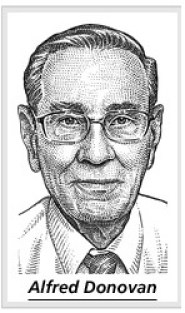 A head-cut image of Alfred Donovan (now deceased) appears courtesy of The Wall Street Journal.