Financial Times: Puzzling out the options as Shell faces reform: “Transparency is a matter of culture. It’s not a matter of organisation …”
By Ian Bickerton, Carola Hoyos and James Boxell
12 August 04
Royal Dutch/Shell has several options to consider as it decides how to create a more unified company. But legal and corporate experts in the UK and the Netherlands agree that ripping apart the Anglo/Dutch partnership formed in 1907 through a traditional merger may not be the easiest or optimum route.
In the Netherlands, experts said one possible route lay open to Royal Dutch/Shell should it choose to unify its century-old company structure.
One of the holding companies would have to make a public offer for the shares of the other, resulting in one listed company, a senior Dutch lawyer said.
Should the company wish to move to a 50:50 ownership structure, by re-aligning the value of assets currently split 60:40 in favour of the Dutch arm, it would involve a transfer of value to Shell Transport & Trading.
That would require a payment to Royal Dutch Petroleum shareholders, either in cash or newly-issued Shell Transport & Trading shares, or the UK arm could issue new shares to increase its capital base and acquire the assets that way, the lawyer said. That would not, however, result in one company, he pointed out.
Paul Frentrop, from Deminor, the European minority shareholders’ group, said a cash payment equivalent to 10 per cent of the value of the company would cost Shell Transport & Trading shareholders “around €8bn ($9.8bn)”.
The Dutch lawyer warned that such a move would be closely scrutinised by the Dutch government, which might be uneasy over any dilution of Royal Dutch Petroleum’s historic majority-ownership position. “I honestly don’t see much of a positive because, if you create one legal entity, you get a lot of political items on the table between Dutch and UK governments and agencies. Why would you have all that noise when you can more easily create a governance structure that is completely unified?” However, while sceptical of the necessity for such a radical shake-up, he accepted there would be benefits for the UK arm and in terms of the unified company’s ability to undertake acquisitions.
One London-based corporate lawyer is similarly sceptical about the need for a full merger, but said: “What they don’t have is a mirror board where each director represents both companies. As long as they sort this out, the other stuff could just be hot air.” Shell is exploring options beyond the mere combination of boards. The UK lawyer agreed with his Dutch counterpart that one option could be for the UK company to buy part of the Dutch company’s stake, leaving them with 50 per cent each.
“This would give total parity and could be an efficient way of using surplus cash, enhancing the structure and reducing the differential of interests,” he said.
It would also appease UK investors uneasy about Dutch shareholder dominance. Dutch board members have traditionally been given priority shares, which is also seen as giving them an advantage over the UK, although these are being scrapped.
Meanwhile, a straight takeover of one company by the other could run into shareholder opposition. For example, if Royal Dutch takes over Shell Transport this may create a company in which British institutions are unable to invest, because they must invest mostly in UK-listed companies. A radical way around this and the Shell board has talked of “extreme measures” could be the creation of a “dual-incorporated company structure”, known as a Dinc, although this has never been tried in the UK and it is unclear whether it would comply with Dutch law.
This could see every investor becoming a shareholder in the UK company, which would then be reincorporated in the Netherlands. As a result, the combined company would be incorporated in both countries. Whatever structural change Shell decides on, if any, it will need to make sure that there are not tax “leakages” if it moves shareholder funds from one state to another. As one lawyer points out, even a 1 per cent rise in taxation makes a vast difference to a company of Shell’s size.
Shell’s steering committee and the working group charged with sorting out the tax implications have until November to make a decision, when investors have been told they will be given the first indications of what governance reform they can expect. Something they might like to consider are the thoughts of Antony Burgmans, chairman of Unilever, the Anglo-Dutch consumer group.
He warned that those who suggested that the group’s problems stemmed from its complex structure were “completely barking up the wrong tree”. “Transparency is a matter of culture. It’s not a matter of organisation … and the leader sets the tone. The culture of the leader becomes the culture of the company.”
Additional reporting by Stefan Wagstyl.
This website and sisters royaldutchshellplc.com, shellnazihistory.com, royaldutchshell.website, johndonovan.website, and shellnews.net, are owned by John Donovan. There is also a Wikipedia segment.


 Royal Dutch Shell conspired directly with Hitler, financed the Nazi Party, was anti-Semitic and sold out its own Dutch Jewish employees to the Nazis. Shell had a close relationship with the Nazis during and after the reign of Sir Henri Deterding, an ardent Nazi, and the founder and decades long leader of the Royal Dutch Shell Group. His burial ceremony, which had all the trappings of a state funeral, was held at his private estate in Mecklenburg, Germany. The spectacle (photographs below) included a funeral procession led by a horse drawn funeral hearse with senior Nazis officials and senior Royal Dutch Shell directors in attendance, Nazi salutes at the graveside, swastika banners on display and wreaths and personal tributes from Adolf Hitler and Reichsmarschall, Hermann Goring. Deterding was an honored associate and supporter of Hitler and a personal friend of Goring.

 Deterding was the guest of Hitler during a four day summit meeting at Berchtesgaden. Sir Henri and Hitler both had ambitions on Russian oil fields. Only an honored personal guest would be rewarded with a private four day meeting at Hitler’s mountain top retreat.


 IN JULY 2007, MR BILL CAMPBELL (ABOVE, A RETIRED GROUP AUDITOR OF SHELL INTERNATIONAL SENT AN EMAIL TO EVERY UK MP AND MEMBER OF THE HOUSE OF LORDS:


 MORE DETAILS:


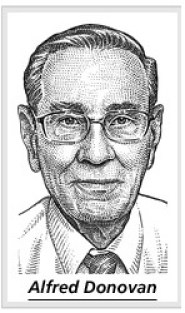 A head-cut image of Alfred Donovan (now deceased) appears courtesy of The Wall Street Journal.