Campaign Magazine: Article by MAIRI CLARK: June 07, 1996
McBain Noel-Johnson was set up in 1972 as a design agency, but after a couple of years the company decided to ‘transfer big agency skills into a smaller operation,’ the chief executive, Chris Noel-Johnson, says.
McBain Noel-Johnson was set up in 1972 as a design agency, but after a couple of years the company decided to ‘transfer big agency skills into a smaller operation,’ the chief executive, Chris Noel-Johnson, says.
This evolutionary process was repeated in 1988, when Richard Ballard was drafted in to set up an electronic state-of-the-art production facility, called, imaginatively enough, the Electronic Studio.
It revolutionised the way agencies looked at creative production and technology. ‘We realised that the future of production was in fully-automated production,’ Noel-Johnson explains.
Noel-Johnson and Ballard have worked together at McBains (as it is now called) for many years and have a complementary working relationship.
Ballard is the softly spoken, hands-on man. He studied art at Somerset School of Art and Design, but admits: ‘I’ve always been more interested in the mechanics than art.’
Noel-Johnson, meanwhile, is an account man by trade, having worked at Ogilvy and Mather and S. H. Benson. He comments: ‘I wouldn’t say I was an account man for long; I started McBains when I was 25.’
The pair’s most involved work was for Wightlink, a ferry service linking the Isle of Wight to the mainland. They were immersed from the start, from designing the corporate livery to creating the brand advertising.
‘We try to work closely with our clients at whatever pace they wish to go,’ Noel-Johnson says.
McBains has also worked on campaigns for BT and the Heart of Britain appeal.
Noel-Johnson adds: ‘Now our priority is to develop our creative reputation, hence the hiring of Giles Keeble [the former creative supremo at Leo Burnett] as creative director, and to develop online work. Above-the-line media is fragmenting and agencies need the resources to drive the business.’


 Royal Dutch Shell conspired directly with Hitler, financed the Nazi Party, was anti-Semitic and sold out its own Dutch Jewish employees to the Nazis. Shell had a close relationship with the Nazis during and after the reign of Sir Henri Deterding, an ardent Nazi, and the founder and decades long leader of the Royal Dutch Shell Group. His burial ceremony, which had all the trappings of a state funeral, was held at his private estate in Mecklenburg, Germany. The spectacle (photographs below) included a funeral procession led by a horse drawn funeral hearse with senior Nazis officials and senior Royal Dutch Shell directors in attendance, Nazi salutes at the graveside, swastika banners on display and wreaths and personal tributes from Adolf Hitler and Reichsmarschall, Hermann Goring. Deterding was an honored associate and supporter of Hitler and a personal friend of Goring.

 Deterding was the guest of Hitler during a four day summit meeting at Berchtesgaden. Sir Henri and Hitler both had ambitions on Russian oil fields. Only an honored personal guest would be rewarded with a private four day meeting at Hitler’s mountain top retreat.


 IN JULY 2007, MR BILL CAMPBELL (ABOVE, A RETIRED GROUP AUDITOR OF SHELL INTERNATIONAL SENT AN EMAIL TO EVERY UK MP AND MEMBER OF THE HOUSE OF LORDS:


 MORE DETAILS:


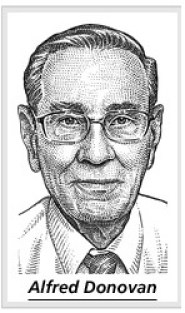 A head-cut image of Alfred Donovan (now deceased) appears courtesy of The Wall Street Journal.