The likes of BP, Shell, and ExxonMobil are keen to point out the increasing difficulty they have in accessing new reserves, thanks to the hardening stance of state-owned oil companies which are unconvinced that they need the help of private groups to extract the resource.
Saudi Arabia
BP chief blames states, not speculators, for record oil prices
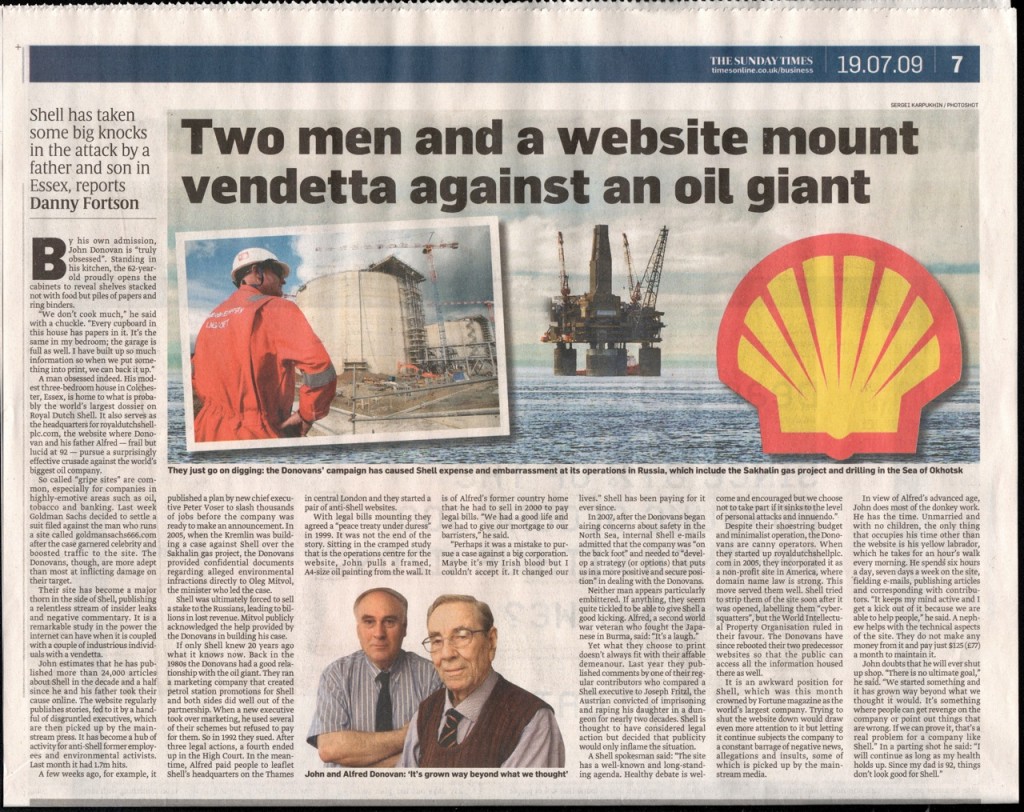
This website and sisters royaldutchshellplc.com, shellnazihistory.com, royaldutchshell.website,
johndonovan.website, and shellnews.net,
are owned by John Donovan. There is also a Wikipedia segment.
Exxon, BP, Shell Investors Lose in Best Year for Oil Prices
Exxon Mobil Plc, Royal Dutch Shell Plc and BP Plcinvestors are losing money in the best year for oil prices as they cede control of production to state-owned energy companies.
700 militants arrested this year, Saudis say on suspicion of planning attacks on the country’s oil industry and other targets
Saudi Arabia has arrested 700 militants in the past six months on suspicion of planning attacks on the country's oil industry and other targets, the interior ministry said yesterday.
Saudi arrests 700 over ‘oil attack’ plots
OPEC kingpin Saudi Arabia has arrested 701 Islamists in the past six months on suspicion of plotting attacks on oil industry installations, the interior ministry announced on Wednesday.
Oil Is Little Changed After Rising on Nigeria Supply Disruption
Attacks on a Royal Dutch Shell Plc platform and a Chevron Corp. pipeline last week halted 300,000 barrels a day of Nigerian output. The country's white-collar oil union began a strike against Chevron today that may stop as much as 350,000 barrels a day
Oil continues to rise as Nigerian rebels attack Shell platform 120 miles offshore
Exacerbating the situation is Nigeria, where armed rebels opened a new front in their campaign against foreign oil companies last week by attacking a Royal Dutch Shell platform 120 miles of the coast. Deepwater platforms have generally been viewed as safe from attack, given their distance from the coast.
Who wants oil prices to fall?
...does Saudi Arabia really want to bring oil prices down?
Global Oil Crisis: Oil Rises as Saudi Pledge Fails to Ease Global Supply Concerns
June 23 (Bloomberg) -- Oil rose to within $3 of a record on speculation Saudi Arabia's output increase may not raise global supply because of production halts in Nigeria and the North Sea.
Global Oil Crisis: Jeddah Deepens Oil Price Dialogue, But No Quick Fix
"In this critical hour, the world community should rise to its responsibility and cooperation should be the cornerstone of any efforts," Saudi King Abdullah said on Sunday, calling for a global "energy-for-the-poor" initiative.
Global Oil Crisis: Agreements Are Elusive at Oil Talks in Saudi Arabia
Despite the urgency that brought hundreds of participants here, Jeroen van der Veer, the chief executive of Royal Dutch Shell, summarized the difficulties faced by oil producers in dealing with record prices: There are no overnight solutions.
Global Oil Crisis: Saudis Promise More Oil To Curb World-Wide Fears
But it is unclear whether the Saudi bid to reassert its oil muscle will be enough to slow a historic surge in crude prices that many fear could go far higher...
Saudi oil output increase set to be wiped out by Nigeria crisis
Saudi Arabia's decision to pump more oil than it has in nearly 30 years risks being more than outweighed by the sharp drop in output caused by attacks on production facilities in Nigeria.
Global Oil Crisis: Saudi Arabia acts to avoid blame for rise
Soaring energy costs have prompted concerns about political and social instability in developed countries and fuelled high inflation in many nations. And the last thing Saudi Arabia wants is to be blamed.
Opec rift fuels new fears for oil prices
Fears that the price of oil could reach new highs in the coming weeks have intensified following the emergency meeting of the world's oil powers in Saudi Arabia.
Oil price rises despite Saudi Arabia’s pledge
Jeroen van der Veer, chief executive of oil giant Royal Dutch Shell, agreed that there would be no "silver bullet" solution to curb spiralling oil prices. "What I've heard so far are basically all good ideas, but it will probably not change the price tomorrow morning," he added.
Little hope oil summit will cut prices: Shell CEO Jeroen van der Veer
Saudi Arabia (Reuters) - Crisis talks over record high oil prices are unlikely to quickly turn the tables on roaring markets, the chief of Royal Dutch Shell said on Sunday.
Oil Powers Seek Tonic to Record Prices In Jeddah
Saudi Arabia will try to coax its few OPEC peers who have spare production capacity to join the kingdom in pumping more barrels, although some in the cartel have been openly skeptical that raising output will rein in prices they believe are driven more by speculation than market fundamentals
Crude-oil futures rose 2% Friday, boosted by news of supply interruptions in Nigeria and…
Supply interruptions in Nigeria gave crude-futures prices another leg up. Royal Dutch Shell declaredforce majeure on 225,000 barrels a day at its Bonga production facility off the coast of Nigeria after an attack Thursday. The company expects the facility to remain off line for several weeks.
Former shepherd boy with power to pour oil on the world’s troubles
"The more information that comes out, it seems that there is possibly less to this meeting than meets the eye."
Saudi Arabia oil summit should look beyond the short term
Some Opec members are refusing to attend the summit in disgust at what they feel is Saudi Arabia's unilateralism.
Oil prices soar as leaders gather for Saudi Arabia summit
Jeroen van der Veer, chief executive of Royal Dutch Shell, and Tony Hayward, his opposite number at BP, are among the senior businessmen attending.
Venezuela to snub Saudi Arabia over call for Opec summit
Among those expected to attend are the chief executives of the world's eight largest international oil companies by market capitalisation - ExxonMobil, Royal Dutch Shell, BP, Chevron, Total, ConocoPhillips, Eni and Repsol.
Warning that oil summit could push price up
Van der Veer has said peak oil is close and that it is time to start producing it from new sources such as tar sands and gas-to-liquids.
Oil price edges closer to $140 a barrel
Richard Savage, head of energy research for Mirabaud, the Swiss bank, said: This increase won't help bring prices down. If anything, it has made people slightly nervous because the rise is so small that it makes you wonder how close to capacity the Saudis now are. There is a sense of: Is this all they can really do?'
Saudi King: ‘We will pump more oil’
Saudi Arabia will raise oil production to record levels within weeks in an attempt to avert an escalation of social and political unrest around the world.
Saudi Arabia increases oil output after UN pressure
Saudi Arabia has offered to increase oil production, as the worlds biggest oil exporter moves to address global fears that prices are spiralling out of control, it emerged yesterday.
WILL WE SOON BE RUNNING ON EMPTY?
On Friday, Saudi announced an emergency summit, to be held next weekend in the port of Jeddah, inviting leading oil producers and consumers - including the UK and the United States.
Plan Would Lift Saudi Oil Output to Highest Ever
The move was seen as a sign that the Saudis are becoming increasingly nervous about both the political and economic effect of high oil prices. In recent weeks, soaring fuel costs have incited demonstrations and protests from Italy to Indonesia.
Oil Prices Fail To Prod OPEC To Produce More
LONDON -- The latest rise in oil prices is doing little to persuade the Organization of Petroleum Exporting Countries to boost output, as it repeats its mantra that the slumping global economy will push demand lower this year.
Fuel costs: Saudi Arabia to call Opec summit in attempt to stem ‘unjustified’ oil price surge
BP claimed yesterday that soaring prices and instability were being caused by a lack of supply. It blamed high taxes in producer countries but made no reference to the $50bn the company had spent buying back its own shares over recent years - money which could have been invested in boosting output.
Oil Majors Say U.S. Restrictions Delay Iran Projects
Despite an urgent need to replenish reserves, Anglo-Dutch oil giant Royal Dutch Shell PLC and Spanish-Argentine Repsol YPF said they wouldn't sign a $10 billion contract to enter South Pars, the Iranian side of a giant natural-gas field shared with Qatar. Instead, the two oil giants are considering entering later phases of the project.
Saudi Aramco at 75
I take special pride in mentioning that Motiva - our joint venture with Shell here in the U.S. - broke ground in December 2007 on a $7 billion project to expand its refinery in Port Arthur, Texas. Upon completion in 2010, this investment will provide 325,000 barrels per day of additional gasoline and other petroleum products to U.S. domestic markets. The expansion will increase the refinery's crude throughput capacity to 600,000 barrels per day, making it the largest U.S. refinery. In addition, the project is expected to generate over 4,500 construction jobs and as many as 300 new permanent jobs upon completion.
Oil Exporters Are Unable To Keep Up With Demand
"The sense in the market is that peak oil is here and that things will only get worse,"...
Shell raises Saudi gas project stake to 50 pct
RIYADH, May 27 (Reuters) - Royal Dutch Shell (RDSa.L: Quote, Profile, Research) has raised to 50 from 40 percent its stake in a project to explore for gas in Saudi Arabia's vast Empty Quarter after French Total (TOTF.PA: Quote, Profile, Research) pulled out of the joint-venture.
The globe’s most hydrocarbon-rich region facing prospect of critical shortages of gas
"...so far, no discoveries have been made and this year Total of France pulled out of the project, selling its stake to Royal Dutch Shell and Aramco."
Oil: A global crisis
The invasion of Iraq by Britain and the US has trebled the price of oil, according to a leading expert, costing the world a staggering $6 trillion in higher energy prices alone. Goldman Sachs predicted last week that the price could rise to an unprecedented $200 a barrel over the next year, and the world is coming to terms with the idea that the age of cheap oil has ended, with far-reaching repercussions on their activities.
Running on empty?
So are the peak oilists right? A series of recent events certainly appears to lend credence to those who argue that the world's ageing oilfields are being sucked dry amid China's and India's determination to lift themselves out of poverty and the west's reluctance to give up the luxuries of modern oil-dependent life.
The Guardian: Q&A: Oil
The Guardian: Q&A: Oil
Mark Tran looks at the reasons behind the surge in oil prices and their possible impact on the world economy
Wednesday June 2, 2004
Posted 3 June 04
How much does a barrel of oil cost?
US light crude touched a fresh 21-year high of over $42 (£22.7) in New York today before dropping back a few cents. That means oil prices have gone up by about a quarter since the start of the year and are now well over the $22-$28 target range set by the Opec oil cartel.
Why have prices gone up?
The main factor has been strong economic growth in the US and China. With a red-hot economy, China’s oil demand looks set to rise about 20% in the first half of this year on top of 11% growth last year, according to the International Energy Agency (IEA). At the same time, higher growth in the US economy, which devours 25% of all world oil, is driving competition between Asia and the US for supplies. The rate of demand growth has caught forecasters by surprise, with the lack of refining capacity in the US also putting pressure on prices.
Shaken expatriates rethink Saudi future
The Guardian: Shaken expatriates rethink Saudi future
Ewen MacAskill and Brian Whitaker
Wednesday June 2, 2004
Foreign companies in Saudi Arabia are offering to repatriate the families of their staff in the wake of the bloody weekend rampage by militants that left 22 dead, most of them foreigners.
As new clashes between suspected militants and security forces were reported in the west of the country, several Japanese companies joined Shell, the Anglo-Dutch oil giant, in offering to pull relatives out of the kingdom.
One Japanese firm said it may also evacuate its workers, though it was too early to tell whether there would be an exodus. Saudi Arabia relies on 6 million expatriates to operate its oil and other industries. The vast majority are Asian, with British and American workers numbering around 25,000.


 Royal Dutch Shell conspired directly with Hitler, financed the Nazi Party, was anti-Semitic and sold out its own Dutch Jewish employees to the Nazis. Shell had a close relationship with the Nazis during and after the reign of Sir Henri Deterding, an ardent Nazi, and the founder and decades long leader of the Royal Dutch Shell Group. His burial ceremony, which had all the trappings of a state funeral, was held at his private estate in Mecklenburg, Germany. The spectacle (photographs below) included a funeral procession led by a horse drawn funeral hearse with senior Nazis officials and senior Royal Dutch Shell directors in attendance, Nazi salutes at the graveside, swastika banners on display and wreaths and personal tributes from Adolf Hitler and Reichsmarschall, Hermann Goring. Deterding was an honored associate and supporter of Hitler and a personal friend of Goring.

 Deterding was the guest of Hitler during a four day summit meeting at Berchtesgaden. Sir Henri and Hitler both had ambitions on Russian oil fields. Only an honored personal guest would be rewarded with a private four day meeting at Hitler’s mountain top retreat.


 IN JULY 2007, MR BILL CAMPBELL (ABOVE, A RETIRED GROUP AUDITOR OF SHELL INTERNATIONAL SENT AN EMAIL TO EVERY UK MP AND MEMBER OF THE HOUSE OF LORDS:


 MORE DETAILS:


 A head-cut image of Alfred Donovan (now deceased) appears courtesy of The Wall Street Journal.