

By Rania El Gamal and Alex Lawler | VIENNA
OPEC was trying on Monday to rescue a deal to limit oil output as tensions grew among the producer group and non-OPEC member Russia, with top exporter Saudi Arabia saying markets would rebalance even without an agreement.
OPEC experts started a meeting in Vienna at 0900 GMT and were due to make recommendations to their ministers on how exactly the Organization of the Petroleum Exporting Countries should reduce production when it meets on Nov. 30.
Meanwhile, the Algerian and Venezuelan oil ministers were to travel to Moscow on Monday and Tuesday in a final attempt to persuade Russia to take part in cuts instead of merely freezing output, which has reached new highs in the past year.
In September, OPEC, which accounts for a third of global oil production, agreed to cap output at around 32.5-33.0 million barrels per day versus the current 33.64 million bpd to prop up oil prices, which have more than halved since mid-2014.
The meeting on Nov. 30 was expected to rubber-stamp that deal, with Russia and some other non-OPEC producers such as Azerbaijan and Kazakhstan also contributing.
But doubts emerged in recent weeks as OPEC’s No.2 and 3 producers, Iraq and Iran, expressed reservations about the mechanics of output reductions and Saudi Arabia voiced concern about Russia’s willingness to cut.
On Friday, OPEC canceled an experts meeting with non-OPEC producers scheduled for Nov. 28 after Saudi Arabia said the organization needed to sort out its differences first.
Over the weekend, Saudi Energy Minister Khalid al-Falih said oil markets would rebalance even without an output-limiting pact. He had previously said Riyadh was keen for a deal.
“NOBODY KNOWS”
Doubts about OPEC’s ability to deliver promised cuts sent Brent crude down 2 percent initially on Monday to less than $47 a barrel. Prices later recovered to trade up 1 percent after Iraq’s oil minister said he remained optimistic. [O/R]
Some analysts including Morgan Stanley and Macquarie have said oil prices will correct sharply if OPEC fails to reach a deal, potentially going as low as $35 per barrel.
As OPEC experts turned up at the group’s headquarters on Monday, one delegate who had previously stated that a deal would be done, said this time: “I am not sure.”
Another delegate, when asked about the prospects for a deal, said: “Nobody knows yet”.
Iraqi Oil Minister Jabar Ali al-Luaibi, upon arrival in Vienna, declined to say whether Iraq was ready to cut output: “We are optimistic. We hope we (will) have agreement. We will cooperate with OPEC members to reach agreement acceptable to all.”
OPEC ministers started arriving in Vienna on Sunday for the group’s regular twice-yearly talks but Saudi Arabia’s Falih was not expected to land before Tuesday evening, leaving little time for traditional pre-meeting discussions with peers.
Iranian semi-official news agency MEHR published an editorial on Sunday accusing Saudi Arabia of declaring a new “war on oil prices” and reneging on its promises to limit output.
The tone contrasted with Iranian news agencies’ more upbeat coverage of OPEC’s informal meeting in September in Algeria, when the initial deal was reached.
(Additional reporting by Ahmad Ghaddar and Vladimir Soldatkin; Writing by Dmitry Zhdannikov; Editing by Dale Hudson)
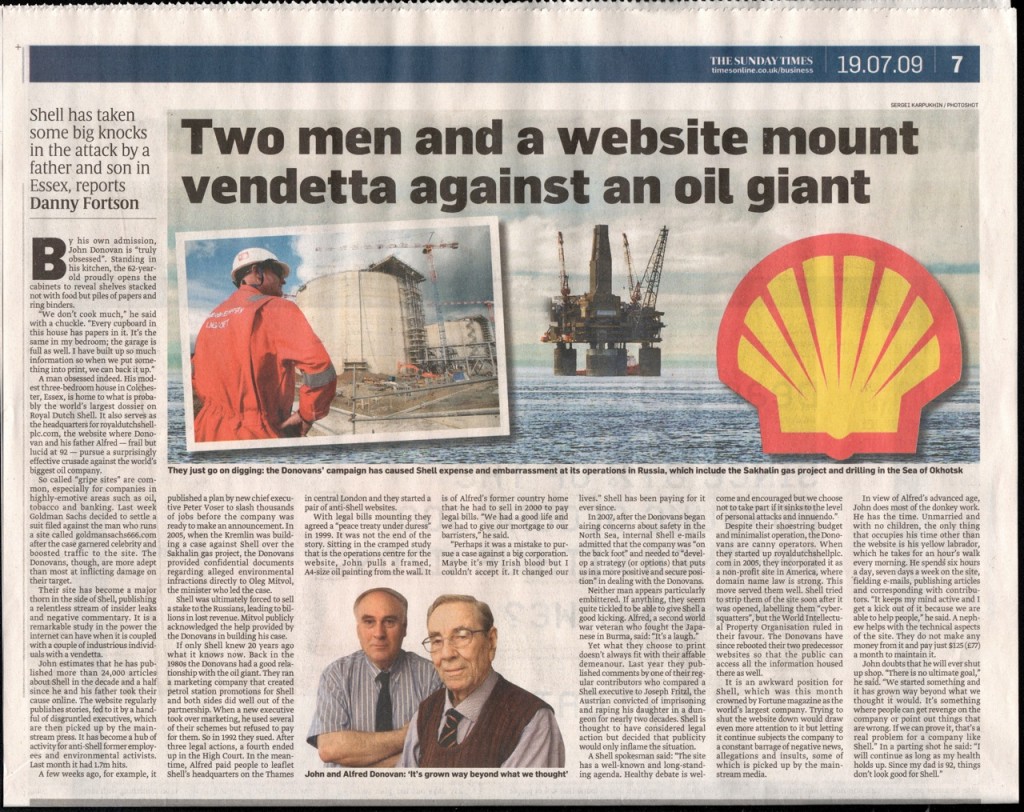
This website and sisters royaldutchshellplc.com, shellnazihistory.com, royaldutchshell.website, johndonovan.website, and shellnews.net, are owned by John Donovan. There is also a Wikipedia segment.


 Royal Dutch Shell conspired directly with Hitler, financed the Nazi Party, was anti-Semitic and sold out its own Dutch Jewish employees to the Nazis. Shell had a close relationship with the Nazis during and after the reign of Sir Henri Deterding, an ardent Nazi, and the founder and decades long leader of the Royal Dutch Shell Group. His burial ceremony, which had all the trappings of a state funeral, was held at his private estate in Mecklenburg, Germany. The spectacle (photographs below) included a funeral procession led by a horse drawn funeral hearse with senior Nazis officials and senior Royal Dutch Shell directors in attendance, Nazi salutes at the graveside, swastika banners on display and wreaths and personal tributes from Adolf Hitler and Reichsmarschall, Hermann Goring. Deterding was an honored associate and supporter of Hitler and a personal friend of Goring.

 Deterding was the guest of Hitler during a four day summit meeting at Berchtesgaden. Sir Henri and Hitler both had ambitions on Russian oil fields. Only an honored personal guest would be rewarded with a private four day meeting at Hitler’s mountain top retreat.


 IN JULY 2007, MR BILL CAMPBELL (ABOVE, A RETIRED GROUP AUDITOR OF SHELL INTERNATIONAL SENT AN EMAIL TO EVERY UK MP AND MEMBER OF THE HOUSE OF LORDS:


 MORE DETAILS:


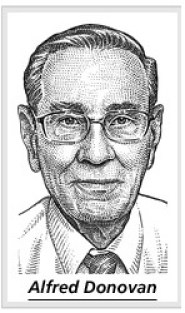 A head-cut image of Alfred Donovan (now deceased) appears courtesy of The Wall Street Journal.