Two years on from the biggest shareholder revolt on pay the London market has seen and things are getting back to normal at Royal Dutch Shell.


Shell had its moment back in 2004 with its reserves scandal but from 2005 embarked on a reconstruction involving a big increase in investment. Photo: GETTY IMAGES

Peter Voser, the chief executive, earned £4.8m in 2010, four times as much as his rival Bob Dudley at BP.
But then the companies’ fortunes could not have been more different over the past couple of years. BP workers were killed yet again after a fatal safety lapse and the company’s Macondo well created a fissure in the earth’s surface that spewed pollution into the Gulf of Mexico.
BP’s shares have underperformed the All Share by 60pc as a result while Shell has lagged by 22pc, although it has outperformed its oil peers by 9pc. BP has underperformed the same group by 30pc. Shell’s total market capitalisation across its two classes of share is £132bn and BP £86bn – a gap I doubt Dudley will close in his time as chief executive and it will be beyond his successor too.
Only a self inflicted disaster by Shell will change that. Shell had its moment back in 2004 with its reserves scandal but from 2005 embarked on a reconstruction involving a big increase in investment. Those projects are beginning to flow through now but Voser is keeping his foot firmly on the floor with $1bn in cost savings by the end of next year and $100bn of investment over the next three years to secure growth through to 2020.
These are ambitious plans but the company is enjoying huge cash flow benefits from strong crude prices so can afford it and such re-investment should be encouraged. Political upheaval in the Middle East and the constant threat of natural disaster, as we’ve seen in Japan, make it all the more urgent to secure energy supplies.
Shell has also ducked more of the political controversy that BP seems incapable of avoiding so has created a perception of being a less risky business than its rival. Shell, like all oil majors, looked at acquiring BP last year and as the valuation gap between the two becomes more pronounced, BP looks increasingly like a tasty feast should Voser, or one of his peers, ever wish to divert fire power from buying oil wells to buying oil companies.


 Royal Dutch Shell conspired directly with Hitler, financed the Nazi Party, was anti-Semitic and sold out its own Dutch Jewish employees to the Nazis. Shell had a close relationship with the Nazis during and after the reign of Sir Henri Deterding, an ardent Nazi, and the founder and decades long leader of the Royal Dutch Shell Group. His burial ceremony, which had all the trappings of a state funeral, was held at his private estate in Mecklenburg, Germany. The spectacle (photographs below) included a funeral procession led by a horse drawn funeral hearse with senior Nazis officials and senior Royal Dutch Shell directors in attendance, Nazi salutes at the graveside, swastika banners on display and wreaths and personal tributes from Adolf Hitler and Reichsmarschall, Hermann Goring. Deterding was an honored associate and supporter of Hitler and a personal friend of Goring.

 Deterding was the guest of Hitler during a four day summit meeting at Berchtesgaden. Sir Henri and Hitler both had ambitions on Russian oil fields. Only an honored personal guest would be rewarded with a private four day meeting at Hitler’s mountain top retreat.


 IN JULY 2007, MR BILL CAMPBELL (ABOVE, A RETIRED GROUP AUDITOR OF SHELL INTERNATIONAL SENT AN EMAIL TO EVERY UK MP AND MEMBER OF THE HOUSE OF LORDS:


 MORE DETAILS:


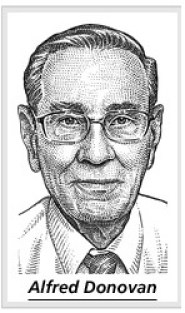 A head-cut image of Alfred Donovan (now deceased) appears courtesy of The Wall Street Journal.