
By James Paton
June 22 (Bloomberg) — East Timor, opposed to Woodside Petroleum Ltd.s plan to develop the Sunrise gas project using a floating plant, said it proposes a $3.8 billion oil and gas development hub on its southern coast.
Negotiations with Australia over the venture in the Timor Sea continue, government spokesman Agio Pereira said in an e- mailed statement today. The southeast Asian nation said it expects to put forward its plan later this year.
Australias second-largest oil and gas producer and its partners, including Royal Dutch Shell Plc, have opted to rely on floating liquefied natural gas technology for the development, saying that it will deliver the most revenue to both Australia and East Timor. The government of East Timor objects to any plan that doesnt include a gas processing plant in the country.
Woodside has fulfilled all obligations governing the Sunrise project, the Perth-based producer said earlier this month. The company said it ruled out piping the gas to East Timor because it was more expensive and that floating LNG is the best commercial option for converting the gas to liquid form.
Roger Martin, a spokesman for Woodside, declined to comment.
Woodside dropped 0.4 percent to A$45.49 at 2:35 p.m. in Sydney trading, while the benchmark S&P/ASX 200 Index fell 0.9 percent.
Technical Risks
Piping the gas to East Timor for processing would cost about $5 billion more than the floating LNG option and presents significant technical risks, Woodside Chief Executive Officer Don Voelte said earlier this month.
East Timors petroleum regulator last month refused to accept Woodsides plan, insisting on more detailed analysis of alternatives, including building a plant in East Timor.
The Sunrise resources straddle a boundary between Australian waters and an area jointly managed by the two countries. The countries agreed to share royalties.
Woodside and its partners have exclusive rights to develop the fields and sell the gas, the company said. Woodside has a 33 percent stake in Sunrise, while ConocoPhillips has 30 percent and Shell has 27 percent. Osaka Gas Co. owns 10 percent.
–Editors: John Viljoen, Ang Bee Lin.
To contact the reporter on this story: James Paton in Sydney [email protected].
To contact the editor responsible for this story: Amit Prakash at [email protected].
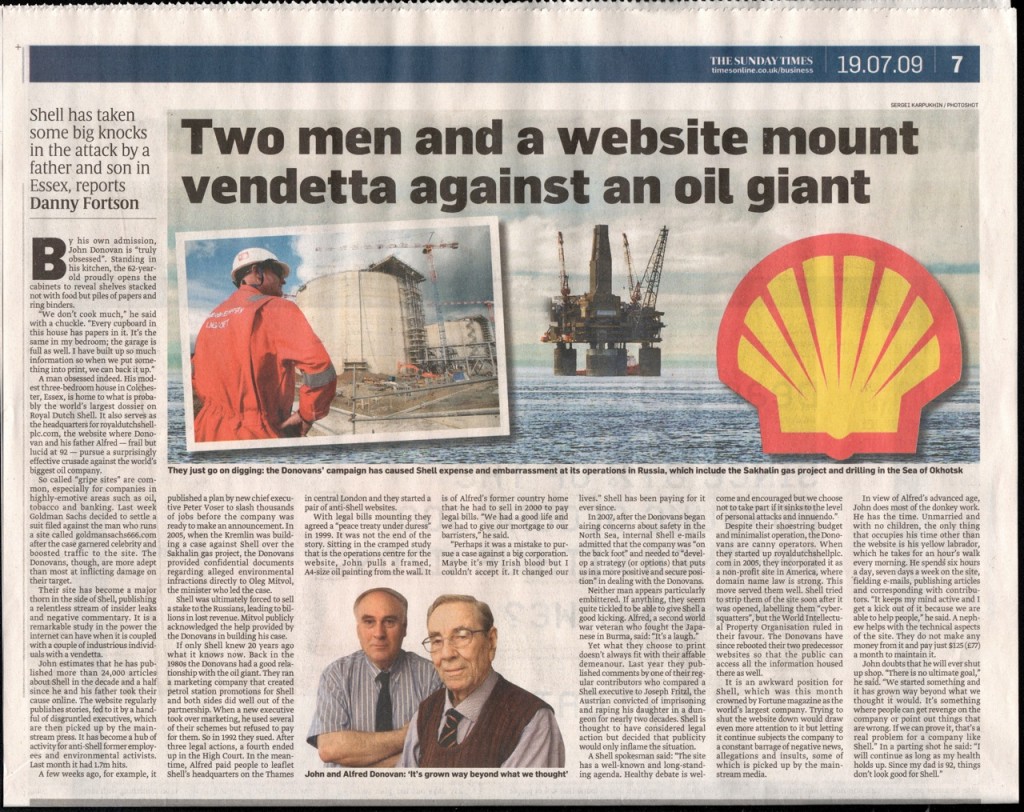
This website and sisters royaldutchshellplc.com, shellnazihistory.com, royaldutchshell.website, johndonovan.website, and shellnews.net, are owned by John Donovan. There is also a Wikipedia segment.


 Royal Dutch Shell conspired directly with Hitler, financed the Nazi Party, was anti-Semitic and sold out its own Dutch Jewish employees to the Nazis. Shell had a close relationship with the Nazis during and after the reign of Sir Henri Deterding, an ardent Nazi, and the founder and decades long leader of the Royal Dutch Shell Group. His burial ceremony, which had all the trappings of a state funeral, was held at his private estate in Mecklenburg, Germany. The spectacle (photographs below) included a funeral procession led by a horse drawn funeral hearse with senior Nazis officials and senior Royal Dutch Shell directors in attendance, Nazi salutes at the graveside, swastika banners on display and wreaths and personal tributes from Adolf Hitler and Reichsmarschall, Hermann Goring. Deterding was an honored associate and supporter of Hitler and a personal friend of Goring.

 Deterding was the guest of Hitler during a four day summit meeting at Berchtesgaden. Sir Henri and Hitler both had ambitions on Russian oil fields. Only an honored personal guest would be rewarded with a private four day meeting at Hitler’s mountain top retreat.


 IN JULY 2007, MR BILL CAMPBELL (ABOVE, A RETIRED GROUP AUDITOR OF SHELL INTERNATIONAL SENT AN EMAIL TO EVERY UK MP AND MEMBER OF THE HOUSE OF LORDS:


 MORE DETAILS:


 A head-cut image of Alfred Donovan (now deceased) appears courtesy of The Wall Street Journal.