
The Sunday Times
Royal Dutch Shell, the oil giant, has launched a shake-up of its controversial operations in Nigeria by offering oilfields valued at up to $5 billion (£3.1 billion) for sale.
The auction comes as Nigeria prepares to impose harsher terms on foreign operators next month and hand greater control to domestic firms.
Shell is the biggest western oil firm in Nigeria, the worlds tenth largest producer, and has had operations there for 70 years.
It is understood that the company recently launched a formal sales process that is being overseen by Ann Pickard, head of Shell Nigeria.
They have been talking about this for a while but it has now kicked off, said a source close to the situation. They are inviting proposals and circulating technical data on their fields.
Shells decision to reduce its reliance on Nigeria, which was once its primary growth engine, signals a huge shift.
For decades it has been a mainstay of an industry that accounts for more than three-quarters of the Nigerian economy. It persisted despite rampant piracy and a long-running campaign of violence by militants against foreign workers.
The growing violence and a souring of relations with the government in recent years led the company to invest billions elsewhere to offset its dependence on the country.
With new projects in the Gulf of Mexico and Qatar near completion, it is understood that Peter Voser, Shells chief executive, is now keen to reduce its position in Nigeria.
Sinopec, one of Chinas state-owned oil groups, has requested information. It is thought that indigenous companies such as Oando, Nigerias largest independent group, and London-listed Afren, could also pick up some fields.
Shell declined to comment but sources in talks with the company said the assets in question could be worth up to $5 billion. It is not selling its offshore blocks, which are less vulnerable and have more generous royalty terms.
Most of Shells fields are onshore and it is understood that the divestiture programme is focused primarily on those in the western part of the country. These include producing fields as well as undeveloped blocks and those now shut down because of the violence.
A further impetus has been provided by the end of long-term oilfield leases that were granted to Shell and other western rivals such as Exxon Mobil and Chevron. The leases, which have been in force for at least 20 years, were struck under the framework set out in the Petroleum Act of 1960. The Nigerian government is driving a hard bargain on renewal talks.
Adewale Tinubu, chief executive of Oando, said: This has been a long time coming. The Petroleum Act was passed in 1960. Its now almost 2010. Its the biggest shake-up of the industry since Nigeria became independent.
He added: Shell will be the predominant seller. They have the widest footprint across the country and need to optimise the most.
CNOOC, another Chinese state firm, recently offered $50 billion for a huge swathe of the countrys reserves. Some of these are still controlled by joint ventures between Nigerias national oil company and western partners.
Shells relationship with the Nigerians is fraught. It has filed dozens of lawsuits over pay disputes with the national oil company. Illegal tapping and sabotage of pipelines, meanwhile, has led to hundreds of thousands of barrels of crude being spilled into the environment.
Exxon and Chevron are believed to want to sell assets, while also bidding to renew rights to more desirable fields.
Shells decision is part of a company-wide shake-up. Since taking the helm in July, Voser has made 15,000 workers reapply for their jobs, re-entered Iraq and put a handful of European refineries up for sale.


 Royal Dutch Shell conspired directly with Hitler, financed the Nazi Party, was anti-Semitic and sold out its own Dutch Jewish employees to the Nazis. Shell had a close relationship with the Nazis during and after the reign of Sir Henri Deterding, an ardent Nazi, and the founder and decades long leader of the Royal Dutch Shell Group. His burial ceremony, which had all the trappings of a state funeral, was held at his private estate in Mecklenburg, Germany. The spectacle (photographs below) included a funeral procession led by a horse drawn funeral hearse with senior Nazis officials and senior Royal Dutch Shell directors in attendance, Nazi salutes at the graveside, swastika banners on display and wreaths and personal tributes from Adolf Hitler and Reichsmarschall, Hermann Goring. Deterding was an honored associate and supporter of Hitler and a personal friend of Goring.

 Deterding was the guest of Hitler during a four day summit meeting at Berchtesgaden. Sir Henri and Hitler both had ambitions on Russian oil fields. Only an honored personal guest would be rewarded with a private four day meeting at Hitler’s mountain top retreat.


 IN JULY 2007, MR BILL CAMPBELL (ABOVE, A RETIRED GROUP AUDITOR OF SHELL INTERNATIONAL SENT AN EMAIL TO EVERY UK MP AND MEMBER OF THE HOUSE OF LORDS:


 MORE DETAILS:


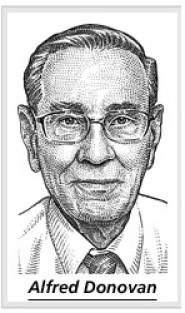 A head-cut image of Alfred Donovan (now deceased) appears courtesy of The Wall Street Journal.