
A business view
- guardian.co.uk
- The Guardian
My first international experience as a young boy was meeting two young people from Borneo, sent over by missionaries to my school in a small town near Inverness. Years later, my first overseas work for Shell was in the exact place they came from and while there I received a valuable insight.
A Malaysian friend asked me how I motivated all the different people from different countries working there and my stock answer was all about targets, standards and vision. He then asked how I felt about people sitting quietly in meetings and I replied that they can’t have had much to contribute.
He then described how people from his culture were brought up not to contradict or challenge people or show their emotions in public, before asking if I still thought the people in those meetings were not engaged. It shook me to realise how easy it is to make false judgments. It’s important to realise that there are always things all of us can learn.
A globalising world needs to be collaborative, built on trust that comes from knowledge and understanding. Acquiring those necessary skills and experience cannot start soon enough in life. This approach, for example, helps us to realise the recent financial situation is a global crisis affected by trade imbalances and deficits and economic flows around the world. Similarly, we all believe if we can work together to diminish trade barriers, it would be good for many people, particularly poor farmers in the developing world.
In business, a collaborative mentality is vital, not only so people work effectively in teams within their own organisations but also connect well with customers around the world. One reason Shell UK supports the Prime Minister’s Global Fellowship scheme (see feature, right) is the strong emphasis it places on showing young people, through work and other experiences abroad, the importance of collaboration and what it can achieve.
Collaboration is also a key element of Project Better World, a programme started and run by Shell staff through which the company supports individuals to take sabbaticals and broaden their horizons through work with voluntary organisations. Recent experiences have ranged from someone helping out with the technical aspects of solar power in the Dominican Republic to a colleague who went to Vietnam to explore concerns about its biodiversity and ended up counting butterflies in the forest.
Shell does business in 130 countries, and some 20 million customers each day, so we need a very diverse workforce to meet their needs. When we recruit, we need just about every sort of professional, from scientists and engineers to marketers and lawyers to economists and HR people. But we particularly like people with a world view and breadth of mind, an active interest in different cultures and a friendly curiosity about what’s going on in the world.
In future, people with these skills and attributes will be vital in the wider economy for another reason: there is a demographic “bulge” on the horizon and many experienced people are nearing retirement with insufficient numbers coming up behind to replace them.
Tomorrow’s employee who brings not only the right skills but also an international understanding to the table, and who is energised by the prospect of collaborating with people from different cultures and countries, will be all the more valuable as a result.
Interview by John Holt
James Smith is chair of Shell UK, one of the multinational companies hosting students on the Prime Minister’s Global Fellowship scheme


 Royal Dutch Shell conspired directly with Hitler, financed the Nazi Party, was anti-Semitic and sold out its own Dutch Jewish employees to the Nazis. Shell had a close relationship with the Nazis during and after the reign of Sir Henri Deterding, an ardent Nazi, and the founder and decades long leader of the Royal Dutch Shell Group. His burial ceremony, which had all the trappings of a state funeral, was held at his private estate in Mecklenburg, Germany. The spectacle (photographs below) included a funeral procession led by a horse drawn funeral hearse with senior Nazis officials and senior Royal Dutch Shell directors in attendance, Nazi salutes at the graveside, swastika banners on display and wreaths and personal tributes from Adolf Hitler and Reichsmarschall, Hermann Goring. Deterding was an honored associate and supporter of Hitler and a personal friend of Goring.

 Deterding was the guest of Hitler during a four day summit meeting at Berchtesgaden. Sir Henri and Hitler both had ambitions on Russian oil fields. Only an honored personal guest would be rewarded with a private four day meeting at Hitler’s mountain top retreat.


 IN JULY 2007, MR BILL CAMPBELL (ABOVE, A RETIRED GROUP AUDITOR OF SHELL INTERNATIONAL SENT AN EMAIL TO EVERY UK MP AND MEMBER OF THE HOUSE OF LORDS:


 MORE DETAILS:


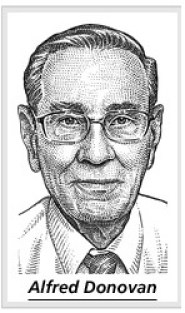 A head-cut image of Alfred Donovan (now deceased) appears courtesy of The Wall Street Journal.