
Royal Dutch Shell is to become the first big Western oil company to move large numbers of expatriate staff into Iraq to oversee its gas joint venture, The Times has learnt.
In recent weeks the Anglo-Dutch oil giant has been sounding out security companies, suppliers and logistics companies in Iraq about how to support an expatriate operation of as many as 200 people in Basra, where it has signed a preliminary deal worth up to $4 billion (£2.5 billion) to process and market natural gas.
Shell had been expected to operate in Iraq, at least initially, with a skeleton staff of foreigners supplementing local employees. However, its plan to consider a much larger force of expatriates, including both its own employees and foreign contractors, represents the first time that a big Western company has considered such a large commitment of resources to Iraq since the 2003 war.
A Shell spokesman said that it would not send personnel to Iraq until it was safe to do so and there were no immediate plans because the contract had not yet been finalised. The company said: Over time we will increase our presence in the country but for security reasons detailed plans will remain confidential.However, experts said that the security environment in Basra was sufficiently stable to support such a move. Andreas Carleton-Smith, director of Control Risks Group, which advises oil companies on the security threats in Iraq, said: People are very experienced now with dealing with the level of threat in that area. While not easy, people can gear up and deal with it . . . I think security is one of the least difficult of the issues they will have to deal with. He said that regulatory problems and potential contractual disputes with the Iraqi Government or suppliers could present more serious obstacles than just security.
Michael Corke, an energy consultant with Purvin & Gertz, said in Dubai: This kind of project is very much the kind of thing they would have to do with a hands-on approach with their own people on the ground.
Shell, which is struggling to rebuild its comparatively thin reserves portfolio, has been among the keenest of the international oil companies to enter Iraq, which has the worlds third-largest reserves after Saudi Arabia and Iran as well as vast, mostly untapped, reserves of natural gas.
It signed a landmark deal with Baghdad in September to extract the 700 million cu ft of gas a day that is flared during oil production from 19,000 sq km of land in the Basra region enough to meet all of Iraqs power generation needs. Initially, most of the gas is likely to be used for domestic electricity production, although it could later be used for exports to other Gulf states. Shell has said that, ultimately, a liquefied natural gas plant could be built in Basra that would allow for exports of gas farther afield, including Britain.
Shell has been using external contractors to conduct surveys required for the project. Assuming that the deal is finalised, Shell is looking at enlisting external expertise to operate and repair ageing production facilities and to install new equipment.
The Iraqi Cabinet approved the deal, which gives the state-owned South Gas Company 51 per cent and Shell 49 per cent of the venture.
Other Western oil giants, including Total, BP and ExxonMobil, are in talks with the Iraqi Government about other oil and gas projects, although continued delays over the passage of an oil law that would set out the legal framework for the industry have held up progress.


 Royal Dutch Shell conspired directly with Hitler, financed the Nazi Party, was anti-Semitic and sold out its own Dutch Jewish employees to the Nazis. Shell had a close relationship with the Nazis during and after the reign of Sir Henri Deterding, an ardent Nazi, and the founder and decades long leader of the Royal Dutch Shell Group. His burial ceremony, which had all the trappings of a state funeral, was held at his private estate in Mecklenburg, Germany. The spectacle (photographs below) included a funeral procession led by a horse drawn funeral hearse with senior Nazis officials and senior Royal Dutch Shell directors in attendance, Nazi salutes at the graveside, swastika banners on display and wreaths and personal tributes from Adolf Hitler and Reichsmarschall, Hermann Goring. Deterding was an honored associate and supporter of Hitler and a personal friend of Goring.

 Deterding was the guest of Hitler during a four day summit meeting at Berchtesgaden. Sir Henri and Hitler both had ambitions on Russian oil fields. Only an honored personal guest would be rewarded with a private four day meeting at Hitler’s mountain top retreat.


 IN JULY 2007, MR BILL CAMPBELL (ABOVE, A RETIRED GROUP AUDITOR OF SHELL INTERNATIONAL SENT AN EMAIL TO EVERY UK MP AND MEMBER OF THE HOUSE OF LORDS:


 MORE DETAILS:


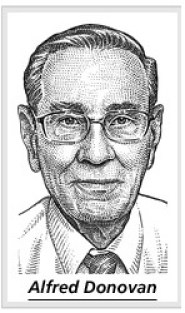 A head-cut image of Alfred Donovan (now deceased) appears courtesy of The Wall Street Journal.