Published: January 3, 2007
A year after Russia put the gas squeeze on Ukraine, it was Belarus’s turn. Unlike Ukraine, Belarus blinked two minutes before the Jan. 1 deadline and Russia had its booty: a 50 percent share of Belarus’s pipeline network and a more than doubling of the price Belarus will now pay for Russian gas.
There was no global outcry this time. President Aleksandr Lukashenko, the utterly Soviet boss of Belarus, has no friends in the West. But this latest squeeze is another warning that the Kremlin will let nothing — personal loyalty, contracts, the law — halt its drive to reimpose state control on Russia’s energy sector. It is also another reminder that the West, a big consumer of Russian energy, remains vulnerable to President Vladimir Putin’s whims.
The Belarus deal came less than two weeks after Royal Dutch Shell gave in to the Kremlin’s pressure and sold a controlling share in the Sakhalin-2 oil and gas project to Gazprom, Russia’s state gas monopoly. Moscow is now leaning on the British-Russian joint venture, TNK-BP, to give Gazprom a large and possibly controlling stake.
A year ago, when the democratic revolutions in Georgia and Ukraine were seen as serious threats to the Kremlin’s influence, Mr. Putin was eager to prop up Mr. Lukashenko. But once Mr. Lukashenko successfully stole the March presidential election, the new gas bill arrived in Minsk. That included half ownership for the Kremlin of Beltransgaz, the state pipeline operator that not only fuels Belarus but also supplies a fifth of Europe’s gas.
Russia’s European customers could increase their leverage — and possibly improve the Kremlin’s behavior — if they negotiated jointly with Gazprom, rather than scurrying to cut separate deals. Western companies and governments also need to warn Moscow that its leverage has limits. Russia will need the expertise and capital of foreign companies if it wants to keep developing its natural resources. No one wants to do business with a bully.
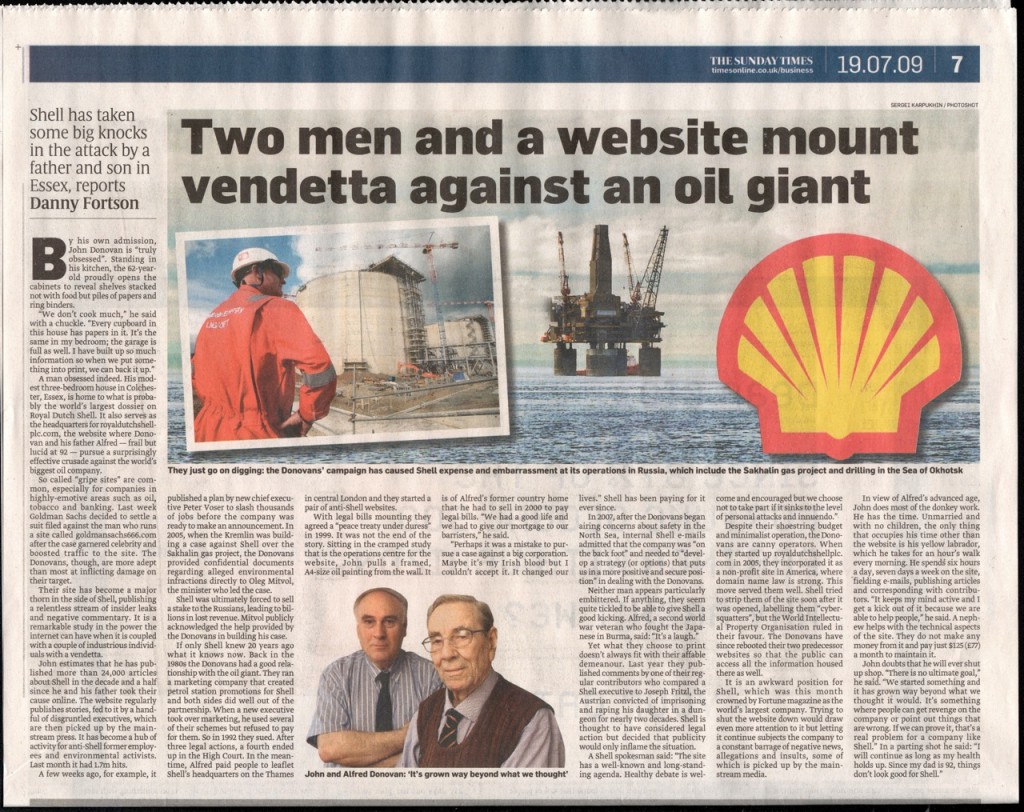
This website and sisters royaldutchshellplc.com, shellnazihistory.com, royaldutchshell.website, johndonovan.website, and shellnews.net, are owned by John Donovan. There is also a Wikipedia segment.


 Royal Dutch Shell conspired directly with Hitler, financed the Nazi Party, was anti-Semitic and sold out its own Dutch Jewish employees to the Nazis. Shell had a close relationship with the Nazis during and after the reign of Sir Henri Deterding, an ardent Nazi, and the founder and decades long leader of the Royal Dutch Shell Group. His burial ceremony, which had all the trappings of a state funeral, was held at his private estate in Mecklenburg, Germany. The spectacle (photographs below) included a funeral procession led by a horse drawn funeral hearse with senior Nazis officials and senior Royal Dutch Shell directors in attendance, Nazi salutes at the graveside, swastika banners on display and wreaths and personal tributes from Adolf Hitler and Reichsmarschall, Hermann Goring. Deterding was an honored associate and supporter of Hitler and a personal friend of Goring.

 Deterding was the guest of Hitler during a four day summit meeting at Berchtesgaden. Sir Henri and Hitler both had ambitions on Russian oil fields. Only an honored personal guest would be rewarded with a private four day meeting at Hitler’s mountain top retreat.


 IN JULY 2007, MR BILL CAMPBELL (ABOVE, A RETIRED GROUP AUDITOR OF SHELL INTERNATIONAL SENT AN EMAIL TO EVERY UK MP AND MEMBER OF THE HOUSE OF LORDS:


 MORE DETAILS:


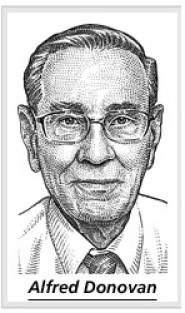 A head-cut image of Alfred Donovan (now deceased) appears courtesy of The Wall Street Journal.