COMMENT FROM breakingviews
December 27, 2006
The Russian airbrush is back. In Soviet times, it was normally used to remove a “nonperson” from a photograph and so create a more politically convenient version of reality. Now it’s being used to airbrush someone in. That, in essence, is the deal that Gazprom has just struck with Royal Dutch Shell and its Japanese partners to take control of Sakhalin II, the world’s largest single integrated oil-and-gas project. Gazprom has taken a 50%-plus-one-share stake, and in return is paying the proportionate share of its investment costs — as if it had been there from the start.
The deal math is relatively simple, despite months of negotiations. Shell, Mitsui & Co. and Mitsubishi Corp. have invested $12 billion in a project that is 80% complete. That implies its full cost will be $15 billion. Gazprom is paying $7.5 billion for half of the same, so the sums match. Looked at another way, Gazprom is paying just under $4 per barrel of Sakhalin’s reserves. By comparison, when Rosneft floated this summer, it was valued at $4.70 per barrel. Part of that premium is because much of Rosneft’s oil and gas was already on stream.
True, by paying only cost, Gazprom saves on any risk premium that Shell and its Japanese partners faced getting the project off the ground. On the other hand, those risks were never that great. Although Sakhalin is a technically challenging project, there was never any exploration risk; Sakhalin’s fields were already mapped and the oil and gas was in place.
That might not make this a great deal for Shell, but it’s not a bad one, either. The company will have to unbook some of its reserves, because its stake in Sakhalin has fallen below half, but at least with Gazprom as its partner it can now develop the reserves it has there. As President Vladimir Putin encouragingly said during the signing ceremony, the project’s “fundamental problems can now be considered resolved.” The Russian playing field may not be level for foreign oil companies operating there, be they Shell or BP. But then Russia enjoys a natural home advantage; it owns the stadium — and the house photographer.
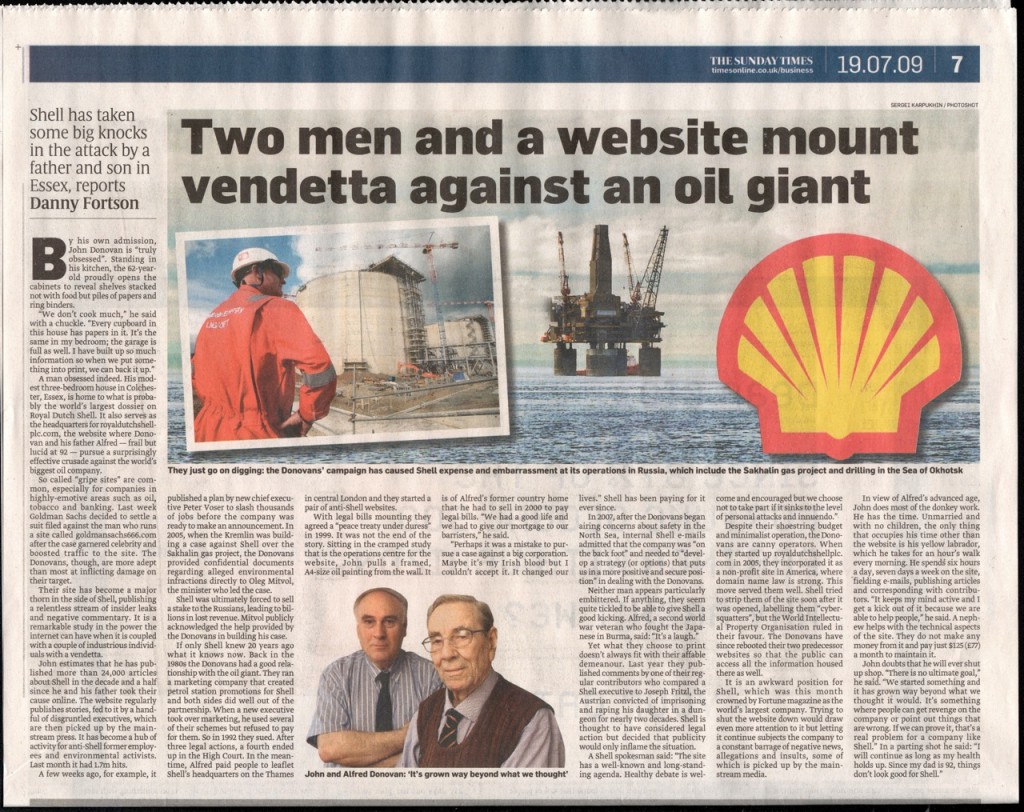
This website and sisters royaldutchshellplc.com, shellnazihistory.com, royaldutchshell.website, johndonovan.website, and shellnews.net, are owned by John Donovan. There is also a Wikipedia segment.


 Royal Dutch Shell conspired directly with Hitler, financed the Nazi Party, was anti-Semitic and sold out its own Dutch Jewish employees to the Nazis. Shell had a close relationship with the Nazis during and after the reign of Sir Henri Deterding, an ardent Nazi, and the founder and decades long leader of the Royal Dutch Shell Group. His burial ceremony, which had all the trappings of a state funeral, was held at his private estate in Mecklenburg, Germany. The spectacle (photographs below) included a funeral procession led by a horse drawn funeral hearse with senior Nazis officials and senior Royal Dutch Shell directors in attendance, Nazi salutes at the graveside, swastika banners on display and wreaths and personal tributes from Adolf Hitler and Reichsmarschall, Hermann Goring. Deterding was an honored associate and supporter of Hitler and a personal friend of Goring.

 Deterding was the guest of Hitler during a four day summit meeting at Berchtesgaden. Sir Henri and Hitler both had ambitions on Russian oil fields. Only an honored personal guest would be rewarded with a private four day meeting at Hitler’s mountain top retreat.


 IN JULY 2007, MR BILL CAMPBELL (ABOVE, A RETIRED GROUP AUDITOR OF SHELL INTERNATIONAL SENT AN EMAIL TO EVERY UK MP AND MEMBER OF THE HOUSE OF LORDS:


 MORE DETAILS:


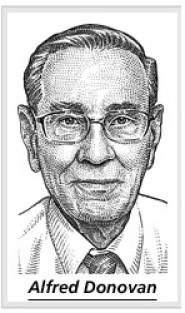 A head-cut image of Alfred Donovan (now deceased) appears courtesy of The Wall Street Journal.