By Upstream staff
12 September 2006
Russian investigations into a Shell-led project are the result of a $10 billion cost overrun and are not part of a wider crackdown on foreigners, Natural Resources Minister Yuri Trutnev said today.
Last year Shell doubled the cost estimate for its huge Sakhalin 2 project off Russia’s Pacific coast to $20 billion, blaming high metals prices, inflation and the weak dollar.
But the hike in costs hits the Kremlin directly because Sakhalin 2 is a production sharing agreement, so the Russian state will have to wait twice as long before it gets any revenue from the project’s exports of oil and liquefied natural gas.
“We cannot but react to this because if (Shell’s) intentions become reality the Russian Federation will lose $10 billion,” Trutnev said in a statement.
“The terms of the agreement are binding on both sides, and Russia is simply obliged to defend its interests.”
Russian environmental watchdog RosPrirodNadzor, an agency within Trutnev’s ministry, has asked a court to recognise that the project was not complying with ecological rules, a move that it said would force work at Sakhalin 2 to stop.
Trutnev said the spate of environmental checks on Sakhalin 2 were prompted by Russia’s displeasure at “the operator’s intention to allocate additional funds to allowable expenditure and to push back the date for sharing production.”
But he added a word of reassurance that a tough stance on Sakhalin-2 was not a sign of a wider crackdown on foreign investors in Russia’s massive energy sector.
“This situation is no way linked to a worsening of the investment climate in Russia,” he said.
That may be some comfort to ExxonMobil, which operates the neighbouring $12.8 billion Sakhalin 1 production sharing agreement and is also being checked by RosPrirodNadzor.
Russia and ExxonMobil are at odds over newly discovered reserves around Sakhalin-1’s existing acreage, which ExxonMobil has said it has the right to develop. Trutnev’s ministry disagrees and wants to auction the new sites.
The Russian moves against the two Sakhalin projects follow several years of tightening state control over the energy sector, a trend that drew criticism today from Tony Brenton, the British ambassador in Russia.
Brenton told an investment conference in Moscow that Russia could benefit from following the “nationality-blind” open way in which Britain developed its North Sea oil projects and turned the City of London into a world-class financial centre.
“Closed markets, dominated by insiders, are a recipe for inefficiency and corruption,” Brenton said.
“Nothing could be more damaging to Russia at this current key moment in its development than for international companies …to begin to feel that the playing field is tilted against them.”
Sakhalin 2 is operated by Sakhalin Energy, in which Shell owns 55%, and is Russia’s top foreign investment project and the world’s largest liquefied natural gas development.
The huge cost overrun has angered not only the Kremlin but also Russian gas monopoly Gazprom, which agreed in principle to take a 25% stake in Sakhalin Energy just days before Shell unveiled the ballooning budget.
The Gazprom deal is effectively on hold until Shell completes its negotiation over the project costs with the Kremlin. Gazprom has said it expects those talks to drag on into 2007, despite Shell’s hopes of wrapping them up this year.
Sakhalin Energy’s other shareholders are Japan’s Mitsui with 25% and Mitsubishi with 20%.
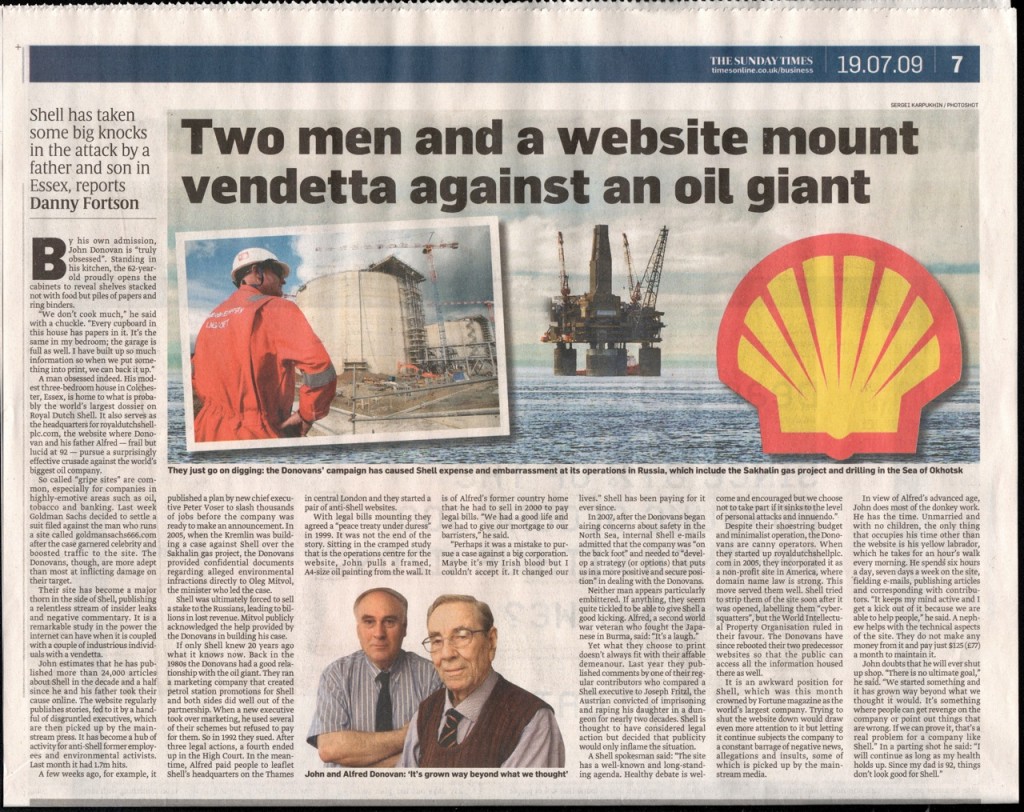
This website and sisters royaldutchshellplc.com, shellnazihistory.com, royaldutchshell.website, johndonovan.website, and shellnews.net, are owned by John Donovan. There is also a Wikipedia segment.


 Royal Dutch Shell conspired directly with Hitler, financed the Nazi Party, was anti-Semitic and sold out its own Dutch Jewish employees to the Nazis. Shell had a close relationship with the Nazis during and after the reign of Sir Henri Deterding, an ardent Nazi, and the founder and decades long leader of the Royal Dutch Shell Group. His burial ceremony, which had all the trappings of a state funeral, was held at his private estate in Mecklenburg, Germany. The spectacle (photographs below) included a funeral procession led by a horse drawn funeral hearse with senior Nazis officials and senior Royal Dutch Shell directors in attendance, Nazi salutes at the graveside, swastika banners on display and wreaths and personal tributes from Adolf Hitler and Reichsmarschall, Hermann Goring. Deterding was an honored associate and supporter of Hitler and a personal friend of Goring.

 Deterding was the guest of Hitler during a four day summit meeting at Berchtesgaden. Sir Henri and Hitler both had ambitions on Russian oil fields. Only an honored personal guest would be rewarded with a private four day meeting at Hitler’s mountain top retreat.


 IN JULY 2007, MR BILL CAMPBELL (ABOVE, A RETIRED GROUP AUDITOR OF SHELL INTERNATIONAL SENT AN EMAIL TO EVERY UK MP AND MEMBER OF THE HOUSE OF LORDS:


 MORE DETAILS:


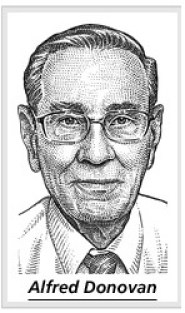 A head-cut image of Alfred Donovan (now deceased) appears courtesy of The Wall Street Journal.