Tuesday September 05, 2006
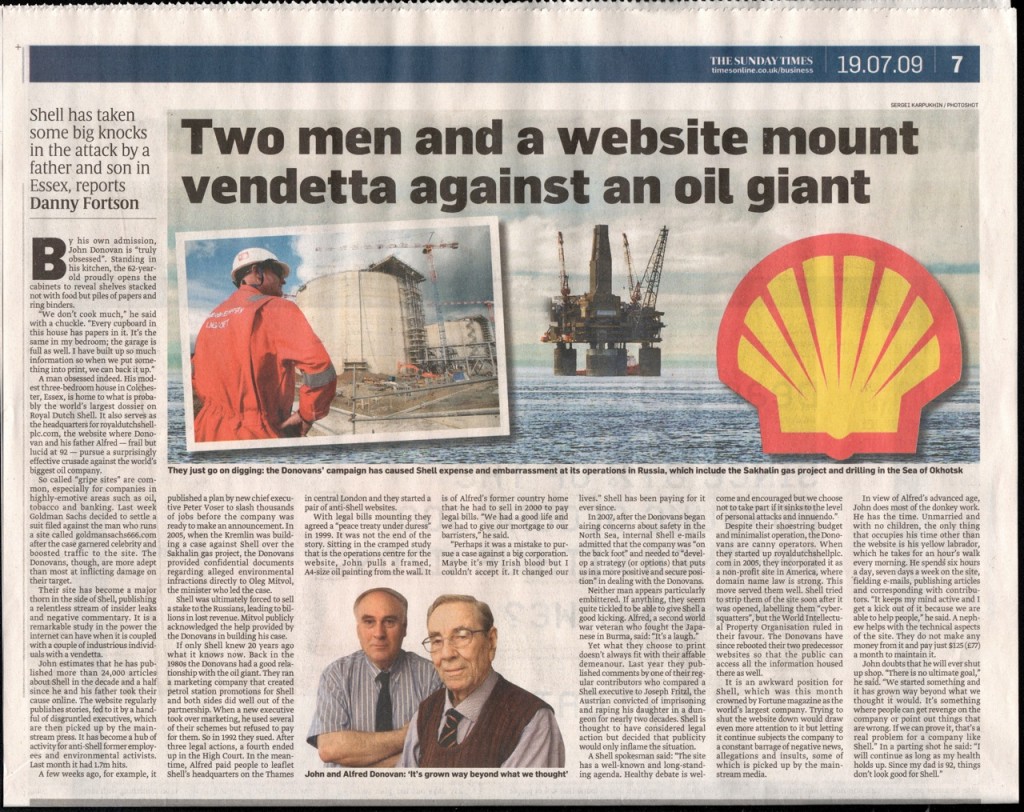
MOSCOW (AP) Russia’s environmental regulator said Tuesday it had filed suit seeking to revoke approval for a $20 billion international oil project led by Royal Dutch Shell on the Pacific island of Sakhalin.
The Federal Service for the Supervision of Natural Resources had signaled for several weeks that it planned to ask the Natural Resources Ministry to withdraw its approval for the Sakhalin-2 project in Russia’s Far East.
The service said in a statement that the suit was filed due to “unfulfilled recommendations, details of which are included in the state ecological review, and multiple digressions,” along with the project operators’ failure to take necessary anti-erosion measures.
Ivan Chernyakhovskiy, a spokesman for the project’s operator, Sakhalin Energy, said the company had no immediate comment.
The move is the latest in a growing number of complications for the project, whose major investors include Royal Dutch Shell PLC, Japan’s Mitsubishi Corp. and others.
Last week, Shell suspended pipe-laying work at a section of its giant liquefied natural gas project on Sakhalin because of what it said was substandard construction work.
Sakhalin-2 is one of two projects in Russia’s Pacific offshore being developed by Western oil companies under production-sharing agreements signed in the early 1990s, and is due to come online in 2008. The other is Exxon Mobil Corp.’s Sakhalin-1 oil project, which has state-controlled oil company OAO Rosneft as a partner.
Observers have suggested that the ministry’s attention to Sakhalin-2 is aimed at pressuring Shell to offer state-controlled gas monopoly OAO Gazprom better terms as it jostles to join what will be the world’s biggest liquefied natural gas development.
Gazprom is offering Shell access to the far northern Zapolyarnoye-Neocomian field, the world’s fifth-largest gas deposit, in exchange for a 25 percent-plus-one-share stake in Sakhalin-2.
Last July, Shell said the expected cost of developing Sakhalin-2 which is overwhelmingly dedicated to producing liquefied natural gas had doubled to around $20 billion. The company blamed the increase on currency swings and rising prices of commodities such as steel.
Gazprom argues the cost increase has diminished the value of the stake it wants to take and wants to reduce the assets it is offering in the swap deal.
Shell shares fell 0.4 percent to 26.98 euros ($34.69) in Amsterdam trading.
(Copyright 2006 by The Associated Press. All Rights Reserved.)
This website and sisters royaldutchshellplc.com, shellnazihistory.com, royaldutchshell.website, johndonovan.website, and shellnews.net, are owned by John Donovan. There is also a Wikipedia segment.


 Royal Dutch Shell conspired directly with Hitler, financed the Nazi Party, was anti-Semitic and sold out its own Dutch Jewish employees to the Nazis. Shell had a close relationship with the Nazis during and after the reign of Sir Henri Deterding, an ardent Nazi, and the founder and decades long leader of the Royal Dutch Shell Group. His burial ceremony, which had all the trappings of a state funeral, was held at his private estate in Mecklenburg, Germany. The spectacle (photographs below) included a funeral procession led by a horse drawn funeral hearse with senior Nazis officials and senior Royal Dutch Shell directors in attendance, Nazi salutes at the graveside, swastika banners on display and wreaths and personal tributes from Adolf Hitler and Reichsmarschall, Hermann Goring. Deterding was an honored associate and supporter of Hitler and a personal friend of Goring.

 Deterding was the guest of Hitler during a four day summit meeting at Berchtesgaden. Sir Henri and Hitler both had ambitions on Russian oil fields. Only an honored personal guest would be rewarded with a private four day meeting at Hitler’s mountain top retreat.


 IN JULY 2007, MR BILL CAMPBELL (ABOVE, A RETIRED GROUP AUDITOR OF SHELL INTERNATIONAL SENT AN EMAIL TO EVERY UK MP AND MEMBER OF THE HOUSE OF LORDS:


 MORE DETAILS:


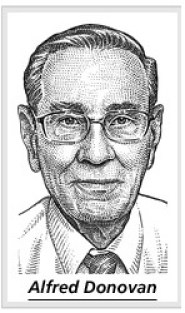 A head-cut image of Alfred Donovan (now deceased) appears courtesy of The Wall Street Journal.