Hard lessons from the oil frontier By Carola Hoyos in London
Published: May 14 2006 22:29 | Last updated: May 14 2006 22:29
Rising oil prices and the consequent shift of power in favour of resource-rich countries such as Venezuela, Russia and Saudi Arabia, have left demand for the traditional services of international oil companies waning.
| // |
Petro-states with increasingly sophisticated national oil companies no longer need foreign help to extract oil and gas. This has brought the renegotiation of contracts, exclusion of foreign companies from projects and a host of demands on international groups that range from funding local schools to involvement in electricity or refining sectors. Bolivia is the latest country to change the rules, taking full control of its gas fields from companies including Petrobras of Brazil, Repsol of Spain and the UK’s BG.
Chief executives from some of the world’s biggest energy groups have revealed in a series of interviews with the FT their different approaches to tackling the massive shift that has left their companies struggling to redefine themselves.
Jeroen van der Veer, chief executive of Royal Dutch Shell, Europe’s second-largest listed energy group, says international oil companies have to “take it how it is, take a deep breath, sometimes cut a fresh deal, and keep on moving”.
But he admits that Shell has struggled to deliver some of the very projects the company is counting on to set it apart – projects such as Russia’s Sakhalin gas venture, which require advanced technology and the ability to manage vast, complicated endeavours.
When the group has struggled with so-called frontier projects, such as Sakhalin, Mr van de Veer says it analysed the problems it faced and learnt two key lessons.
“First of all, we underestimate the frontier and how complex it is, that it may take longer to get it right,” he says. “You need more in-depth preparation.”
The second is that when investing in frontier projects, the group must negotiate a much higher percentage of contingent benefits, Mr van de Veer says. “That’s a no-brainer, as the Americans say. But we didn’t do it.”
Wolfgang Ruttenstorfer, chairman and chief executive of OMV, the Austrian energy group, has taken a different tack. Last week, he spent $13bn acquiring Verbund, Austria’s leading electricity group, launching OMV away from oil.
“The place for OMV has changed. The power is shifting to the ones who have the resources. Oil is not the predominant energy source for the next 100 years, gas may take over that role. We have to decide where we are going amid the changed circumstances,” he says. “It is a reason for our merger with Verbund.”
But in Italy, Paolo Scaroni, chief executive of Eni, is keeping his focus on getting access to oil and gas reserves. “In order to justify [sharing] the oil reserve, we can offer countries a partnership in developing the country, like for example providing electricity in Nigeria,” he says.
In Angola, Eni offered more. Eni and its partners – which include Total, of France, China’s Sinopec and Statoil of Norway – offered the country $900m for Block 15, to which it last week won the right to explore for oil, Mr Scaroni confirmed.
“The cost of entry may be higher, but then you have the reserves. If you do not offer that, you just don’t exist,” Mr Scaroni says.
Additional reporting by Alison Maitland


 Royal Dutch Shell conspired directly with Hitler, financed the Nazi Party, was anti-Semitic and sold out its own Dutch Jewish employees to the Nazis. Shell had a close relationship with the Nazis during and after the reign of Sir Henri Deterding, an ardent Nazi, and the founder and decades long leader of the Royal Dutch Shell Group. His burial ceremony, which had all the trappings of a state funeral, was held at his private estate in Mecklenburg, Germany. The spectacle (photographs below) included a funeral procession led by a horse drawn funeral hearse with senior Nazis officials and senior Royal Dutch Shell directors in attendance, Nazi salutes at the graveside, swastika banners on display and wreaths and personal tributes from Adolf Hitler and Reichsmarschall, Hermann Goring. Deterding was an honored associate and supporter of Hitler and a personal friend of Goring.

 Deterding was the guest of Hitler during a four day summit meeting at Berchtesgaden. Sir Henri and Hitler both had ambitions on Russian oil fields. Only an honored personal guest would be rewarded with a private four day meeting at Hitler’s mountain top retreat.


 IN JULY 2007, MR BILL CAMPBELL (ABOVE, A RETIRED GROUP AUDITOR OF SHELL INTERNATIONAL SENT AN EMAIL TO EVERY UK MP AND MEMBER OF THE HOUSE OF LORDS:


 MORE DETAILS:


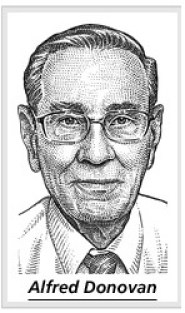 A head-cut image of Alfred Donovan (now deceased) appears courtesy of The Wall Street Journal.