Three Foreign Oil Workers Freed in Nigeria: Police
|
|
Filed at 3:51 a.m. ET

PORT HARCOURT, Nigeria (Reuters) – Three foreign oil workers, including an Italian, taken hostage in Nigeria's oil capital Port Harcourt were released on Friday after a day in captivity, police said.
The employees of Italian oil contractor Saipem were abducted at gunpoint by members of a community where Saipem was working and which was in dispute with the company over compensation for environmental damage.
“They have been released. The issues of disagreement must have been resolved,'' Rivers State Police Commissioner Samuel Agbetuyi told Reuters by telephone.
A Bukuma community leader, Mbaka Harmony, told a local radio station that that the community was demanding 300 million naira ($2.3 million) in compensation for damage caused by Saipem's laying of a pipeline through the area.
In Rome, the Italian Foreign Ministry confirmed the release of the Italian national, Vito Macrina, and the two other men.
The kidnapping was unrelated to a five-month campaign of sabotage, bombings and kidnapping against Nigeria's Western-run oil industry by militants fighting for more economic autonomy in Nigeria's far south.
The attacks by the Movement for the Emancipation of the Niger Delta (MEND) have reduced Nigerian oil exports by a quarter since February.
The latest abduction, and the assassination of a U.S. oil executive in Port Harcourt on Wednesday, marked a new low in security in the world's eighth largest oil exporter.
RANSOMS BANNED
Kidnapping is a fairly common method used by poor villagers in the lawless delta, suffering neglect by their own government, to extract benefits or cash from oil companies.
Hostages are routinely released after payment of a ransom, although some oil companies have banned such payments.
Port Harcourt is the largest city in the Niger Delta, which produces all of Nigeria's oil, and several multinationals have major offices there, including Royal Dutch Shell and Agip.
Militancy is fueled by resentment among many delta inhabitants, who feel cheated out of the riches being produced from their tribal lands.
Neglect and corruption have eroded trust in government, while communal rivalries and abuses by the military have led to the rise of well-armed community militias.
They have taken advantage of the absence of law and order to engage in large-scale theft of crude oil, extortion, blackmail and kidnapping against oil companies, which rely on ill-equipped and poorly trained police and troops to protect them.
MEND's emergence in December has raised the stakes in the delta, because it introduced more professional guerrilla tactics, more deadly firepower and a clearer political dimension to the violence.


 Royal Dutch Shell conspired directly with Hitler, financed the Nazi Party, was anti-Semitic and sold out its own Dutch Jewish employees to the Nazis. Shell had a close relationship with the Nazis during and after the reign of Sir Henri Deterding, an ardent Nazi, and the founder and decades long leader of the Royal Dutch Shell Group. His burial ceremony, which had all the trappings of a state funeral, was held at his private estate in Mecklenburg, Germany. The spectacle (photographs below) included a funeral procession led by a horse drawn funeral hearse with senior Nazis officials and senior Royal Dutch Shell directors in attendance, Nazi salutes at the graveside, swastika banners on display and wreaths and personal tributes from Adolf Hitler and Reichsmarschall, Hermann Goring. Deterding was an honored associate and supporter of Hitler and a personal friend of Goring.

 Deterding was the guest of Hitler during a four day summit meeting at Berchtesgaden. Sir Henri and Hitler both had ambitions on Russian oil fields. Only an honored personal guest would be rewarded with a private four day meeting at Hitler’s mountain top retreat.


 IN JULY 2007, MR BILL CAMPBELL (ABOVE, A RETIRED GROUP AUDITOR OF SHELL INTERNATIONAL SENT AN EMAIL TO EVERY UK MP AND MEMBER OF THE HOUSE OF LORDS:


 MORE DETAILS:


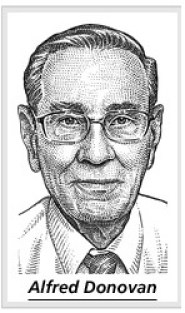 A head-cut image of Alfred Donovan (now deceased) appears courtesy of The Wall Street Journal.